

 Account


Sie sehen Mariendistel ständig in Wellness-Feeds, meist neben dem Wort "Entgiftung". Jetzt taucht sie auch in der Hautpflege auf, und Sie fragen sich, ob ein Leberkraut tatsächlich etwas für Ihr Gesicht tun kann. Diese Frage ist berechtigt, und die Antwort ist interessanter als der Hype vermuten lässt.
Bei Frøya Organics bauen wir das wasserfrei formulierte Anti-Aging Pflegesystem für reife Haut aus arktischen Wildpflanzen auf – basierend auf wissenschaftlichen Erkenntnissen und dem, was Haut tatsächlich braucht. Lassen Sie uns durchgehen, was Mariendistel wirklich bewirkt, wo die Evidenz stark ist und wo sie schwächer wird.
Wichtigste Erkenntnisse
- Der aktive Wirkstoff der Mariendistel ist Silymarin, eine Gruppe von Antioxidantien aus den Samen der Pflanze, die freie Radikale auf der Haut bekämpfen.
- Der "Entgiftungs"-Winkel ist ein Mythos. Die Lebervorteile der Mariendistel stammen aus oralen Studien und lassen sich nicht auf einen Balsam im Gesicht übertragen.
- Ihre stärksten Hauteffekte sind antioxidative Schutzfunktion, Rötungsberuhigung und Barriereschutz – bislang vor allem durch Labor- und Tierstudien nachgewiesen.
- Oral und topisch sind nicht dasselbe. Eine Supplementierungsstudie kann nicht versprechen, was eine Creme auf Ihrer Wange leistet.
Was Mariendistel ist und warum sie die Hautpflege bemerkt hat
Die Mariendistel ist eine blühende Pflanze, deren Samen einen Wirkstoff namens Silymarin enthalten. Silymarin ist einer der am meisten erforschten aktiven Inhaltsstoffe für Haut und ist eine Gruppe von Antioxidantien aus den Samen.
Sie kennen sie vielleicht unter anderen Namen. Sie heißt auch Silybum marianum, Stechendistel oder Heilige Distel, und Mariendistel wächst wild in Ländern rund ums Mittelmeer. Sie gehört in die gleiche Familie wie Gänseblümchen, und Heiler nutzten sie einst als natürliches Mittel gegen alles – von Leberleiden bis zu Schlangenbissen.
Die Hautpflege hat aufgehorcht, weil Silymarin ein echtes Antioxidans ist. Seine antioxidativen Eigenschaften helfen, oxidativen Stress zu beruhigen – die tägliche Beanspruchung Ihrer Haut durch Sonne und Verschmutzung. Deshalb taucht Mariendistel-Extrakt immer wieder in Zutatenlisten und Laborstudien auf.
Die Leber-Haut-Verbindung und was sie wirklich bedeutet

Die Leber-Haut-Verbindung ist real, aber es ist keine Schönheitsgeschichte. Wenn die Leber schwächelt, kann sich das auf der Haut zeigen – durch Gelbfärbung, Juckreiz oder spinnwebenartige weiße Äderchen, die Ärzte als klinische Zeichen von Leberproblemen deuten.
Das ist Medizin, keine Gesichtsbehandlung. Die Gesundheitsvorteile der Mariendistel als Kräutersupplement stammen aus oralen Studien, bei denen eine randomisierte Studie nach acht Wochen verbesserte Leberwerte zeigte. Forschung deutet sogar darauf hin, dass Mariendistel-Supplements das LDL-Cholesterin und den Blutzucker bei Menschen mit Diabetes senken könnten und untersucht werden, um die Muttermilchproduktion zu erhöhen.
Das alles überträgt sich nicht auf Ihr Gesicht. Das sind interne Effekte durch die Einnahme eines Supplements. Ihre Haut entgiftet nicht – was ihr hilft, ist topischer Schutz gegen die Dinge, die sie altern lassen.
Mariendistel-Vorteile für die Haut
Die Vorteile der Mariendistel für die Haut gehen auf Silymarin und die Fettsäuren in ihrem Samenöl zurück. Der Großteil dieser Evidenz stammt aus Labor- und Tierstudien, nicht aus großen Humanstudien, lesen Sie es also als vielversprechend, nicht als bewiesen. So sieht die Ausgangslage aus.
Antioxidativer Schutz vor freier Radikalschädigung
Silymarin bekämpft freie Radikalschädigung – den Prozess, der Hautalterung vorantreibt und Kollagen abbaut. Es neutralisiert reaktive Moleküle aus UV-Strahlung und Verschmutzung, bevor sie Hautzellen schädigen.
Laborforschung zeigt die schützenden Effekte von Silymarin auf der Haut. Eine Studie zu Silymarins hautschützenden Aktivitäten fand heraus, dass es freie Radikale fängt und Kollagen und Elastin vor den Enzymen schützt, die sie abbauen.
Diese antioxidativen Effekte sind das, wofür Silymarin für reife Haut interessant ist. Der Haken ist die Applikation, da Ihr Gesicht diesen Schutz lokal aufgetragen braucht, nicht geschluckt.
Rötungsberuhigung und gereizte Haut
Silymarin ist sowohl ein Antioxidans als auch ein Entzündungshemmer, das bedeutet, es kann Reizungen beruhigen und Rötungen lindern. Es lässt die entzündlichen Signale nach, die Haut gereizt oder reaktiv hinterlassen.
Tierstudien belegen das. Wenn Silymarin auf die Haut aufgetragen wurde, sahen Forscher weniger Rötung und Schwellungen – deshalb weckt es Interesse für empfindliche, reaktive Haut. Seine antioxidative Wirkung kann auch bei unebener Hautfarbe helfen, indem sie die Entzündung lindert, die Flecken hinterlassen kann. Die Forschung hier ist noch jung, betrachten Sie sie als vielversprechend, nicht als bewiesen.
Hautbarriere-Unterstützung und Feuchtigkeitsspeicherung
Mariendistelsamenöl ist reich an Linolsäure, einer Fettsäure, auf die Ihre Hautbarriere angewiesen ist. Linolsäure hilft beim Aufbau von Ceramiden – die Lipide, die Ihre Barriere zusammenhalten und verhindern, dass Feuchtigkeit entweicht.
Eine starke Barriere bedeutet weniger Wasserverlust, also bleibt die Haut weicher und weniger trocken. Eine schwache Barriere bewirkt das Gegenteil.
Zeichen, dass Ihre Barriere Hilfe braucht: Spannung nach der Reinigung, schuppige Stellen, Stechen durch Produkte, die früher nicht gebrannt haben, und ein mattes, raues Gefühl. Wenn das auf Ihre Haut zutrifft, ist Barriereschutz der richtige Anfang.
Das ist der Grund, warum barrierefreundliche Öle nach 45 wichtig sind, wenn Haut dünner wird und schneller austrocknet. Wenn sich Ihre Haut gespannt oder schuppig anfühlt, zeigt unsere Anleitung zum natürlichen Weg zur Reparatur einer beschädigten Hautbarriere den Weg zurück.
Mariendistel und Akne
Mariendistel wird mit klarerer Haut verbunden, weil Silymarin die Ölproduktion regulieren kann. Forschung deutet darauf hin, dass es die Talgproduktion regulieren und Aknelasionen verhindern kann, und diese beruhigende Wirkung kann erwachsenen Frauen über 35 bei hormonellen Ausbrüchen helfen.
Halten Sie Ihre Hoffnungen gemäßigt. Die meiste Forschung untersucht Mariendistel als orales Supplement, nicht als topisches Produkt, also ist es keine Lokalbehandlung, die Sie aufstreichen.
Die ehrliche Einschätzung ist, dass es als Teil einer Routine zu beruhigter Haut beitragen kann. Es ist keine eigenständige Akne-Lösung, und kein einzelnes Kraut ist das.
Orale Mariendistel vs. topisches Silymarin für die Haut
Oral aufgenommene Mariendistel und topischer Silymarin-Extrakt sind nicht dasselbe für Ihre Haut. Ein Supplement unterstützt den Körper von innen, während die topische Anwendung direkt dort wirkt, wo Sie es auftragen.
Das ist wichtig, weil die meisten Ergebnisse aus dem einen oder dem anderen stammen, nicht aus beiden. Eine Supplementierungsstudie kann nicht versprechen, was eine Creme auf Ihrer Wange leistet. Es gibt keine Standarddosierung für Hautpflege, und mehr Forschung ist noch nötig zu topischen Effekten.
Für die Haut sind topische Antioxidantien das, was die sichtbare Oberfläche schützt. Wenn also ein Claim sich auf eine Supplementierungsstudie stützt, um ein Gesichtsprodukt zu verkaufen, verlangsamen Sie und prüfen Sie die Quelle.
Wie Frøyas arktische Wildpflanzen denselben Antioxidanzien-Schutz bieten
Mariendistel gehört zur Familie der Korbblütler, und auch zwei Pflanzen, die Frøya bereits nutzt, gehören dazu. Ringelblume und Arnika sind sanfte Verwandte davon und bringen der Haut denselben beruhigenden, antioxidativen Charakter mit, gestützt auf ihre eigene Forschung.
Wir bauen Routinen statt Mono-Produkte aus einem bestimmten Grund: Ihre Haut hat mehr als ein Bedürfnis gleichzeitig. Reinigung, Tagesglanz, Augenpflege und nächtliche Reparatur erfordern jeweils eine andere Pflanze, deshalb bekommen sanfte, bewährte Pflanzen wie Sanddorn, Hagebutte und Ringelblume jeden ihren eigenen Schritt.
Anti-Aging Pflegesystem für reife Haut

Das Anti-Aging Pflegesystem für reife Haut ist eine vierteilige Routine auf Basis von antioxidativen und Barriere-Gedanken, ohne Wasser in einem einzigen Tiegel. Jeder Schritt bringt seine eigenen Pflanzen für seine eigene Aufgabe mit, und wenig reicht weit.
|
Schritt |
Wofür es ist |
Wie man es anwendet |
|
Ein wasserfreies Reis- und Rosenpuder-Peeling, das abgestorbene Haut entfernt, damit die Balsame eindringen |
2 bis 3 mal pro Woche: Eine Prise in eine trockene Handfläche geben, mit Wasser mischen, 1 bis 2 Minuten einmassieren |
|
|
Ihre morgendliche Schicht, reich an Sanddorn und Hagebutte für Nährung und natürlichen Glanz |
Jeden Morgen eine dünne Schicht auf saubere Haut drücken. Eine kleine Menge reicht aus |
|
|
Ein gezielter Augenbalsam mit Arnika und Vitamin E zur Beruhigung von Schwellungen und Glättung feiner Linien |
Nachts eine kleine Menge um die Augen abtupfen |
|
|
Ein Nachtbalsam mit Hagebutte und Sanddorn, der hydratisiert und glättet, während Sie schlafen |
Vor dem Schlafengehen eine dünne Schicht über das Gesicht glätten |
Sanddorn ist die botanische Powerplanze, die durch dieses Set läuft. Diese winzige arktische Beere ist voller Nährstoffe und Omega 7, also hilft sie, chronische Entzündungen zu beruhigen und die Hautfarbe im Laufe der Zeit auszugleichen. Unser Leitfaden zu den Vorteilen von Sanddornöl für die Haut zeigt, warum Haut darauf reagiert.
Wie echte Haut nach Wochen botanischer Pflege aussieht

Echte Veränderungen auf reifer Haut zeigen sich langsam, dann alle auf einmal. Antioxidantien und Barriere-Öle wirken über Wochen mit Ihrer Haut zusammen, also ist die Verschiebung, die Sie am Tag 40 bemerken, die stille Arbeit früherer Wochen, die aufgeholt wird.
Das ist das Muster, das unsere Kundinnen beschreiben, und ihre Fotos erzählen es besser als wir können. Hier sind echte Vorher-Nachher-Aufnahmen von Frauen, die sich auf konsistente, botanische Pflege eingelassen haben.
Geben Sie jeder guten Routine eine faire 60-Tage-Chance. Haut, die sich jahrelang angespannt oder matt angefühlt hat, dreht sich nicht über Nacht um, aber mit gleichmäßiger Pflege, die auf gesunde Haut abzielt, dreht sie sich.
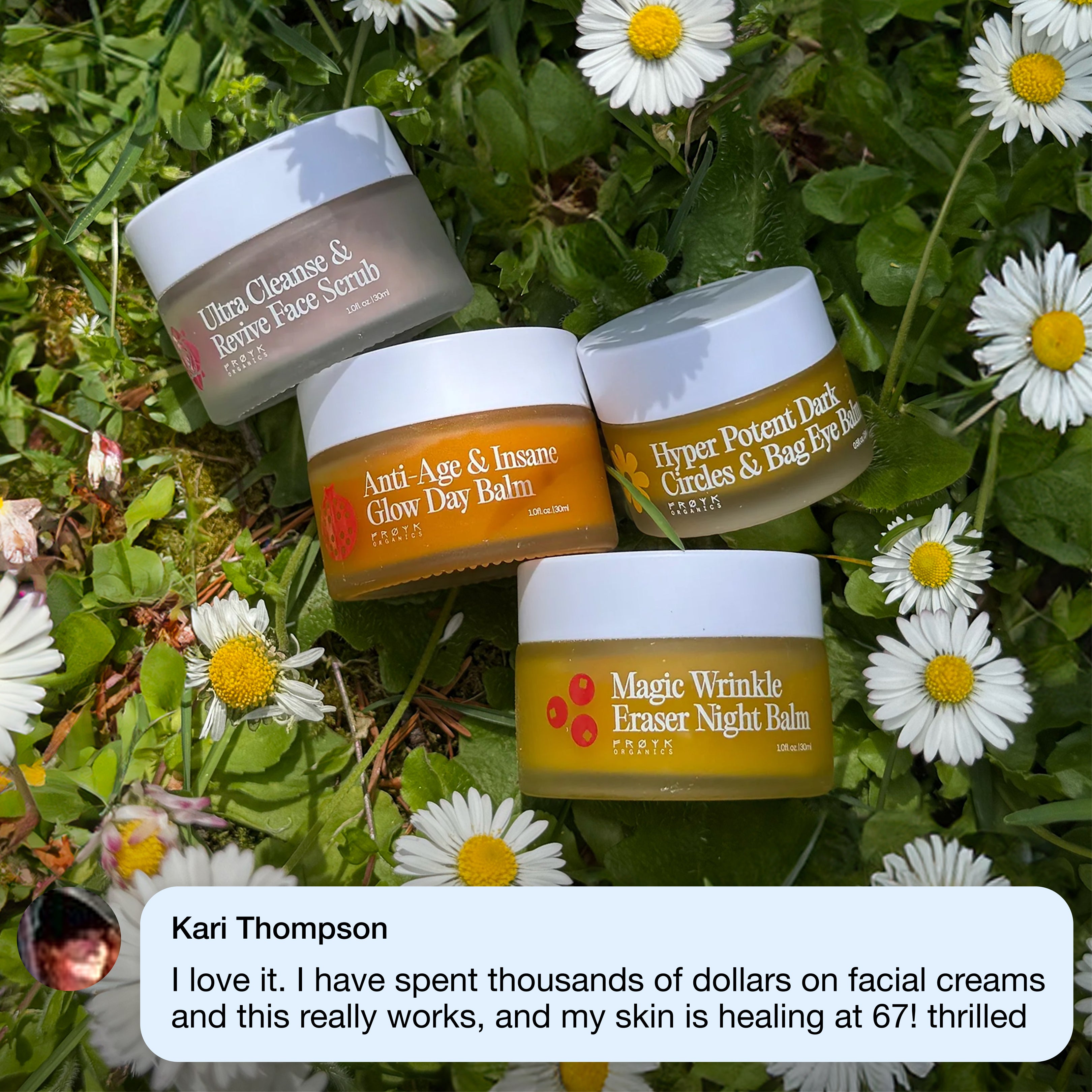
Arktische Wildpflanzen und Bio-Bienenwachs. Kein Wasser, kein künstliches Aroma. Vier Balsame, die den Antioxidanzien- und Barriereschutz bieten, auf den Mariendistel hinweist, gestützt durch eine 60-Tage-Geld-zurück-Garantie.
Kaufen Sie das System HEUTEHäufig gestellte Fragen
Was bewirkt Mariendistel für Ihr Gesicht?+
Ist Mariendistel gut für reine Haut?+
Hilft Mariendistel, die Haut zu straffen?+
Ist Mariendistel gut bei Rosazea?+
Ist die Anwendung von Mariendistel sicher?+


