

 Account


Rosehip oil is cold-pressed from the seeds of Rosa canina, the wild dog rose native to Northern Europe. Unlike many botanical oils, it has been studied in peer-reviewed clinical trials, not just traditional medicine literature. Its documented profile includes two essential fatty acids that the skin cannot synthesize on its own, a naturally occurring form of vitamin A, and a measurable antioxidant load. For women navigating the skin changes that come with perimenopause and beyond, that combination matters. Here is what the research actually shows about rosehip oil benefits and what it can realistically do for mature skin.
Most guides either oversell rosehip seed oil as a miracle or reduce it to vague claims. The real evidence sits in clinical data that most articles never cite. A 2025 pilot study published in MDPI Cosmetics found visible wrinkle reduction in middle-aged and older participants after just five weeks of daily topical use. That is specific, measurable, and recent.
Rosehip oil works through multiple mechanisms simultaneously, not just one. It is not retinol. It is not trying to be. For mature skin dealing with collagen loss, hyperpigmentation, chronic dryness, and accumulated sun damage all at once, that multi-mechanism profile is exactly what makes it worth your attention.
We’re Frøya Organics. Wild Arctic Rosa canina (dog rose) is a hero ingredient in our botanical formulas. When we reviewed the clinical evidence, we found an ingredient that earned its place through data. Here are nine mechanisms you can verify.
1. Reduces Fine Lines and Wrinkles: Clinical Evidence for Visible Results
Most anti-aging ingredients do one job. They either build collagen or protect the collagen you still have. Rosehip oil does both simultaneously, and there are clinical numbers behind that claim.
The MDPI 2025 pilot tracked 27 participants applying rosehip oil topically every day for five weeks. Middle-aged and older participants showed the strongest wrinkle reduction - which is exactly the opposite of what you would expect from a mild moisturizer.
A separate 2015 randomized controlled trial (PMC4655903) studied 34 adults aged 35 to 65 over eight weeks and found significant reductions in crow’s feet appearance (P<0.05), along with increased skin moisture and elasticity. One caveat: that study used oral rosehip powder, not topical oil. The fibroblast mechanisms overlap, but the delivery route matters and you deserve to know the difference.
The age range in these studies (35 to 65) maps directly to the audience most likely to benefit. These results were measured on mature skin, not extrapolated from younger participants. Expect visible changes in five to eight weeks of consistent daily use. Not overnight, but measurably.
2. Supports Collagen Production When Your Skin Needs It Most
This is where rosehip oil benefits for aging skin become more than a buzzword. Trans-retinoic acid, a natural form of vitamin A present in rosehip oil, activates fibroblasts - the same cells a dermatologist targets with prescription retinoids.
Building new collagen matters less if existing collagen is being broken down just as fast. Rosehip oil inhibits MMP-1, the primary enzyme responsible for collagen degradation. This dual action is especially critical for skin over 40, where degradation outpaces production every year.
Potency is also sensitive to storage. Cold-pressed rosehip oil can lose a significant portion of its carotenoid content if stored improperly, so keep it in a dark amber bottle, away from heat and sunlight, and use it within the stated shelf life. Refrigeration extends potency further. Source and storage both matter.
Best for: Women in perimenopause or menopause experiencing visible skin thinning or loss of firmness. Skip if: you are already on prescription retinoids. Consult your dermatologist before layering vitamin A sources.
3. Fades Hyperpigmentation and Age Spots Through Two Distinct Pathways
Every rosehip oil article says it “helps with dark spots.” Almost none explain the two completely different mechanisms working in parallel, or why understanding them changes how you use the oil.
Pathway two - Tyrosinase inhibition: Retinoids in rosehip oil inhibit tyrosinase, the enzyme directly responsible for creating melanin. Lycopene and beta-carotene add brightening properties through a separate biochemical route. Two pathways, one oil.
An honest caveat: the 2025 MDPI study found that pigmentation results were mixed. Some participants saw clear improvement. Others experienced a slight increase. Rosehip oil benefits many skin tones when it comes to hyperpigmentation, but it is not a guaranteed solution for everyone.
During menopause, hormonal shifts trigger melanin overproduction across large areas of skin. A multi-pathway approach matters more at this stage. Give it at least eight weeks of consistent nightly use before judging results, and always pair with SPF 30+. UV exposure triggers the same melanin pathways you are trying to calm.
4. Delivers Deep Hydration and Repairs Your Skin Barrier Without Greasiness
If moisturizer alone stopped cutting it somewhere around your 40th birthday, there is a biological reason. Declining estrogen reduces your skin’s ability to retain moisture at the structural level. Surface hydration is no longer enough. Your skin barrier itself needs repair.
The concern you probably have: will it feel greasy? No. Rosehip oil has a comedogenic rating near 0 to 1 on a scale of 0 to 5. It absorbs quickly as a dry oil and leaves no greasy residue. For mature skin that craves deep moisture but recoils at the thought of a heavy layer, this profile is ideal.
One practical tip that makes a real difference: apply rosehip oil to slightly damp skin. The moisture on the surface improves absorption and amplifies hydration. Heavy creams sit on top. Hyaluronic acid pulls water in. Rosehip oil rebuilds the barrier that keeps moisture from escaping.
5. A Gentler Alternative to Retinol for Sensitive and Mature Skin
“Nature’s retinol” is rosehip oil’s most popular nickname, and its most misleading one. The nuance matters more than the branding, and it is more useful to you.
But here is why that matters less than you think. For women with rosacea, eczema-prone skin, or a history of retinol sensitivity, rosehip oil provides directionally similar benefits - cell turnover support, collagen stimulation, texture softening - at a pace skin can actually handle. No peeling. No purging. No mandatory sunscreen escalation beyond what you should already be wearing.
Board-certified dermatologist Dr. Nicole Y. Lee puts it precisely: rosehip oil’s antioxidants, essential fatty acids, and vitamins “help nourish and protect the skin while promoting hydration, softening texture, and supporting a healthy skin barrier.”
One additional point for women navigating perimenopause: unlike retinol (contraindicated in pregnancy), rosehip oil is generally considered safe during pregnancy, making it one of the few vitamin A sources available at that time. Call it retinol’s gentler cousin - not its replacement.
6. Calms Inflammation and Soothes Reactive Skin Conditions
Skin that never used to react to anything now flares at the slightest provocation. If that sounds familiar, hormonal changes after 40 are likely dialing up your inflammatory response, and harsh anti-aging actives can make it worse.
The conditions that respond best include rosacea, psoriasis, eczema, and general skin sensitivity - all of which tend to worsen around menopause. But the mechanism goes deeper than symptom relief. A 2019 study published through Thieme Connect found that rosehip oil helps macrophages (your immune system’s first responders) switch from inflammation mode to healing mode faster after skin damage. This cellular-level shift explains why rosehip oil calms active flares rather than just temporarily masking redness.
Rosehip oil absorbs quickly without blocking pores, making it suitable even for reactive skin that cannot tolerate heavier occlusive products. For consistent results, nightly application works better than occasional heavy use.
7. Repairs Scars and Supports Skin Recovery at the Cellular Level
Rosehip oil does not just soften scars cosmetically. It changes how your immune cells respond to skin damage, steering them from inflammation toward active repair.
The cellular mechanism: when skin is damaged, macrophages flood the area in inflammatory mode, which is necessary for fighting infection. But if they stay in that mode too long, the result is excessive scar tissue. Rosehip oil helps macrophages transition from inflammatory mode to healing mode sooner, reducing the overproduction of scar tissue while supporting regeneration of healthy skin. This macrophage modulation mechanism was confirmed in the same 2019 Thieme Connect study referenced in section 6.
Set realistic expectations. Scar color and surface inflammation respond well to rosehip oil. Deep textural scarring (pitted acne scars, for example) may need professional treatment alongside topical care. Apply two to three drops directly to the scar twice daily for at least 12 weeks. Press rather than rub - you want absorption, not friction on healing tissue. Follow with SPF 30+ during the day to prevent scar darkening from UV exposure.
8. Provides Antioxidant Protection Against Sun Damage and Photoaging
Every decade of sun exposure compounds. Rosehip oil cannot undo 40 years of UV damage overnight, but its antioxidant profile can interrupt the photoaging cycle while repairing what it can.
The MDPI 2025 study found that UV spots declined in participants who used rosehip oil topically for five weeks, suggesting photoprotective effects attributable to its high vitamin A and carotenoid content. A 2024 PMC review confirmed that rosehip’s carotenoids, phenolics, and antioxidants “can slow the aging process by promoting cell turnover and antioxidant renewal.”
One critical caveat: the vitamin A in rosehip oil increases your skin’s sensitivity to UV light. SPF 30+ is non-negotiable when using rosehip oil, especially in the morning. Layer rosehip oil under your sunscreen for antioxidant support that complements your UV filters. Never use rosehip oil as a sunscreen substitute.
9. Addresses All Four Menopausal Skin Concerns in One Ingredient
Menopause does not change your skin in one way. It changes it in four ways simultaneously. And most skincare addresses one concern at a time, which is why your routine keeps growing and your results keep shrinking.
Rosehip oil maps to each concern through distinct mechanisms. For collagen: vitamin A stimulates production while MMP-1 inhibition protects what remains. For hyperpigmentation: retinoids and lycopene inhibit tyrosinase, while linoleic acid corrects the fatty acid imbalance driving melanin overproduction. For dryness: essential fatty acids restore the moisture barrier at the structural level. For sun damage: vitamins A and E deliver synergistic antioxidant defense against photoaging.
When skin changes are multi-factorial, addressing one pathway at a time creates a product-layering spiral. You end up with a 10-step routine where each product tackles one concern and potentially irritates skin that is already struggling. Rosehip oil’s multi-active profile simplifies the approach while targeting root causes rather than symptoms.
The practical application is straightforward: two to three drops on slightly damp skin, morning and evening. It works as a standalone oil or mixed into your existing moisturizer. As a dry oil, it absorbs fully without residue. Best for: Women in perimenopause or menopause who want to simplify their routine without sacrificing results. Skip if: you have active cystic acne - treat that first.
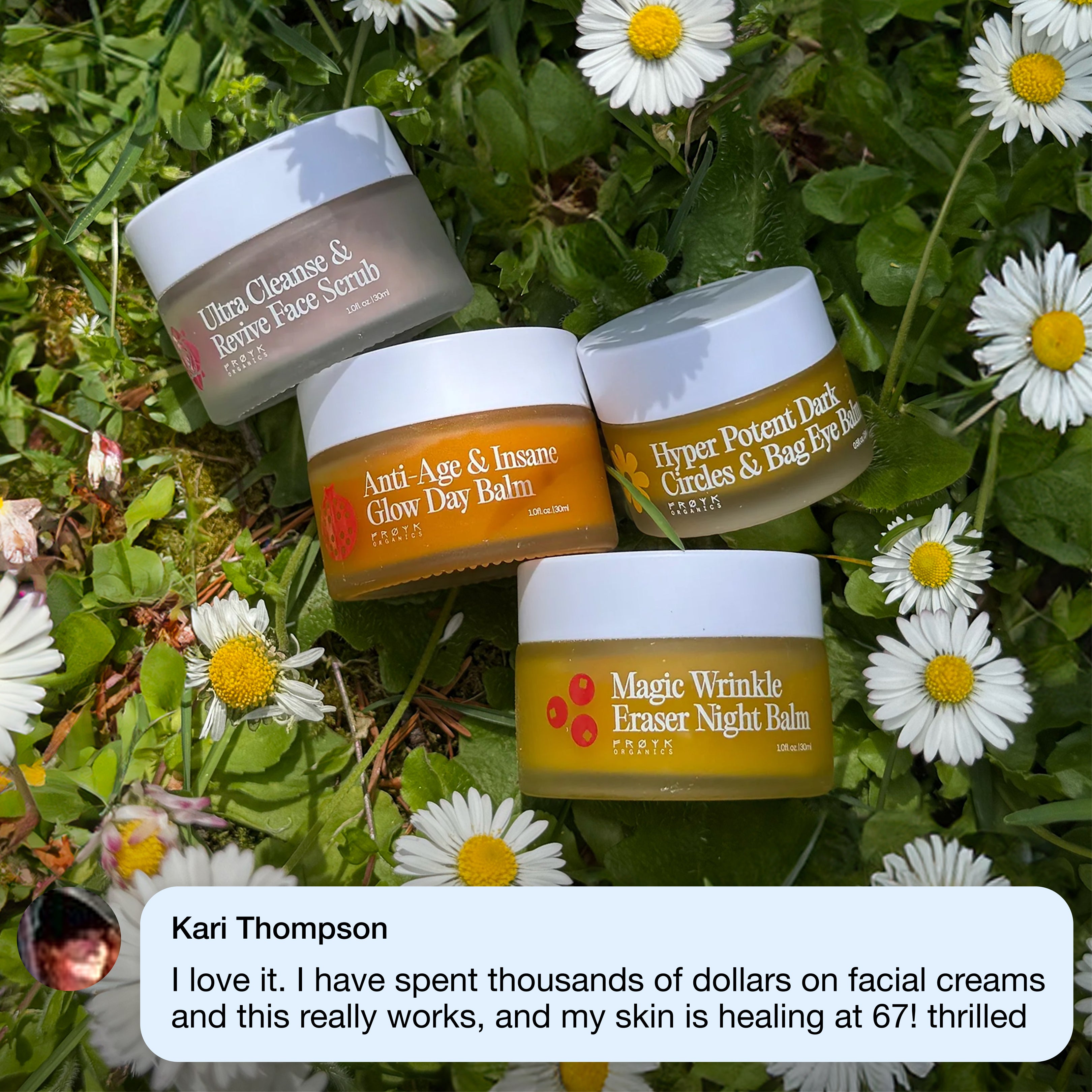
100% botanical actives. Sea buckthorn as the foundation. Zero water, zero synthetic preservatives. Rated 4.66/5 from 3,152+ reviews. 60-day money-back guarantee.
Shop the System - $119


