

 Account


Most skincare studies recruit women in their 20s and 30s, then assume the results apply to everyone. A 2024 randomized controlled trial from the University of Florida flipped that assumption. Women over 40 who took cranberry polyphenols for six weeks showed measurable improvements in skin elasticity, smoothness, and UV resilience. Younger women in the same trial showed no response at all.
That result matters if you’re navigating the skin changes that come after 45. Cranberry extract benefits for mature women over 45 are uniquely matched to this biology. The active compounds in cranberry target the exact mechanisms behind post-45 skin decline: glycation damage, collagen-degrading enzymes, sluggish cellular repair, and a shifting skin microbiome. None of these are addressed by a generic multivitamin or another jar of retinol cream.
Here are eight specific, skin-focused benefits backed by clinical research, plus how to choose the right form and dose.
1. Clinically Proven Skin Elasticity and Smoothness (in Women Over 40)
The 2024 University of Florida study is the strongest evidence for cranberry extract benefits for mature women over 45. The details of the trial design make the results especially convincing, and the biomarker data explains why older skin responds so differently.
The crossover design is critical to interpreting these results. Every participant served as her own control, receiving both the cranberry and the placebo at different times. That eliminates individual variation as a confounding factor and gives the results more statistical weight than a standard parallel-group trial of the same size. When the same woman shows improvement on cranberry and no improvement on placebo, genetic and lifestyle differences are no longer alternative explanations.
The part that makes this study unusual: younger women in the same trial showed no measurable improvements. The researchers concluded that older women benefit more because they have “declined skin health and antioxidant functions due to aging.” As skincare specialist Lindsey Walsh of Juventude Skincare puts it, the “effects are most pronounced in women over 40 because older skin experiences more baseline oxidative stress and inflammation, so polyphenol supplementation provides measurable uplift that simply isn’t needed in younger, intact skin.”
The trial also measured internal antioxidant markers, and the age-specific pattern held. Women over 40 showed the strongest improvements in glutathione peroxidase (GPx) activity, one of the body’s key defenses against oxidative damage. Superoxide dismutase (SOD) activity increased across the cranberry group, while TNF-alpha, an inflammatory marker, decreased. The GPx finding is notable because glutathione peroxidase protects cell membranes from lipid peroxidation, a process that accelerates visibly after menopause.
That’s a rare thing in skincare ingredients: the clinical evidence comes from your age group, not extrapolated from 25-year-olds. Set the expectation: results appeared at the six-week mark with consistent daily intake, not overnight.
2. Reverses Collagen Glycation Damage (Not Just Prevents It)
You’ve been taking collagen for years, but your skin still feels less bouncy than it used to. The problem may not be collagen quantity. It may be that your existing collagen is being slowly caramelized from the inside.
After 45, this damage compounds because declining estrogen disrupts glucose metabolism in skin tissue, accelerating AGE formation at exactly the time your body is least equipped to handle it. The perimenopause collagen loss rate of 30% over five years means you’re losing collagen quantity while the remaining collagen is simultaneously losing quality through glycation.
A 2022 study published in the Journal of Agricultural and Food Chemistry found that cranberry polyphenols inhibit AGE formation and break existing AGE crosslinks in collagen. The procyanidin fraction was the most effective component. Georgios Tzenichristos, founder of LipoTherapeia with over 25 years of clinical experience and more than 20,000 patient sessions, confirms that cranberry procyanidins “not only prevent glycation but also REVERSE it.”
That dual action, prevention plus reversal, is rare among polyphenol sources. Most antioxidants can slow glycation. Very few can undo damage that has already locked into the collagen matrix. This is one of the cranberry extract benefits for mature women over 45 that distinguishes it from other berry supplements: it addresses damage that has already accumulated, not just future damage.
The practical takeaway: cranberry extract and collagen supplements are complementary, not redundant. Collagen adds new fibers. Cranberry protects and repairs the ones you already have. One important caveat: commercial cranberry juice with added sugar actively worsens glycation. The sugar in the drink creates more AGEs than the polyphenols can undo. Stick to unsweetened forms or standardized supplements.
3. Dual-Action Collagen Protection: Blocks Breakdown and Boosts Production
Every berry has antioxidants. Cranberry contains a molecular structure found in almost no other fruit, one that does something to collagen-degrading enzymes that blueberries and acai cannot.
The compounds responsible are A-type proanthocyanidins, or A-type PACs. Most berries contain B-type PACs, which have a different molecular linkage and a weaker enzyme-inhibiting profile. A-type PACs are found almost exclusively in cranberry. A 2025 review found that PAC dimers and trimers are the most effective fraction for inflammatory skin conditions, including atopic dermatitis and psoriasis. This means cranberry’s A-type PAC structure delivers targeted anti-inflammatory activity that B-type PACs from other berries simply cannot match.
MMPs (matrix metalloproteinases) are enzymes that actively dismantle collagen and elastin. Your body needs some MMP activity for normal tissue remodeling. After 45, MMP activity ramps up due to cumulative UV exposure and declining estrogen. The demolition crew is working overtime while the construction crew is on break.
As Lindsey Walsh notes, the A-type PAC structure is unique to cranberry, and it’s that structure driving superior MMP inhibition compared to B-type PACs found in blueberry, grape seed, or acai. Oral cranberry extract, standardized for PAC content, addresses systemic MMP activity throughout the body. Topical products can only reach the outermost layers. If you want to protect collagen at the dermal level where it actually lives, oral delivery is the more direct route.
4. UV Photoprotection from the Inside Out
You wear SPF daily. But your skin still flushes and reddens more easily than it did ten years ago. That’s not the sunscreen failing. It’s your skin’s internal antioxidant defense weakening with age.
UV radiation generates free radicals that overwhelm the skin’s antioxidant reserves. After 45, those reserves are already depleted by declining estrogen and decades of accumulated oxidative stress. The same UV exposure that your skin handled easily at 30 now causes more redness, more inflammation, and more cumulative damage. Your SPF blocks UV photons at the surface, but it does nothing to replenish the depleted antioxidant pool inside the skin cells.
The polyphenols circulate systemically after oral intake and concentrate in skin tissue, creating a baseline antioxidant buffer in the dermal layer that sunscreen alone cannot provide. Picture your typical Tuesday: 20 minutes of incidental sun walking to the car, running errands, sitting near a window. SPF handles the direct UV. Cranberry extract strengthens the internal response to whatever gets through.
Cranberry extract is not a sunscreen replacement. Pair it with broad-spectrum SPF 30 or higher for compounded protection. Apply sunscreen on the outside, build your antioxidant reserves on the inside.
5. Activates Cellular Cleanup (Mitophagy) in Aging Skin Cells
Your skin cells have a built-in recycling program that clears out damaged internal components and rebuilds from within. After 45, this program slows to a crawl. Cranberry extract can restart it.
The process is called mitophagy. Your cells contain hundreds of mitochondria, the tiny structures that generate energy. When a mitochondrion malfunctions, it starts leaking free radicals instead of producing clean energy. Mitophagy is the cell’s quality-control system: it identifies broken mitochondria, breaks them down, and recycles the parts into raw materials for building new, functional ones.
A 2024 study published in Food Research International found that cranberry extracts induced mitophagy in human fibroblasts. The flavonol fraction was effective at concentrations as low as 0.4 micrograms per milliliter. These are physiologically achievable concentrations from oral supplementation, not abstract lab-only doses.
Think of mitophagy as spring cleaning for your skin cells. Cranberry extract helps cells clear the clutter so they can get back to producing collagen and elastin efficiently. Most skincare ingredients work on the surface or provide raw materials. Mitophagy activation works at the root: it improves the functional capacity of the cells that build your skin. When fibroblasts clear their damaged mitochondria, they produce more collagen and generate fewer free radicals. The cell itself works better.
This benefit won’t appear on a product label, and you won’t see it in the mirror after one dose. But it explains why consistent cranberry supplementation improves skin quality over weeks rather than days. The cells need time to clear the backlog, rebuild their mitochondrial fleet, and ramp up collagen output with renewed energy.
6. Supports Your Skin Microbiome and Barrier Lipids
What you eat changes which bacteria live on your skin. And those bacteria directly influence how much ceramide your skin produces.
Ceramides are the lipid molecules that hold skin cells together like mortar between bricks. When ceramide production drops, the skin barrier weakens. Water escapes. Irritants get in. The result is the dryness, sensitivity, and fine lines that so many women notice after menopause. Hormonal shifts after 45 alter the skin’s bacterial community, often reducing the species that support barrier function. This isn’t just cosmetic. A compromised skin barrier triggers a cycle of irritation and inflammation that accelerates visible aging.
A sub-analysis of the 2024 cranberry RCT revealed something unexpected. Oral cranberry supplementation changed the bacterial populations living on participants’ facial skin. Specifically, it increased Rothia mucilaginosa, Cutibacterium granulosum, and Staphylococcus epidermidis. Each of these bacteria plays a distinct role: Cutibacterium granulosum stimulates immune function and protects the skin barrier, while Propionibacterium species help maintain the acidic skin pH that keeps harmful bacteria in check.
The S. epidermidis finding is the standout result. S. epidermidis levels were positively correlated with ceramide content in the skin. More of this bacterium meant more ceramide, which meant a stronger, more resilient skin barrier. This is an oral-to-skin pathway: consuming cranberry polyphenols reshaped the skin’s bacterial landscape from the inside.
Cranberry extract benefits for mature women over 45 include this systemic route that most topical approaches miss entirely. Nourish the bacteria that produce your skin’s own ceramides, rather than applying ceramides from the outside. If you’re experiencing new-onset skin sensitivity or persistent dryness that topical products alone aren’t resolving, the problem may be in the bacterial ecosystem your skin depends on. Rebuilding it from the inside takes consistent daily intake over several weeks, but it addresses the root cause rather than layering on another Band-Aid.
7. Reduces Skin Inflammation Through the Gut-Skin Axis
If your skin has become more reactive, red, or sensitive since your mid-40s, the trigger may not be on your skin at all. It may be in your gut.
The gut-skin axis is the bidirectional communication pathway between your digestive system and your skin. When the gut barrier is compromised, inflammatory molecules enter the bloodstream and circulate to skin tissue. The result is persistent redness, increased sensitivity, and accelerated aging that no topical cream can fully address. After 45, estrogen decline weakens both the gut barrier and the skin barrier simultaneously. Systemic inflammation rises. Skin that was once resilient starts reacting to products, weather changes, and stress in ways it never did before.
Cranberry polyphenols increase populations of three key gut bacteria: Akkermansia muciniphila, Bifidobacterium, and Lactobacillus. Akkermansia is a keystone species for gut barrier integrity. It strengthens the mucus layer lining the intestinal wall and helps regulate systemic inflammation. Bifidobacterium and Lactobacillus produce short-chain fatty acids that further support barrier function. When the gut barrier tightens, fewer inflammatory molecules reach the bloodstream. Less systemic inflammation translates directly to less skin redness and less reactivity.
This connects to the 2024 RCT findings. The reduced UV-induced erythema and decreased TNF-alpha levels measured in that trial are consistent with lower systemic inflammation. The skin wasn’t just better protected on the surface. It was less inflamed from within. If you’ve tried every calming serum on the market and your skin is still reactive, the missing piece may be gut barrier repair, not another topical layer.
8. Phytoestrogen-Free: Safe for Hormone-Sensitive Women
If you’ve been avoiding berry-based supplements because of phytoestrogen concerns, cranberry extract is the clear exception.
Many plant polyphenols interact with estrogen receptors. Soy isoflavones, red clover, and flaxseed lignans all contain phytoestrogens that mimic estrogen in the body. For women with a history of hormone-sensitive conditions, or women who prefer to avoid any hormonal interference, these supplements require careful vetting with a healthcare provider. That extra step stops a lot of women from exploring botanical skin support at all.
This makes cranberry extract one of the few evidence-backed skin supplements women 45 and older can take regardless of hormonal status, family history, or current medications, with one class of exceptions. Cranberry extract may interact with warfarin and other blood thinners. High-dose cranberry can also increase oxalate levels, which matters if you’re prone to kidney stones. Talk to your doctor if either applies.
There’s a dual benefit worth noting for post-menopausal women. UTI risk increases sharply after menopause because estrogen decline reduces protective vaginal bacteria. The same cranberry PACs that support skin health also reduce UTI recurrence by 25–30%. One supplement addresses two post-menopausal concerns through the same active compounds.
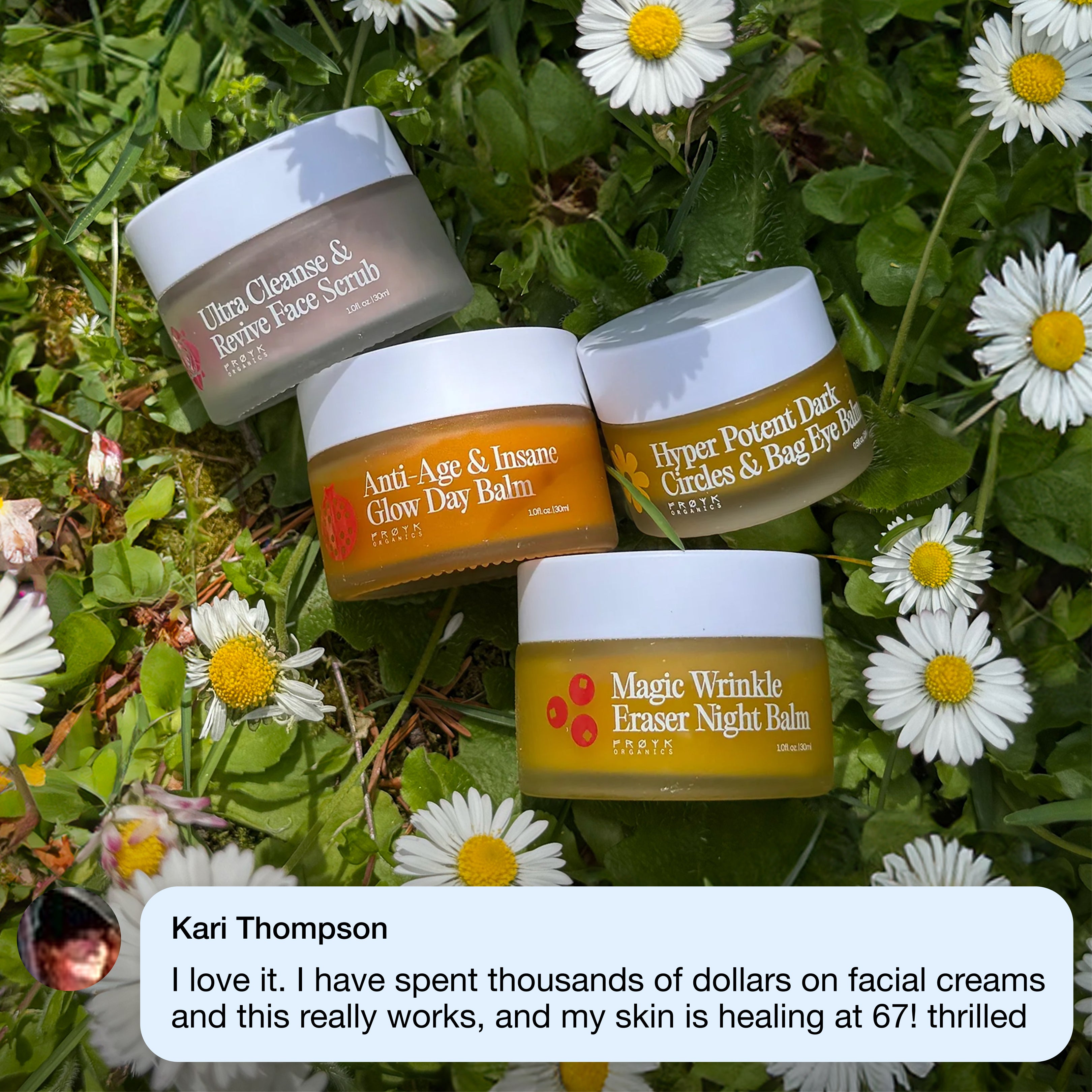
100% botanical actives. Sea buckthorn as the foundation. Zero water, zero synthetic preservatives. Rated 4.66/5 from 3,152+ reviews. 60-day money-back guarantee.
Shop the System - $119Choosing the Right Form: Supplement vs. Juice vs. Topical vs. Powder
You know what cranberry extract can do for your skin. Here’s exactly how to get the right dose in the right form.
Standardized cranberry extract supplement (capsule). This is the most precise option. Look for products that list BL-DMAC standardization on the label. BL-DMAC is the gold standard method for measuring proanthocyanidin content, and it’s the only reliable way to verify potency. The 2024 skin trial used approximately 192.9 mg procyanidins per day. Most commercial cranberry supplements are standardized for UTI prevention at just 36 mg PAC per day, which is likely under-dosed for skin benefits. Georgios Tzenichristos recommends Cysticlean (240 mg PAC per capsule) as a reliable high-dose option. Another product, Oximacro, delivers 112 mg extract with 36 mg PAC-A per serving.
Not-from-concentrate (NFC) cranberry juice. Must be unsweetened, 100% juice. NFC juice delivers about 23 mg PAC per 100 mL, compared to just 8.9 mg in juice made from concentrate. The critical distinction: commercial cranberry juice cocktail with added sugar actively worsens glycation, counteracting the AGE-reversal benefit you’re trying to achieve. Read the label. If sugar is listed as an ingredient, put it back. For context, canned jellied cranberry sauce contains just 1.1 mg anthocyanin per 100 g, compared to 15 mg in fresh cranberries.
Freeze-dried cranberry powder. Freeze-drying preserves PAC content with zero processing losses. This is the best non-supplement option for women who prefer whole-food formats. Add it to smoothies, yogurt, or a daily beauty drink.
Topical cranberry skincare. Provides local antioxidant protection at the skin’s surface. No RCT data exists for skin outcomes from topical cranberry alone. Best used as a complement to oral intake, not a replacement for it.
Dosage guidance for skin benefits:
- Target approximately 192.9 mg procyanidins per day (the RCT dose)
- Allow six or more weeks for visible results
- BL-DMAC standardization on the label is the only reliable measure of what you’re actually getting
The most complete approach: an oral standardized supplement for systemic benefits, paired with a topical cranberry product for surface-level antioxidant support.


