

 Account


Die blos op je wangen die onuitgenodigd verschijnt en veel langer aanhoudt dan bij iedereen anders? Een goede rozaceabalsem is hoe je het kalmert.
Een rozaceabalsem is een formule om roodheid te verminderen, irritatie te sussen en gevoelige, reactieve huid te ondersteunen. Rosacea treft naar schatting 5% van volwassenen wereldwijd, en het verschijnt vaak op rijpere huid die met de jaren reactiever is geworden. Er is geen genezing voor, maar de juiste balsem houdt het dag in dag uit kalm en comfortabel.
Dit is het gedeelte dat de meeste mensen missen. De beste resultaten komen vaak voort uit zachte, barrièreondersteunende verzorging, niet uit het sterkste ingrediënt op de plank. Dat is het idee achter een plantaardige balsem met calendula en biologische bijenwas die de roodheid aan de bron kalmert, in plaats van het af te dwingen met harde ingrediënten.
In deze gids leer je wat rosacea echt is, wat een uitbarsting veroorzaakt, wat dermatologen voorschrijven, en hoe een zachte natuurlijke aanpak in je routine past.
Belangrijkste Punten
- Rosacea is een langdurige huidaandoening, dus het doel is kalmte en controle, niet genezing.
- Gezichtsroodheid is het meest voorkomende teken, vaak met opvliegers, puistjes en zichtbare bloedvaten.
- Een zwakke huidbarrière veroorzaakt rosacea, dus barrièreondersteuning is centraal voor het kalmeren van de huid.
- Receptuurcrèmes werken, maar brengen vaak bijwerkingen met zich mee zoals droogheid en irritatie.
- Een zachte, plantaardige rozaceabalsem kalmert roodheid op de meeste huidtypes zonder harde ingrediënten.
Wat Is Rosacea?

Rosacea is een langdurige huidaandoening die roodheid naar het midden van je gezicht brengt, vooral je wangen, neus en kin. Het komt en gaat in uitbarstingen, waarbij je huid roder, warmer en gevoeliger wordt dan normaal.
Er zijn vier hoofdtypes, en je kunt meer dan één hebben. Volgens Cleveland Clinic's gids voor rosacea variëren deze van aanhoudende gezichtsroodheid met zichtbare bloedvaten tot acneachtige puistjes, tot huid die in de loop der tijd verdikt, tot oogirritatie.
Het treft het meest vrouwen en begint meestal na je 30e, daarom overlapt het zo vaak met rijpere huid. Op bruine en zwarte huid kan de roodheid moeilijker zichtbaar zijn, dus let ook op zwelling, gezichtsstekingen en droge-looking huid. Welk type je ook hebt, een zachte balsem zoals de Dagbalsem voor de Onzuivere Huid is gemaakt om de roodheid die ze delen te kalmeren.
Rozaceasypmtomen Die Je Herkent
Roodheid is het meest voorkomende rozaceasypmtoom, maar het komt zelden alleen voor. Het goed beheren van rosacea begint met het kennen van je eigen primaire symptomen.
Dit is hoe rosacea er meestal uitziet en voelt:
- Aanhoudende gezichtsroodheid die op een zonnebrand lijkt die niet weggaat
- Opvliegers die snel verschijnen en in de loop der tijd aanhoudend kunnen worden
- Acnepuistjes en zichtbare bloedvaten over het centrale gezicht
- Gezichtsstekingen, jeuk of huid die zich strak aanvoelt
- Droge-looking huid en ruwe textuur in de getroffen gebieden
Andere symptomen kunnen oogirritatie en vergrote poriën zijn. Als je huid reageert op dingen waar het vroeger niet op reageerde, is die lagere tolerantie de moeite waard om op te letten.
Wat Veroorzaakt een Rozaceauitbarsting
Een rozaceauitbarsting gebeurt wanneer iets je huid irriteert of de kleine bloedvaten in je gezicht verwijdt. Het leren kennen van je eigen triggers is een van de nuttigste dingen die je kunt doen.
De gewone zijn goed gedocumenteerd. Cleveland Clinic noemt deze onder de gebruikelijke verdachten:
- UV-licht en blootstelling aan de zon, een van de meest voorkomende triggers
- Hoge en lage temperaturen, plus koude wind
- Alcohol, pittige voeding en hete dranken
- Stress en sterke emoties
Symptomen verergeren zich vaak met blootstelling aan de zon en stress tegelijk. Je hoeft je niet binnen te verstoppen, je wilt alleen branden vermijden en de triggers beheren die je kunt controleren.
Waarom Je Huidbarrière Zoveel Uitmaakt

Rosacea is nauw verbonden met een verzwakte huidbarrière, daarom kalmert barrièreondersteuning het. Wanneer je barrière beschadigd is, verliest het water sneller en laat irritanten gemakkelijker door.
Een overzicht uit 2024 over rosacea en de huidbarrière, gepubliceerd in het tijdschrift Pharmaceuticals, stelt dit duidelijk uit. De onderzoekers noemen barrièredisfunctie een kenmerk van rosacea, gemarkeerd door hoger waterverlies door de huid, lagere hydratatie en een verhoogde huid-pH. In duidelijke bewoordingen: rozaceahuid worstelt om vocht vast te houden en irritanten buiten te houden, wat de cyclus van roodheid gaande houdt.
Datzelfde overzicht maakt ook het praktische punt. De auteurs zeggen dat barrièreherstelnde verzorging onderdeel moet zijn van het beheren van rosacea, omdat een sterkere barrière zowel ontsteking kalmert als het verminderen van hoeveel irriterende deeltjes erin kunnen.
Dit is waarom een goede moisturizer hier zoveel uitmaakt. Barrièreherstellende moisturizers zijn een kernonderdeel van dagelijkse rozaceazorg, en onderzoeken tonen aan dat ze comfort en de resultaten die je uit behandeling krijgt kunnen verbeteren. Een rijke, plantaardige balsem sluit vocht in en kalmert het oppervlak, waardoor je barrière de rustige ondersteuning krijgt die het nodig heeft.
Als je het volledige beeld wilt, dit gids over het natuurlijk herstellen van een beschadigde huidbarrière maakt het duidelijk.
Wat Dermatologen Voorschrijven voor Rosacea
Dermatologen behandelen rosacea met receptuurcrèmes, gels en soms pillen, afgestemd op je symptomen. De beste behandeling hangt ervan af of je voornaamste probleem roodheid, opvliegers of puistjes zijn.
Dit is de korte versie, ontleend aan Mayo Clinic's gids voor rozaceabehandeling:
- Brimonidine en oxymetazoline verminderen gezichtsroodheid door bloedvaten te vernauwen, met resultaten binnen 12 uur na gebruik.
- Azelaïnezuur en metronidazol zijn topische medicijnen die puistjes en roodheid kalmeren, met resultaten in 2 tot 6 weken.
- Ivermectine heeft anti-ontstekings- en antiparasitaire eigenschappen voor ontstekingspuistjes.
- Orale antibiotica zoals doxycycline worden gebruikt voor ernstiger rosacea met puistjes en pukkels.
- Voor ernstige rosacea die niet op andere opties reageert, kan een dermatoloog sterkere orale medicatie voorschrijven.
- Laserbehandeling kan opvliegers verminderen en zichtbare bloedvaten verkleinen.
Deze kunnen goed werken voor matige rosacea, dus een dermatoloog is het waard om op te zoeken als je symptomen hardnekkig zijn. Toch geneest geen balsem rosacea, en symptomen keren vaak terug als je stopt. Veel van deze actieve ingrediënten brengen ook droogheid, stekingen of erger roodheid in het begin met zich mee, wat moeilijk is voor al gevoelige huid, en dat is waar zachte dagelijkse verzorging haar plaats verdient.
Een Zachte Natuurlijke Aanpak voor het Kalmeren van Roodheid
Zachte, lage-irritatieverzoging is iets waar elke bron het over eens is, omdat vrij verkrijgbare producten gezondheid van de huid ondersteunen hoewel ze rosacea niet genezen. Dit is de laag die je thuis beheerst, elke dag.
Zachtheid wint hier: Met rosacea wint kalm van sterk. Harde ingrediënten kunnen snelle resultaten afgedwongen, maar triggeren vaak de roodheid en stekingen die je probeert te ontsnappen, terwijl rustgevende planten huid bedaren zonder gevecht.
Sterke ingrediënten kunnen resultaten duwen, maar ze hebben een prijs op reactieve huid. Retinoïden en zuren kunnen al reactieve huid steken en ontsteken, dus veel mensen geven er stilletjes op.
Planten nemen een zachter pad. Calendula en kamille zijn rustgevende ingrediënten met echte anti-ontstekingsbewijzen, en een overzicht van kamillewerking tegen ontsteking stelt dat haar verbindingen onder het huidoppervlak in diepere lagen zinken, wat hen in staat stelt ontsteking oppervlakkig te kalmeren. Je ziet andere rustgevende planten zoals aloe en centella asiatica over de hele categorie, maar het doel is altijd hetzelfde, minder irritatie voor reactieve huid.
Als je de volledige routine wilt, onze gids voor natuurlijke rozaceabehandeling loopt door wat werkelijk roodheid kalmert.
Frøya's Biologische Rozaceabalsem voor Roodheid-gevoelige Huid

De Balsem voor Roodheid is gemaakt om roodheid te kalmeren en je huidbarrière te ondersteunen. Het vertrouwt op arctische planten en biologische bijenwas in plaats van harde ingrediënten, daarom past het bij reactieve huid.
Wat het onderscheidt is de zuivere formule. Er is geen synthetische geur, geen alcohol en geen zuren, en het is niet-comedogeen, dus het werkt op vette, droge, combinatie en gevoelige huidtypes.
Dit is hoe de planten voor roodheid-gevoelige huid werken. Calendula en goudsbloem kalmeren het voorkomen van roodheid, bijenwas ondersteunt de barrière en sluit vocht in, en de rustgevende kracht van calendulaextract voor huid staat centraal in de formule. In plaats van resultaten af te dwingen met sterke ingrediënten, kalmert en ondersteunt de balsem, dus je huid heeft minder om tegen te reageren.
In Frøya's eigen klantgerapporteerde resultaten zag 79% minder acne, roodheid en rosacea. Een kleine vingertopweertje 's avonds is alles wat je nodig hebt op schone, droge huid.
Hoe de Complete Natuurlijke Apotheek samen werkt

De Complete Apotheek voor Gezicht & Lichaam is de set voor roodheid die verschijnt naast eczeem, psoriasis of droge plekken. Het dekt gezicht en lichaam in één doos, met elke balsem die zijn eigen taak doet.
Elke balsem richt zich op een ander probleem, dus samen behandelen ze meer dan één kwestie zonder mengen of layering:
|
Balsem |
Wat Het Doet |
Beste voor |
|
Kalmert gezichtsroodheid en puistjes met calendula en bijenwas |
Roodheid, opvliegers en puistjes in het gezicht |
|
|
Verlicht droge, jeukende plekken met kamille en distel |
Eczeem, psoriasis en droge huid in gezicht en lichaam |
|
|
Soothes smartende gebieden met smeerwortel en arnica |
Pijnlijke gewrichten en spieren |
Als roodheid je enige zorg is, de enkele Stopper is alles wat je nodig hebt. De set is daar voor huid die meer dan één ding tegelijk behandelt.
Het Opbouwen van een Natuurlijke Huidverzorgingsroutine voor Rosacea
Een eenvoudige, consistente routine kalmert rosacea beter dan een plank vol andere producten. Met Frøya is de balsem een op zichzelf staande stap, al gemengd dus er is niets om jezelf te mengen of af te meten.
Houd je dagelijks ritme eenvoudig:
- Gebruik een zachte, niet-irriterende reiniging en dep je huid droog.
- Breng 's avonds een dunne laag balsem aan op schone, droge huid.
- Wacht tot je huid droog is voordat je aanbrengst, dus het stekt minder.
- Blijf consistent, want kalmere huid bouwt op over weken, niet dagen.
Als je make-up draagt, laat de balsem eerst bezinken. Geen layering, geen tien stappen, geen gissen welk product met het volgende botst.
Wat Vermijden Bij Rosacea-gevoelige Huid
Met rosacea komen de snelste winsten vaak voort uit het verwijderen van irritanten, niet het toevoegen van meer producten. Een paar veel voorkomende ingrediënten hebben de neiging uitbarstingen te triggeren.
Let op deze op reactieve huid:
- Alcohol hoog op de ingrediëntenlijst, wat kan uitdrogen en steken
- Kunstmatige geur, een frequente oorzaak van irritatie
- Menthol, kamfer en koelende agentia die fijn voelen maar roodheid uitlokken
- Harde zuren en scrubs die een al fragiele barrière afstropen
Het kiezen van kalmere producten zonder synthetische geur legt druk van je huid af. Om te bepalen wat je huid tolereert, patch-test alles nieuws eerst op je kaak.
Zon, Levensstijl en het Voorkomen van Uitbarstingen
Het beheren van je triggers is de meest betrouwbare manier om uitbarstingen weg te houden, en zonbescherming staat bovenaan de lijst. Zon en levensstijlgewoonten zijn waar de meeste controle zich bevindt.
Een paar gewoonten maken werkelijk verschil:
- Beperk lange perioden in sterke zon, en gebruik schaduw en een hoed
- Voor uitgebreide tijd buiten, een minerale zonnebrandcrème met titaandioxide of zinkoxide helpt je branden te vermijden
- Dermatologen merken vaak op dat minerale zonnebrandcrèmes goed voor gevoelige, rosacea-gevoelige huid werken
- Bedek je gezicht in koude, winderig weer, en let op hoe alcohol, pittige voeding en stress je beïnvloeden
Je hebt geen rigide regelboekje nodig. Kleine, gestage aanpassingen houden je huid kalmer dan welk enkel product ook kan.
Echt, Blijvend Comfort voor Rosacea-gevoelige Huid

Kalme huid gaat niet over één wonderpotje. Het gaat over een zachte routine die je werkelijk volhoudt, op huid die eindelijk stopt met op alles wat je erop zet te reageren.
Dat is waar een plantaardige rozaceabalsem voor is gebouwd. Het werkt om opvliegers en roodheid te verminderen, ondersteunt de barrière die rosacea afsleet, en doet het zonder de steek van sterke ingrediënten.
Je kunt dit zien in de voor-en-na-foto's hierboven, van vrouwen met roodheid-gevoelige huid die een eenvoudige routine hebben aangehouden. Voor-en-na-klantresultaten zeggen meer dan welke belofte we ook zouden kunnen doen. Geef je huid gestage, zachte verzorging, en laat het je tonen hoe kalm eruit ziet.
Disclaimer: Dit artikel is alleen voor algemene informatie en is geen medisch advies. Rosacea is een medische aandoening, dus raadpleeg alstublieft een arts of dermatoloog over diagnose en behandeling die bij je huid past. Frøya Organics-producten zijn plantaardige huidsbalmen, geen medicijnen, en zijn niet bedoeld om een aandoening te behandelen of genezen.
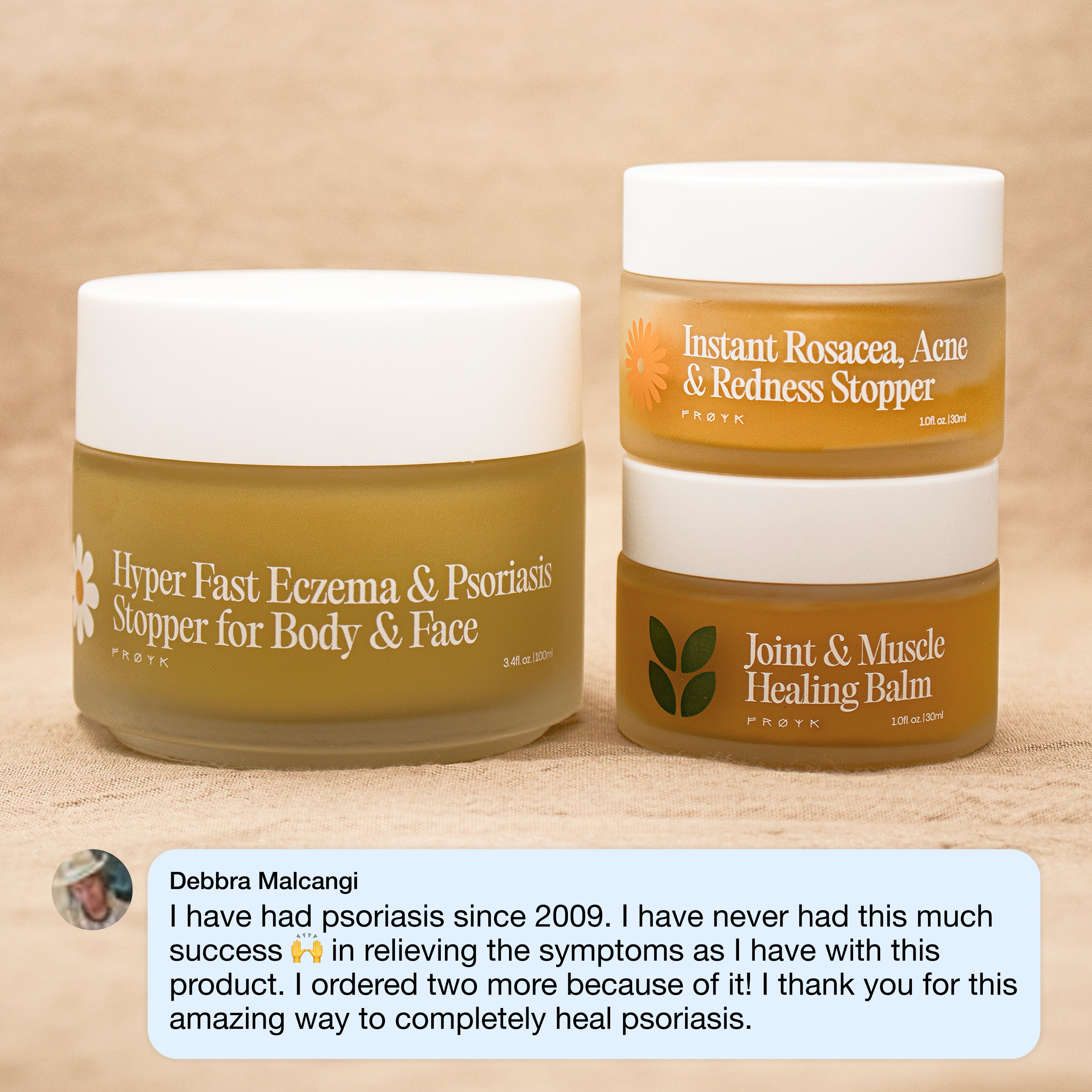
Drie waterloze balmen voor rosacea, eczeem en gewrichtspijn. Wilde arctische planten en biologische bijenwas kalmeren, sluiten en ondersteunen reactieve huid, ondersteund door een 60-dagengarantie met terugbetaling.
Bestel het Systeem VandaagVeelgestelde Vragen
Wat is de grootste trigger van rosacea?+
Wat helpt direct tegen rosacea?+
Wat verhelpt rosacea snel?+
Wat mag je niet op een rosacea-huid gebruiken?+
Wat is de beste crème of balsem om rosacea te verzachten?+
Is een waterloze rosacea-balsem beter voor gevoelige huid?+


