

 Compte


Vous êtes devant le miroir, une lotion tonique d'un côté, un sérum de l'autre, vous vous demandez ce que votre peau veut encore. Voici la réponse simple. Nettoyez d'abord, puis appliquez la lotion tonique, puis le sérum, puis l'hydratant, et sur une peau mature, un sérum fait généralement plus pour vous qu'une lotion tonique.
Après 45 ans, votre barrière cutanée s'amincit et s'assèche. L'étape tonique supplémentaire que de nombreuses routines proposent peut enlever plus qu'elle ne redonne. Ce que votre peau veut vraiment, c'est une routine de soins simple qui traite et protège en un seul geste, pour que votre peau se sente apaisée au lieu d'être tiraillée.
Points clés
- Nettoyage, lotion tonique, puis sérum, puis hydratant est le bon ordre, le produit le plus léger s'appliquant en premier.
- Sur une peau mature, un sérum fait généralement plus qu'une lotion tonique, car il traite les ridules, les taches sombres et la terne.
- Une lotion tonique est facultative après 45 ans, surtout si vous utilisez déjà un nettoyant doux et équilibré en pH.
- Les actifs puissants comme le rétinol, les AHA et l'acide hyaluronique peuvent se retourner contre vous sur une barrière plus fine, causant de la sécheresse, de l'irritation ou une texture rugueuse.
- Une routine plus simple à base de plantes arctiques douces donne généralement à la peau mature de meilleurs résultats avec beaucoup moins de réactivité.
Quelle est la différence entre une lotion tonique et un sérum ?
Une lotion tonique faciale est un liquide fin à base d'eau que vous utilisez après le nettoyage pour rafraîchir et rééquilibrer. Un sérum est un traitement plus épais et concentré qui cible les ridules, les taches sombres et la terne.
Le plus simple pour l'expliquer : une lotion tonique prépare la surface, et un sérum fait le travail plus profond. L'une prépare la scène, l'autre joue. La plupart des peaux matures ont beaucoup plus besoin du deuxième travail que du premier.
La meilleure lotion tonique pour vous dépend de votre peau, mais la plupart des produits de soins tombent dans ces deux rôles. Une lotion tonique est une étape facultative des soins de la peau que vous pouvez sauter si votre nettoyant est déjà doux, ce qui devient plus important à mesure que votre peau devient délicate avec l'âge.
Ce qu'une lotion tonique fait
Une lotion tonique enlève les résidus restants, ajoute une légère hydratation et aide à rétablir le niveau de pH de votre peau après le lavage. Vous l'appliquez avec des disques de coton ou en la tapotant avec vos mains.
Les lotions toniques se présentent sous de nombreuses formes, et c'est là que ça devient confus. Certaines sont hydratantes, d'autres sont faites pour les peaux grasses pour contrôler l'excès de sébum, et certaines offrent une légère exfoliation chimique. Quelques-unes peuvent réduire l'apparence des pores de la peau, et certaines prétendent même s'adapter à un niveau doux avec des acides.
Le hic pour les peaux matures est simple. De nombreuses lotions toniques contiennent encore de l'alcool ou des astringents puissants, donc une couche supplémentaire dont vous n'avez peut-être pas besoin peut vous laisser tiraillée et squameuse. Si vous utilisez une lotion tonique, choisissez-en une apaisante et sans alcool.
Ce qu'un sérum fait
Un sérum délivre les ingrédients actifs à une concentration plus élevée qu'une lotion tonique ou un hydratant. C'est l'étape qui traite plusieurs préoccupations cutanées à la fois, des ridules à la peau terne.
Une petite quantité suffit, donc quelques gouttes couvrent généralement tout votre visage. Parce qu'il est concentré, c'est d'où proviennent la plupart de vos résultats visibles. Un sérum à la vitamine C, par exemple, est un choix populaire pour l'illumination, bien qu'il puisse piquer les peaux réactives.
C'est pourquoi le choix de votre sérum est plus important que celui de votre lotion tonique une fois passée 45 ans. Il cible les préoccupations cutanées spécifiques que l'étape de surface ne peut pas atteindre.
Lotion tonique ou sérum : lequel appliquer en premier dans votre routine de soins ?
La lotion tonique s'applique d'abord, puis le sérum. La règle dans presque toutes les routines est du plus léger au plus épais, donc le produit le plus fin touche la peau propre avant que les plus riches ne la scellent.
Voici l'ordre, du début à la fin :
- Nettoyez avec un nettoyant visage doux pour éliminer l'huile, le maquillage et la journée
- Lotion tonique pour rafraîchir et rééquilibrer, si votre peau l'aime
- Sérum pour traiter vos préoccupations principales et permettre une meilleure absorption
- Hydratant, un bon hydratant qui scelle l'hydratation
- Écran solaire pendant la journée, pour se protéger contre les dommages des UV
La nuit, certains font un double nettoyage pour enlever complètement l'écran solaire et le maquillage. L'ordre est plus important à mesure que la peau vieillit, c'est pourquoi une routine de soins réfléchie pour les femmes matures met les étapes les plus légères avant celles qui les scellent. Si vous inversez l'ordre, votre produit le plus riche peut bloquer le reste.
Les ingrédients actifs derrière les lotions toniques et les sérums
Les ingrédients actifs sont les parties d'un produit qui créent un vrai changement, pas seulement du confort de surface. Dans les lotions toniques et les sérums, ces actifs prétendent lisser les ridules, atténuer les taches sombres ou calmer les rougeurs.
Chaque ingrédient de soins se comporte différemment sur la peau mature. Les différents types de peau réagissent aussi à leur façon, donc ce qui convient à une peau grasse de 30 ans peut surcharger une peau sèche de 50 ans. Selon la recherche de l'Institut Linus Pauling de l'Université d'État de l'Oregon, la vitamine C est un antioxydant qui soutient la synthèse du collagène pour la peau et aide à protéger contre les dommages des UV.
Le problème, c'est que « plus puissant » et « meilleur » ne sont pas la même chose ici. Plus l'actif est concentré, plus votre barrière doit absorber et tolérer. Sur une peau plus fine après 45 ans, les actifs populaires peuvent se retourner contre vous rapidement.
Pourquoi les actifs populaires anti-âge se retournent contre les peaux matures
Beaucoup des actifs anti-âge les plus célébrés ont été créés pour les peaux plus jeunes, plus grasses et plus résistantes. Après la ménopause, des niveaux d'œstrogène plus bas laissent votre barrière plus fine et plus lente à guérir, donc les mêmes ingrédients agissent plus fortement.
Le résultat est souvent plus d'irritation, pas plus de jeunesse. Quand des actifs puissants dénudent votre peau plus vite qu'elle ne récupère, le choix plus intelligent est un soin doux de réparation de la barrière qui apaise la réactivité au lieu de la forcer.
Rien de cela ne signifie que ces ingrédients sont mauvais. Cela signifie que la puissance et l'âge de la peau doivent correspondre. Voici ce que la recherche montre, plus quelques réactions prudentes que les gens ont partagées en ligne.
Rétinol et rétinoïdes : quand l'étalon-or se retourne
Le rétinol accélère le renouvellement cellulaire, mais sur une peau mature, il apporte souvent de la sécheresse, des squames, des rougeurs et des picotements. Une barrière plus fine le fait pénétrer plus vite qu'il ne le faisait dans vos 30 ans, donc les réactions durent plus longtemps.
Cette texture de peau rugueuse, comme du papier de verre, est un signe que votre barrière lutte, pas qu'elle s'améliore. Les dermatologues appellent la version pire de cela une dermatite rétinoïde irritante, et après 40 ans c'est plus courant que la plupart des gens ne sont avertis.
Certaines peaux tolèrent le rétinol pendant des années, puis arrêtent. L'exemple ci-dessous est l'une de ces réactions partagée en ligne, incluse ici comme mise en garde.

Ce n'est pas une raison de craindre le rétinol, c'est une raison de respecter une barrière qui change. Si votre peau a commencé à le rejeter, c'est une information, pas un échec.
Acide glycolique et AHA : le piège de la sur-exfoliation
Les acides alpha-hydroxy dissolvent les cellules mortes de la surface, et la recherche montre qu'ils peuvent améliorer les rides et soutenir l'élasticité de la peau. Mais si vous en abusez, vous obtenez une texture rugueuse et inégale et une barrière qui ne guérit jamais complètement.
La peau mature se reconstruit lentement, donc elle bascule dans la sur-exfoliation à des doses plus faibles. Selon la dermatologue certifiée Dr Donna Hart, une sur-exfoliation de la barrière cutanée l'affaiblit et conduit à l'irritation et à la sensibilité. L'acide salicylique, un actif connexe, purifie les points noirs et débouche les pores, ce qui peut faire paraître les grands pores plus petits, mais il assèche aussi la peau réactive.
La partie frustrante est la façon dont cela s'insinue, souvent déguisé en problème de texture même que vous essayiez de corriger. Voici un exemple de cela, partagé en ligne.

Si votre routine de « lissage » vous laisse plus rugueuse, c'est le piège qui se referme. Moins, dans ce cas, est vraiment plus.
Acide hyaluronique : l'hydratant qui peut vous assécher
L'acide hyaluronique est célébré pour retenir l'eau et adoucir les ridules et les rides. Dans l'air sec, il peut en revanche puiser l'humidité des couches plus profondes de votre peau au lieu de l'environnement.
Dans un climat froid ou peu humide, cela peut laisser la peau sèche encore plus sèche. L'hyaluronate de sodium, son cousin plus petit, fonctionne de la même façon, donc une peau terne peut rester terne sans les bonnes conditions.
Celui-ci dépend beaucoup du climat, comme l'exemple ci-dessous le montre.

L'exemple ci-dessus est une réaction partagée en ligne, incluse comme mise en garde. La leçon n'est pas que l'hydratation est mauvaise. C'est qu'un humectant a besoin de la bonne quantité, sinon il peut agir contre vous.
Des ingrédients plus doux qui fonctionnent sans irritation
Doux ne signifie pas faible. Certains des ingrédients à base de plantes les plus étudiés correspondent tranquillement aux actifs durs en matière de résultats tout en évitant la piqûre, ce que la peau plus fine et réactive a besoin.
Voici la partie que le rayon anti-âge bruyant omet. De nombreux ingrédients à base de plantes ont une véritable recherche derrière eux, pourtant bien moins de marques se construisent autour d'eux. Le bakuchiol est comparé au rétinol pour lisser les rides, l'argousier est étudié pour sceller l'humidité, et l'huile de rose musquée pour adoucir les rides, tout sans les réactions dures.
Le bakuchiol est l'exemple le plus clair de la force que la science peut avoir, même sur les ingrédients que la plupart des gens négligent.
Cette comparaison bakuchiol et rétinol dans le British Journal of Dermatology a trouvé que les deux fonctionnaient aussi bien sur les rides, tandis que la version végétale était plus douce pour la peau. Le point est simple : un ingrédient doux à base de plantes peut tenir son propre, même s'il n'a jamais fait la liste des éloges.
Cette même logique tranquille traverse les huiles végétales que les peaux matures adorent. L'argousier scelle l'humidité, tandis que l' huile de squalane pour la peau adoucit et hydrate sans la brûlure d'un acide. Ces ingrédients hydratants sous-estimés soutiennent un teint radieux et un teint uniforme, aidant à ramener une peau éclatante sans l'irritation.
Une routine de soins plus simple pour la peau mature

La solution pour une peau fatiguée et réactive est généralement moins d'étapes, pas plus. Quand chaque produit traite et protège à la fois, vous arrêtez de jongler avec une lotion tonique, un sérum et un hydratant séparés qui accumulent l'irritation.
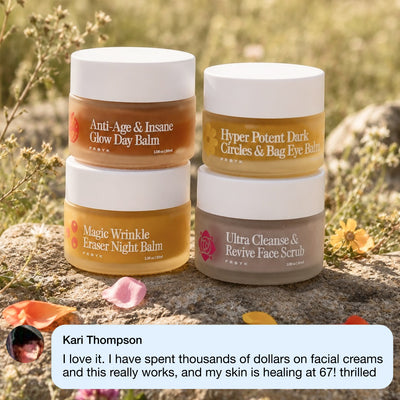
Cette façon de penser façonne chaque produit de la gamme Frøya Organics pour les soins de la peau mature, conçue pour nourrir la barrière au lieu de l'enlever. Les quatre étapes se réunissent dans Le Système Complet Anti-Âge pour Peau Mature, une routine sans eau sans lotion tonique, sans sérum traditionnel, et sans acides à superposer.
La bonne formule doit correspondre à vos objectifs de peau, pas les combattre. Les bons soins de la peau font partie de la santé des femmes, et ils devraient s'intégrer à la journée d'une femme sans prise de tête. Ce système est soutenu par une promesse de remboursement de 60 jours, donc votre peau a le temps réel de répondre.
Comment chaque étape mérite sa place
Chaque étape ici couvre un travail qu'une lotion tonique ou un sérum réclamerait normalement, en utilisant des plantes arctiques étudiées au lieu d'actifs durs.
|
Étape (quand l'utiliser) |
Rôle de routine qu'elle couvre |
Ce qu'elle fait pour la peau mature |
Plantes arctiques étudiées |
|
Ultra Cleanse & Revive Face Scrub (2 à 3 fois par semaine) |
Nettoyage et préparation |
Enlève les cellules ternes et sèches de la surface pour que les étapes suivantes absorbent |
Farine de riz, rose, noyau d'abricot |
|
Baume de Jour Anti-Âge & Éclat (matin) |
Sérum plus hydratant en un |
Lisse les ridules et nourrit la barrière toute la journée |
Argousier, rose musquée, squalane, argan |
|
Traitement de nuit |
Travaille sur les rides et la récupération pendant que vous dormez |
Rose musquée, grenade, cranberry arctique, camomille bleue |
|
|
Baume Contour des Yeux Ultra-Concentré Anti-Cernes & Poches (au besoin) |
Traitement des yeux |
Cible les cernes et les poches sur la peau fine sous les yeux |
Arnica, amande douce, rose musquée |
Le matin, le Baume de Jour Anti-Âge & Éclat traite et hydrate en un seul passage. Vous obtenez donc des soins au niveau du sérum sans une étape strippante séparée.
À quoi ressemblent les soins de la peau plus simples sur la peau mature

Quand vous échangez des actifs durs pour des soins doux et respectueux de la barrière, le changement a tendance à apparaître comme un teint plus calme, plus doux et plus uniforme après quelques semaines.
Ce sont des résultats réels de femmes de plus de 45 ans qui se sont éloignées des produits de soins qui combattaient leur peau. Si les lotions toniques, les sérums et les actifs puissants vous ont laissé réactive, un chemin plus simple vaut la peine d'être essayé.
Testez toujours d'abord un nouveau produit, puis observez comment votre peau s'adapte. Les avantages apparaissent généralement comme une barrière plus tranquille et un éclat sain et constant.
Questions Fréquemment Posées
Utilise-t-on un sérum avant ou après une lotion tonique ?+
Puis-je sauter l'étape de la lotion tonique et utiliser uniquement un sérum ?+
Les disques toniques ou les sérums sont-ils mieux ?+
Le sérum ou la lotion tonique est-il mieux pour une peau mixte ?+
La lotion tonique réduit-elle le sébum ?+
La lotion tonique peut-elle réduire les rougeurs ?+


