

 Cuenta


Estás frente al espejo, tónico en una mano, sérum en la otra, preguntándote qué es lo que tu piel realmente quiere. La respuesta corta es esta. Limpia primero, luego tónico, luego sérum, luego hidratante, y en la piel madura, un sérum generalmente te da más resultados que un tónico.
Después de los 45, tu barrera cutánea se vuelve más delgada y seca. Así que ese paso tonificante extra que muchas rutinas promueven puede eliminar más de lo que devuelve. Lo que tu piel realmente quiere es una rutina de cuidado simple que trate y proteja en un solo movimiento, para que tu piel se sienta tranquila en lugar de tensa.
Puntos Clave
- Limpiar, tonificar, luego sérum, luego hidratante es el orden correcto, aplicando primero el producto más ligero.
- En la piel madura, un sérum generalmente hace más que un tónico, ya que trata líneas finas, manchas oscuras y opacidad.
- Un tónico es opcional después de los 45, especialmente cuando ya usas un limpiador suave y equilibrado en pH.
- Los activos potentes como el retinol, los AHA e ácido hialurónico pueden resultar contraproducentes en una barrera más delgada, causando sequedad, irritación o textura áspera.
- Una rutina más simple con plantas árticas suaves a menudo da a la piel madura mejores resultados con mucha menos reactividad.
¿Cuál es la diferencia entre tónico y sérum?
Un tónico facial es un líquido fino a base de agua que usas después de limpiar para refrescar y equilibrar. Un sérum es un tratamiento concentrado más espeso que ataca las líneas finas, las manchas oscuras y la opacidad.
La forma más simple de pensarlo: un tónico prepara la superficie, y un sérum hace el trabajo más profundo. Uno prepara el escenario, el otro actúa. La mayoría de la piel madura necesita el segundo trabajo mucho más que el primero.
El mejor tónico para ti depende de tu piel, pero la mayoría de los productos de skincare caen en estos dos roles. Un tónico es un paso de skincare opcional que puedes omitir cuando tu limpiador ya es suave, lo que importa más a medida que tu piel se vuelve delicada con la edad.
Lo que hace un tónico
Un tónico elimina los residuos restantes, añade humedad ligera y ayuda a restablecer el nivel de pH de tu piel después de lavar. Lo aplicas con discos de algodón o dándole toques con las manos.
Los tónicos vienen en muchas formas, y ahí es donde se pone confuso. Algunos son hidratantes, algunos están hechos para piel grasa para controlar el exceso de grasa, y algunos brindan exfoliación química suave. Algunos pueden reducir la apariencia de los poros, y algunos afirman incluso tonificar con ácidos suaves.
El inconveniente para la piel madura es simple. Muchos tónicos todavía llevan alcohol o astringentes fuertes, así que una capa extra que quizá no necesites puede dejarte tensa y escamosa. Si usas un tónico, elige uno tranquilo y sin alcohol.
Lo que hace un sérum
Un sérum suministra ingredientes activos en una concentración más alta que un tónico o hidratante. Este es el paso que funciona en múltiples preocupaciones de la piel a la vez, desde líneas finas hasta piel opaca.
Un poco rinde mucho, así que unas pocas gotas generalmente cubren toda tu cara. Porque está concentrado, aquí es de donde viene la mayoría de tus resultados visibles. Un sérum de vitamina C, por ejemplo, es una opción popular para iluminar, aunque puede quemar la piel reactiva.
Por eso tu elección de sérum importa más que tu elección de tónico una vez que pasas los 45. Ataca las preocupaciones específicas de la piel que el paso de la superficie no puede alcanzar.
¿Tónico o sérum: cuál va primero en tu rutina de cuidado de la piel?
El tónico va primero, luego el sérum. La regla en casi todas las rutinas es de más ligero a más espeso, así que el producto más ligero toca la piel limpia antes de que los más ricos lo sellen.
Aquí está el orden, de principio a fin:
- Limpia con un limpiador facial suave para eliminar aceite, maquillaje y el día
- Tónico para refrescar y reequilibrar, si tu piel lo permite
- Sérum para tratar tus preocupaciones principales y permitir una mejor absorción
- Hidratante, un buen hidratante que selle la hidratación
- Protector solar durante el día, para protegerte del daño UV
Por la noche, algunas personas limpian dos veces para eliminar completamente el protector solar y el maquillaje. El orden importa más a medida que la piel envejece, por lo que una rutina de cuidado de la piel reflexiva para mujeres maduras coloca los pasos más ligeros antes de los que los sellan. Invierte la secuencia, y tu producto más rico puede bloquear el resto.
Los ingredientes activos detrás de tónicos y sérums
Los ingredientes activos son las partes de un producto que crean un cambio real, no solo comodidad de superficie. En tónicos y sérums, estos activos afirman suavizar líneas, desvanecerse manchas oscuras o calmar el enrojecimiento.
Cada ingrediente de skincare se comporta diferente en la piel madura. Los diferentes tipos de piel también reaccionan de su propia manera, así que lo que se adapta a la piel grasa de los 30 puede abrumar la piel seca de los 50. Según la investigación del Instituto Linus Pauling de la Universidad Estatal de Oregón, la vitamina C es un antioxidante que apoya la síntesis de colágeno para la piel y ayuda a proteger contra el daño UV.
El problema es que "más fuerte" y "mejor" no son lo mismo aquí. Cuanto más concentrado esté el activo, más tu barrera tiene que absorber y tolerar. En la piel más delgada, posterior a los 45, los activos populares pueden volverse en tu contra rápidamente.
Por qué los activos anti-envejecimiento populares resultan contraproducentes en la piel madura
Muchos de los activos anti-envejecimiento más promocionados fueron construidos para piel más joven, grasa y resistente. Después de la menopausia, un estrógeno más bajo deja tu barrera más delgada y más lenta para sanar, así que los mismos ingredientes golpean más fuerte.
El resultado a menudo es más irritación, no más juventud. Cuando los activos fuertes despojan tu piel más rápido de lo que se recupera, el movimiento más inteligente es suave cuidado de reparación de barrera que calme la reactividad en lugar de forzar a través de ella.
Nada de esto significa que estos ingredientes sean malos. Significa que la potencia y la edad de la piel tienen que coincidir. Aquí está lo que muestra la investigación, más algunas reacciones cautelosas que la gente ha compartido en línea.
Retinol y retinoides: cuando el estándar de oro gira
El retinol acelera la renovación celular, pero en la piel madura a menudo trae sequedad, descamación, enrojecimiento y escozor. Una barrera más delgada permite que penetre más rápido de lo que lo hizo en tus 30, así que las reacciones duran más.
Esa textura áspera de piel de lija es una señal de que tu barrera está luchando, no mejorando. Los dermatólogos llaman a la versión peor de esto dermatitis retinoidea irritante, y después de los 40 aparece más de lo que se advierte a la mayoría de personas.
Algunas pieles toleran retinol durante años, luego dejan de hacerlo. El ejemplo a continuación es una reacción compartida en línea, incluida aquí como precaución.

Eso no es una razón para temer al retinol, es una razón para respetar una barrera cambiante. Si tu piel ha comenzado a rechazarlo, esa es información, no fracaso.
Ácido glicólico y AHA: la trampa del sobre-exfoliación
Los alfa hidroxiácidos disuelven las células muertas de la superficie, y la investigación muestra que pueden mejorar las arrugas y apoyar la elasticidad de la piel. Pero si te excedes, obtendrás una textura áspera e irregular y una barrera que nunca se cura completamente.
La piel madura se reconstruye lentamente, así que cae en sobre-exfoliación en cantidades más bajas. Según la dermatóloga certificada Dra. Donna Hart, sobre-exfoliar la barrera cutánea la debilita y lleva a irritación y sensibilidad. El ácido salicílico, un activo relacionado, limpia puntos negros y desataca poros, lo que puede hacer que los poros grandes se vean más pequeños, pero también seca mucho la piel reactiva.
La parte frustrante es cómo se introduce sigilosamente, a menudo disfrazado como el mismo problema de textura que estabas intentando solucionar. Aquí hay un ejemplo de eso, compartido en línea.

Si tu rutina de "suavizado" te está dejando más áspera, esa es la trampa cerrándose. Menos, en ese caso, es realmente más.
Ácido hialurónico: el hidratante que puede secarte
El ácido hialurónico es elogiado por retener agua y suavizar líneas finas y arrugas. En aire seco, sin embargo, puede extraer humedad de las capas más profundas de tu piel en lugar de los alrededores.
En un clima frío o de baja humedad, eso puede dejar la piel seca aún más seca. Hyaluronate de sodio, su primo más pequeño, funciona de la misma manera, así que la piel opaca puede mantenerse opaca sin las condiciones correctas.
Este depende mucho del clima, como muestra el ejemplo a continuación.

El ejemplo anterior es una reacción compartida en línea, incluida como precaución. La lección no es que la hidratación sea mala. Es que un humectante necesita la cantidad correcta, o puede trabajar en tu contra.
Ingredientes más suaves que funcionan sin irritación
Suave no significa débil. Algunos de los ingredientes a base de plantas más estudiados coinciden silenciosamente con activos duros en resultados mientras omiten el escozor, que es lo que la piel más delgada y reactiva necesita.
Aquí está la parte que el pasillo anti-envejecimiento ruidoso se salta. Hay muchos ingredientes a base de plantas que tienen investigación real detrás de ellos, pero muchos menos marcas construyen alrededor de ellos. El bakuchiol se compara con el retinol para suavizar líneas, el espino amarillo se estudia para sellar la humedad, y el aceite de rosa mosqueta para suavizar arrugas, todo sin las reacciones duras.
El bakuchiol es el ejemplo más claro de cuán fuerte puede ser la ciencia, incluso en ingredientes que la mayoría de las personas pasan por alto.
Esa comparación de bakuchiol y retinol en el British Journal of Dermatology encontró que los dos funcionaban igualmente bien en arrugas, mientras que la versión de plantas fue más suave en la piel. El punto es simple: un ingrediente suave a base de plantas puede sostenerse por su cuenta, incluso si nunca llegó a la lista de promoción.
Esa misma lógica tranquila corre a través de los aceites de plantas que la piel madura ama. El espino amarillo sella la humedad, mientras que aceite de squalano para la piel suaviza e hidrata sin la quemadura de un ácido. Estos ingredientes hidratantes subestimados apoyan un cutis radiante y un tono de piel uniforme, ayudando a devolver la piel radiante sin la irritación.
Una rutina de cuidado de la piel más simple para la piel madura

La solución para la piel cansada y reactiva suele ser menos pasos, no más. Cuando cada producto trata y protege a la vez, dejas de hacer malabares con un tónico, sérum e hidratante separados que acumulan irritación.
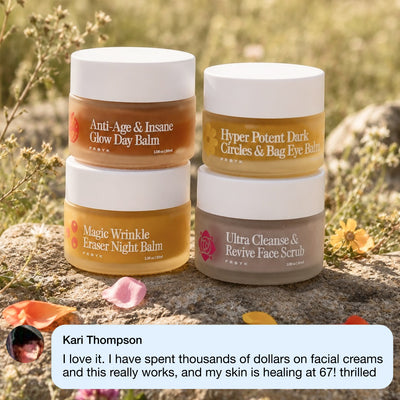
Ese pensamiento da forma a cada producto en la línea Frøya Organics cuidado para piel madura, construida para alimentar la barrera en lugar de despojarla. Los cuatro pasos se unen en El Sistema Completo para la Piel de Mujeres Maduras, una rutina sin agua sin tónico, sin sérum tradicional y sin ácidos que superponer.
La fórmula correcta debe coincidir con tus objetivos de piel, no luchar contra ellos. El buen cuidado de la piel es parte de la salud de la mujer, y debe adaptarse al día de una mujer sin complicaciones. Este sistema respalda una promesa de devolución de dinero de 60 días, así que tu piel tiene tiempo real para responder.
Cómo cada paso se gana su lugar
Cada paso aquí cubre un trabajo que un tónico o sérum normalmente reclamaría, usando plantas árticas investigadas en lugar de activos duros.
|
Paso (cuándo usar) |
Rol de rutina que cubre |
Lo que hace por la piel madura |
Plantas árticas investigadas |
|
Exfoliante Facial Ultra Limpieza y Revitalización (2 a 3 veces a la semana) |
Limpiar y preparar |
Levanta células secas y opacas de la superficie para que los siguientes pasos se absorban |
Harina de arroz, rosa, almendra de albaricoque |
|
Sérum más hidratante en uno |
Suaviza líneas finas y alimenta la barrera todo el día |
Espino amarillo, rosa mosqueta, squalano, argán |
|
|
Tratamiento nocturno |
Funciona en arrugas y recuperación mientras duermes |
Rosa mosqueta, granada, arándano ártico, manzanilla azul |
|
|
Bálsamo de Ojos Ultra Concentrado Anti-Ojeras & Bolsas (según sea necesario) |
Tratamiento para los ojos |
Ataca las ojeras y la hinchazón en la piel delgada bajo los ojos |
Árnica, almendra dulce, rosa mosqueta |
Por la mañana, el Bálsamo de Día Antiedad y Luminosidad Increíble hace el tratamiento y la hidratación en un solo paso. Así que consigues cuidado a nivel de sérum sin un paso de despojo separado.
Cómo se ve el cuidado de la piel más simple en la piel madura

Cuando cambias activos duros por cuidado suave y amigable con la barrera, el cambio tiende a mostrarse como un cutis más tranquilo, suave y uniforme después de algunas semanas.
Estos son resultados reales de mujeres mayores de 45 que se alejaron de los productos de cuidado de la piel que luchaban contra su piel. Si tónicos, sérums y activos fuertes han dejado tu piel reactiva, un camino más simple vale la pena intentarlo.
Siempre prueba un nuevo producto primero, luego observa cómo se estabiliza tu piel. Los beneficios generalmente se muestran como una barrera más tranquila y un brillo constante y saludable.
Preguntas Frecuentes
¿Uso un suero antes o después de un tónico?+
¿Puedo saltar el tónico y solo usar suero?+
¿Son mejores los discos de tónico o los sueros?+
¿Es mejor suero o tónico para piel mixta?+
¿Reduce el tónico el sebo?+
¿Puede el tónico reducir el enrojecimiento?+


