

 Cuenta


Piel clara durante años, y ahora unos granos dolorosos han reaparecido a lo largo de tu mandíbula a los 45. Se siente injusto, y es más común de lo que nadie te advierte.
¡El acné perimenopaúsico ocurre porque el estrógeno cae más rápido que tus otras hormonas, lo que permite que los andrógenos que estimulan el aceite tomen la delantera! Ese cambio, no la falta de higiene, es lo que trae los brotes de vuelta.
Aquí está la parte que pocas mujeres escuchan: este acné generalmente se calma a medida que tus hormonas se estabilizan, y el cuidado suave ayuda mucho más que los exfoliantes ásperos. Tu piel es más seca y reactiva ahora, así que despojarla solo empeora las cosas. El Sistema Completo para Piel con Tendencia Acneica fue creado exactamente para esto, con plantas árticas silvestres que calman la piel en lugar de castigarla.
A continuación, aprenderás por qué los brotes reaparecen ahora, qué los empeora, y cómo una rutina natural ayuda a tu piel a calmarse.
Puntos Clave
- El acné perimenopaúsico es impulsado por cambios hormonales, principalmente la caída del estrógeno que deja que los andrógenos estimulen la producción de aceite.
- Suele aparecer en la mandíbula y la barbilla como lesiones de acné más profundas y sensibles, a diferencia de los brotes adolescentes.
- Los principios activos ásperos pueden empeorar el acné en la piel más seca y sensible de la menopausia.
- Una rutina suave y natural apoya la barrera de tu piel mientras calma los brotes.
- La mayoría de los casos se alivian a medida que las hormonas se estabilizan, aunque los cambios de rutina tardan de 6 a 12 semanas en mostrarse.
¿Qué es el Acné Perimenopaúsico?
El acné perimenopaúsico es el acné que aparece o empeora en los años previos a la menopausia, impulsado por cambios en los niveles de hormonas. Es una forma de acné en adultas, y favorece la parte inferior del rostro, la mandíbula y la barbilla.
La perimenopausia a menudo comienza a mediados de los 40, aunque algunas mujeres la notan a finales de los 30. Tus períodos aún llegan, pero el estrógeno comienza a caer.
La Academia Estadounidense de Dermatología confirma que el acné puede aparecer por primera vez en la edad adulta, lo que llama acné de aparición tardía en mujeres, y que es más común durante la menopausia. Para otras, el acné que se limpió hace años regresa.
¿Por Qué Aparece el Acné Perimenopaúsico Ahora?

La causa principal es el dominio relativo de andrógenos. Cuando el estrógeno cae, el efecto de las hormonas sexuales masculinas como la testosterona se vuelve más fuerte, incluso cuando esos niveles no han subido.
Los andrógenos le dicen a tus glándulas de aceite que produzcan más aceite. Cleveland Clinic explica que lo que causa el acné hormonal es este exceso de aceite mezclándose con células muertas de la piel y bacterias, lo que obstruye los poros y crea brotes de acné.
La caída del estrógeno también ralentiza la renovación de células de la piel, por lo que los poros se obstruyen más fácilmente. La genética también puede aumentar tu riesgo, así que si el acné en adultas es común en tu familia, podrías ser más propensa a padecerlo.
Cómo la Caída del Estrógeno Cambia tu Piel
El estrógeno mantiene la piel firme, hidratada y tranquila. Cuando cae, la piel en menopausia puede volverse más seca y delgada mientras sigue produciendo exceso de aceite.
Esa mezcla es la parte difícil. Tu piel se siente tensa y sensible, pero sigue presentando brotes, por lo que los viejos trucos para el acné dejan de funcionar. Estos cambios de piel son una parte normal del desequilibrio hormonal detrás de esta etapa.
Cómo Difiere del Acné Adolescente
Los brotes perimenopaúsicos son más profundos y cicatrizan más lentamente que el acné en la adolescencia. Se agrupan a lo largo de la mandíbula y la barbilla, a veces como quistes sensibles que nunca llegan a punta.
El acné vulgar adolescente tiende a reunirse en la frente y la nariz. El acné hormonal en adultas favorece la parte inferior del rostro, donde las glándulas de aceite reaccionan más a las hormonas.
Tu piel también es más frágil ahora, así que los tratamientos fuertes que funcionaban a los 16 pueden dejar la piel de 45 años en carne viva. Este es acné hormonal después de los 40, y requiere un toque más suave.
También hay un lado emocional. La investigación sugiere que el acné a mitad de la vida puede afectar la calidad de vida y la confianza en uno mismo, a veces más de lo que lo hizo en los años de adolescencia. Si te sientes cohibida, esa reacción es válida.
Qué Empeora los Brotes Perimenopaúsicos
Algunas cosas cotidianas pueden hacer que la piel ya reactiva se sobrepase. Conocer estos desencadenantes de acné te ayuda a calmar los brotes más rápido.
- Estrés y cortisol: El estrés crónico eleva el cortisol, lo que empuja las glándulas de aceite a producir más aceite.
- Falta de sueño: El sueño corto o interrumpido eleva las hormonas del estrés y ralentiza la reparación nocturna.
- Cuidado de la piel áspero: El lavado excesivo y el fregado despojan la barrera y pueden empeorar el acné.
- Fumar: Puede afectar el equilibrio hormonal y la salud de la piel.
- Azúcar en la sangre y productos lácteos: La investigación vincula los alimentos con alto índice glucémico a más brotes, siendo los productos lácteos un papel menor para algunas personas.
La dieta no es la historia completa, pero el patrón vale la pena conocer. Una revisión sistemática de dieta y acné encontró que comer con alto índice glucémico tiene un vínculo modesto pero real con los brotes, mientras que la evidencia sobre productos lácteos es mixta y depende de la persona.
Así que ayuda observar tu propia piel en lugar de perseguir reglas estrictas. Una dieta rica en frutas y verduras coloridas apoya una piel más tranquila e inflamada de todas formas.
¿Por Qué la Piel Madura Necesita un Enfoque más Suave?

El cambio más grande después de los 40 es que el cuidado del acné áspero a menudo se revierte. Evitar tratamientos ásperos ayuda a prevenir la irritación extra que la piel reactiva no necesita.
Tu barrera es más delgada ahora, así que necesita apoyo, no castigo. La investigación dermatológica vincula una barrera dañada con peor acné, mientras que el cuidado suave y amigable con la barrera ayuda a la piel a recuperarse.
Esa es toda la idea detrás de una rutina más tranquila. Puedes leer más sobre cómo reparar tu barrera de piel naturalmente y por qué importa en esta etapa.
Tratamientos Convencionales y Sus Compensaciones
Los dermatólogos tienen varias opciones para el acné hormonal, y cada una tiene una compensación. Ayuda saber qué hacen y qué le piden a tu piel.
- Peróxido de benzoilo: Reduce las bacterias del acné con bajo riesgo de resistencia, pero a menudo trae sequedad.
- ÁCIDO SALICÍLICO y ácido glicólico: Ayudan a desatascar los poros, aunque pueden irritar la piel delgada y sensible.
- Peelings de retinoides tópicos y retinol: Aceleran la renovación de células, pero a menudo causan descamación, enrojecimiento e irritación adicional.
- Ácido azelaico: Tiene como objetivo calmar el acné inflamatorio, pero puede arder al principio.
- Terapia oral y sistémica: Espironolactona, terapia de reemplazo hormonal o isotretinoína, generalmente reservada para casos graves.
Aquí está el problema de la piel perimenopaúsica. Muchos de estos medicamentos recetados y tópicos resecan la piel que ya es delgada y reactiva, lo que puede dejarte más roja de lo que empezaste.
Los médicos también dependen menos de cursos antibióticos largos ahora, en parte debido a la resistencia antibiótica. Para el acné severo o con cicatrices, un plan de tratamiento personalizado de un dermatólogo es la opción correcta.
Una nota honesta: el anticonceptivo combinado a veces se usa para el acné hormonal, pero conlleva riesgos, incluido un vínculo documentado con el cáncer de mama. Eso pertenece a una conversación con tu médico, no a una estantería de cuidado de la piel.
Para los brotes cotidianos que la mayoría de las mujeres enfrenta en esta etapa, el cuidado botánico suave que funciona con tu piel es el punto de partida más inteligente. Eso es para lo que Frøya Organics fue construido.
¿Los Remedios Naturales Realmente Funcionan?
Algunos remedios naturales muestran promesa, aunque la mayoría necesitan más estudio. Tienden a ser más suaves con la piel sensible, lo que importa en esta etapa.
Algunas opciones surgen en la investigación. El zinc se estudia para calmar la inflamación, algunos antioxidantes se vinculan con acné más leve, y el aceite de árbol de té es conocido por sus propiedades antibacterianas y antiinflamatorias, aunque la evidencia en humanos sigue siendo limitada.
Otros enfoques como el árbol casto, té de menta verde, o la medicina herbal tradicional china surgen a menudo, pero la ciencia es escasa. Habla con tu médico antes de probar suplementos dietéticos u opciones herbales, ya que natural no siempre significa sin riesgo.
Una Rutina Botánica Suave para Piel Perimenopaúsica

El camino más tranquilo es una rutina completa y sin agua que alivie los brotes mientras apoya tu barrera. Sin ácidos, sin retinoides, sin despojar.
Aquí es donde encaja Frøya Organics. Cada fórmula usa plantas árticas silvestres más cera de abeja orgánica, así que una pequeña cantidad funciona sin resecar la piel.
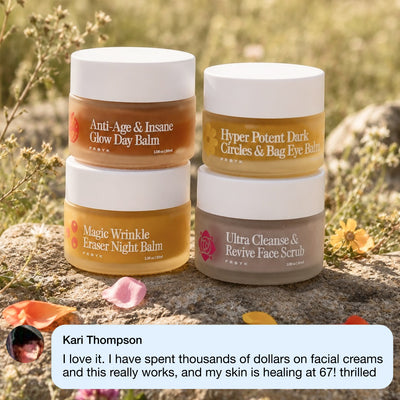
El Sistema Completo para Piel con Tendencia Acneica reúne tres pasos en una rutina, un bálsamo matutino, un exfoliante semanal, y un bálsamo nocturno. Aquí es cómo cada uno ayuda la piel como la tuya.
Exfoliante Facial Ultra Limpieza y Revitalización

A medida que el estrógeno cae, la renovación de células de la piel se ralentiza y las células muertas se acumulan, que es una gran razón por la que los poros se obstruyen. Este exfoliante sin agua los limpia suavemente con arroz, pétalos de rosa y albaricoque, manteniendo los poros más limpios sin grit áspero.
Porque es sin agua, pule sin la espuma que despojan que deja la piel madura tensa. Eso importa cuando tu barrera ya es más delgada e irritable.
Cuándo usar: 2 a 3 veces a la semana, en la ducha, mañana o noche. Agrega una pizca a una palma seca, mezcla con un poco de agua, y masajea sobre tu rostro. Salta el uso diario, ya que la limpieza excesiva puede irritar la piel reactiva y empeorar los brotes.
Bálsamo de Día Mágico Revitalizante y Luminoso

La piel puede volverse grasosa y seca a la vez, y este bálsamo de día botánico se reúne con ambos con ESPINO AMARILLO y escualano. Apoya la barrera y añade hidratación ligera y sin grasa, así que la piel propensa al acné permanece tranquila y cómoda durante el día.
ESPINO AMARILLO trae omega-7 y antioxidantes, mientras que el escualano se hunde sin una película grasosa. El resultado es hidratación que no obstruye ni se sienta pesada en la piel.
Cuándo usar: cada mañana. Suaviza una capa delgada del tamaño de una punta de dedo sobre la piel limpia como tu paso diurno. Un poco es suficiente, ya que el bálsamo es potente y concentrado.
Bálsamo de Día para Piel con Tendencia Acneica

Los brotes a menudo vienen con enrojecimiento e inflamación, y este paso no comedogénico ayuda con ambos. Caléndula y caléndula calman los brotes activos, mientras que el cardo calma la piel reactiva y grasosa, así que el alivio del enrojecimiento está integrado en tu rutina.
No hay ácidos ni retinoides aquí, así que te saltas la descamación y la purga que las rutinas más ásperas pueden traer. Para la piel que reacciona a casi todo, esa suavidad es el punto.
Cuándo usar: cada noche. Aplica una capa delgada de este bálsamo para aliviar el enrojecimiento antes de dormir, y un poco es mucho.
Cuándo Ver a un Dermatólogo
El cuidado natural maneja la mayoría de los brotes cotidianos, pero algunos casos necesitan un profesional. Comunícate si tu piel envía señales más fuertes.
- Lesiones de acné profundas y dolorosas que dejan cicatrices
- Brotes con períodos irregulares o vello facial nuevo, lo que puede apuntar a trastornos endocrinos
- Acné que no se ha calmado después de algunos meses de cuidado constante
Estos pueden señalar un problema hormonal que vale la pena verificar. Ver a un dermatólogo es un paso inteligente, no un fracaso.
Tu Piel Puede Calmarse de Nuevo, Naturalmente

El acné perimenopaúsico puede sentirse como un paso hacia atrás, pero es tu piel reaccionando a un cambio hormonal, no fallándote. A medida que esas hormonas se estabilizan, y con cuidado que apoya tu piel en lugar de despojarla, muchas mujeres ven que su piel se calma.
Las mujeres en estas fotos dejaron de luchar contra su piel y comenzaron a trabajar con ella. Intercambiaron rutinas ásperas y secantes por cuidado botánico suave y le dieron tiempo.
Mereces la misma calma. Mira el cambio por ti misma en nuestros resultados reales de piel de clientes, luego comienza donde lo hicieron.
Este artículo es solo para información general y no es consejo médico. El acné perimenopaúsico puede tener muchas causas, así que hable con un médico o dermatólogo sobre su propia piel, especialmente para brotes severos o dolorosos. Los resultados individuales varían de persona a persona.
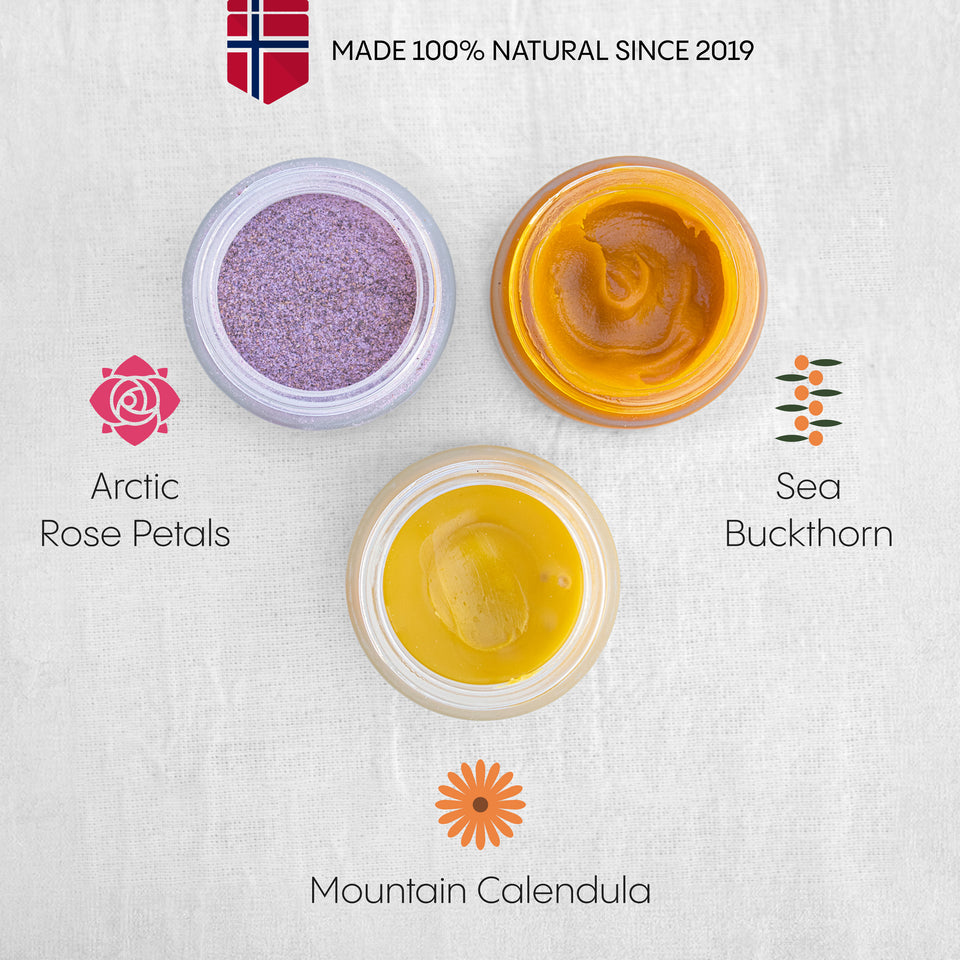
Tres pasos botánicos árticos que limpian, calman, y apoyan la piel propensa al acné durante la perimenopausia. Sin ácidos ásperos, sin despojar. Caléndula, caléndula, y cera de abeja funcionan con tu barrera, respaldado por una garantía de devolución de dinero de 60 días.
Compra el Sistema HoyPreguntas Frecuentes
¿Cómo me deshago del acné perimenopáusico?+
¿Cómo deshacerse del acné hormonal en los 40?+
¿Puede la dieta mejorar el acné menopáusico?+
¿Cuánto dura el acné perimenopáusico?+


