

 Cuenta


Aquí hay algo que casi nadie escucha en la farmacia. La crema que se siente más fuerte es a menudo la que menos hace por tus articulaciones. Ese cosquilleo fresco y refrescante desaparece rápido porque solo te distrae del dolor en lugar de calmar lo que lo causa.
¿Entonces qué ayuda realmente? La mejor crema para aliviar el dolor articular es la que reduce la inflamación o silencia la señal de dolor en la fuente, y solo algunos ingredientes lo logran realmente.
En esta guía, aprenderás cómo funcionan estas cremas, qué dice la investigación sobre cada tipo, y por qué un bálsamo natural basado en árnica se ha ganado un lugar en la conversación.
Puntos clave
- Los tratamientos tópicos funcionan mejor en articulaciones cercanas a la piel, como manos y rodillas.
- Los antiinflamatorios tópicos conllevan menos riesgo gástrico que las píldoras orales, pero aún pueden irritar tu piel.
- El mentol y el alcanfor se sienten bien rápidamente, pero distraen del dolor en lugar de reducir la inflamación.
- La árnica y la consuelda tienen estudios clínicos reales detrás para el dolor de artrosis.
Cómo funcionan las cremas y geles para la artritis en tus articulaciones

Los tratamientos tópicos se absorben a través de tu piel y actúan justo donde duele. Ese es el atractivo completo.
Cuando te aplicas una crema en la zona afectada, el ingrediente activo atraviesa la piel y se asienta en el tejido cerca de la articulación. Según la Clínica Mayo, estos productos tópicos funcionan mejor en articulaciones que están cerca de la piel, como tus manos y rodillas.
La ventaja sobre las píldoras es real. Porque la medicina se mantiene en su mayoría local, mucho menos entra en tu torrente sanguíneo. Eso significa un riesgo menor de la molestia estomacal que puedes tener con los medicamentos orales.
Sin embargo, no todos los dolores responden de la misma manera. Una articulación enterrada profundamente bajo el músculo es más difícil de alcanzar para una crema. Las articulaciones pequeñas y dolorosas cerca de la superficie son donde destacan los productos tópicos.
Antiinflamatorios tópicos vs orales: por qué la diferencia importa
Los antiinflamatorios no esteroideos tópicos te ofrecen alivio localizado con mucha menos carga general que las píldoras orales.
Los antiinflamatorios orales funcionan, pero vienen con inconvenientes. Tomados por vía oral, pueden causar molestias estomacales y problemas cardíacos con el tiempo. Esa es una preocupación real si dependes de ellos para aliviar el dolor de artritis semana tras semana.
Los antiinflamatorios tópicos reducen ese riesgo. Porque los aplicas en la piel, el nivel del medicamento en tu sangre se mantiene mucho más bajo, lo que reduce la posibilidad de efectos nocivos.
Una revisión Cochrane encontró que para la artrosis de rodilla, el diclofenaco tópico alivió el dolor en aproximadamente 10% más de personas que un placebo. Útil, pero no una cura milagrosa. Un compromiso que vale la pena conocer: las reacciones leves en la piel fueron más comunes con diclofenaco que con placebo.
Los principales tipos de cremas para aliviar el dolor, explicados
La mayoría de las cremas para la artritis se dividen en pocos grupos, y cada una funciona de manera diferente. Aquí está el resumen honesto.
- Antiinflamatorios tópicos. El gel de diclofenaco es la opción más estudiada y se recomienda para la artrosis. Voltaren es un gel de diclofenaco tópico disponible sin receta. El compromiso es que pueden causar irritación en la piel, y nunca deberías usarlos en piel dañada o lastimada.
- Contrairritantes (mentol y alcanfor). Se llaman contrairritantes porque crean una sensación refrescante que aleja tu atención del dolor. La trampa es honesta e importante: te distraen, pero no disminuyen la inflamación subyacente. El alivio es temporal.
- Cremas de capsaicina. Hecha de chiles, la capsaicina reduce una sustancia química que transmite señales de dolor en tus células nerviosas llamada sustancia P. Puede proporcionar alivio, pero las cremas de capsaicina pueden tardar hasta dos semanas de uso para ayudar, y pueden causar una sensación de quemadura.
- Salicilatos y lidocaína. Los salicilatos son similares a la aspirina y ofrecen un efecto antiinflamatorio suave. La lidocaína adormece los terminales nerviosos para bloquear el dolor agudo y localizado de los nervios. Si tomas anticoagulantes, consulta con tu médico antes de usar estos otros ingredientes activos.
El patrón aquí es claro. La mayoría de estos silencian la señal. Pocos calman la causa.
¿Qué tan bien funcionan realmente los analgésicos tópicos?
Ayudan, pero los resultados son mixtos. La Fundación de Artritis señala que solo algunos estudios han analizado algunas de estas cremas, como los salicilatos, y los resultados son mixtos. Encontrar una que te convenga puede requerir un poco de prueba y error.
Los antiinflamatorios tópicos tienen la mayor cantidad de investigación detrás. Muchas personas todavía reportan alivio real de otras cremas de venta libre para la artritis, aunque los contrairritantes principalmente enmascaran el dolor sin calmar la inflamación subyacente. Está bien para un reinicio rápido, pero no resuelve la causa.
Entonces la pregunta real se convierte en: ¿qué calma realmente la inflamación que impulsa el dolor? Aquí es donde algunos botánicos se presentan con sus propios datos de estudio.
Ingredientes botánicos con investigación real detrás
Un puñado de ingredientes vegetales se han sostenido en ensayos clínicos para aliviar el dolor articular. Dos destacan.
La árnica es una de las plantas más estudiadas para el dolor articular. En un ensayo doble ciego de 204 personas, el gel de árnica funcionó tan bien como el gel de ibuprofeno para la artrosis de mano, y ni los pacientes ni los médicos podían diferenciar los dos. Calma la inflamación en la fuente en lugar de simplemente enmascarla. Puedes leer más sobre los beneficios del aceite de árnica explicados en nuestra guía de ingredientes.
La consuelda tiene su propio historial, mostrado en el estudio anterior. Ambas plantas tienen una lógica que se sostiene. Una salvedad honesta: estos ensayos utilizaron preparaciones vegetales específicas, así que los resultados no se transfieren a cada producto en el estante.
La investigación botánica sigue creciendo, y los científicos quieren más ensayos de alta calidad para confirmar estas tendencias. Aun así, la dirección es prometedora, y apunta hacia fórmulas basadas en ingredientes como estos.
Un bálsamo natural hecho para articulaciones y músculos adoloridos

El Bálsamo Reparador para Articulaciones y Músculos reúne esos botánicos investigados en una fórmula ártica. Se basa en los mismos ingredientes a los que apuntan los estudios. Árnica y consuelda para ayudar a calmar las articulaciones inflamadas y adoloridas. Alcanfor y menta para el cosquilleo cálido y refrescante que aleja tu mente del dolor mientras los botánicos hacen su trabajo.
Jengibre y eucalipto lo completan para calmar los músculos cansados, todo transportado en cera de abeja orgánica para que los aceites vegetales se absorban. No hay químicos medicados aquí, solo hierbas árticas y cera de abeja, así que no hay nada que interrumpir.
En nuestras propias pruebas, el 82% de las personas se sintieron más fuertes con menos dolor día a día, y la mayoría nota una diferencia en 3 a 9 días. Puedes explorar la gama completa de bálsamos para el alivio de articulaciones y músculos si quieres opciones para todo el cuerpo.
Cómo usar un bálsamo para el dolor articular de forma segura
Un poco rinde mucho, y el uso seguro es simple. Sigue estos consejos.
- Usa una pequeña cantidad en la punta del dedo y masajéala en la zona adolorida.
- Aplícalo dos o tres veces al día, o siempre que aparezca la rigidez.
- Mantente en piel limpia e intacta, y aléjalo de heridas abiertas.
- Sáltate la terapia de calor, ya que una almohadilla térmica sobre un producto tópico puede causar quemaduras.
- Si tu piel reacciona fácilmente, usa guantes de látex para aplicar, y lávate bien las manos después.
Bueno saberlo
Nunca uses un producto tópico para el dolor bajo un vendaje apretado o con calor añadido. Combinar calor con mentol o alcanfor puede provocar quemaduras en la piel.
Si tu dolor dura más de una o dos semanas, consulta con un profesional de la salud.
Cuándo ver a un médico por dolor articular
La mayoría de los dolores articulares desaparecen con cuidado, pero algunos signos necesitan profesionales.
Comunícate con tu equipo de atención médica si tu dolor es severo, repentino o empeora continuamente. Lo mismo aplica para una articulación que se ve roja, caliente o inflamada, o una que sigue a una lesión. Estos pueden señalar condiciones como la artritis reumatoide que necesitan cuidado adecuado.
La fiebre junto con dolor articular es otra razón para llamar. Un médico también puede sugerir hábitos suaves como pérdida de peso para aliviar la presión en las articulaciones dolorosas. Confía en tu instinto aquí, ya que una verificación rápida ahora puede ahorrarte problemas después.
Te mereces moverte sin el dolor

Las articulaciones adoloridas pueden hacer que cosas pequeñas se sientan más difíciles, desde abrir un frasco hasta subir las escaleras. La buena parte es que el cuidado constante basado en plantas puede encajar perfectamente en tu día.
No tienes que perseguir el alivio con algo fuerte. El Bálsamo Reparador para Articulaciones y Músculos se basa en árnica y consuelda, los mismos botánicos a los que apuntan los estudios, incorporados en la zona adolorida cada día. Dale un par de semanas y presta atención a cómo se sienten tus articulaciones.
¿Quieres ver cómo Frøya Organics ha ayudado a otros a sentirse más como ellos mismos? Lee los testimonios reales de clientes antes y después e imagina cómo podría verse una rutina más tranquila y cómoda para ti.
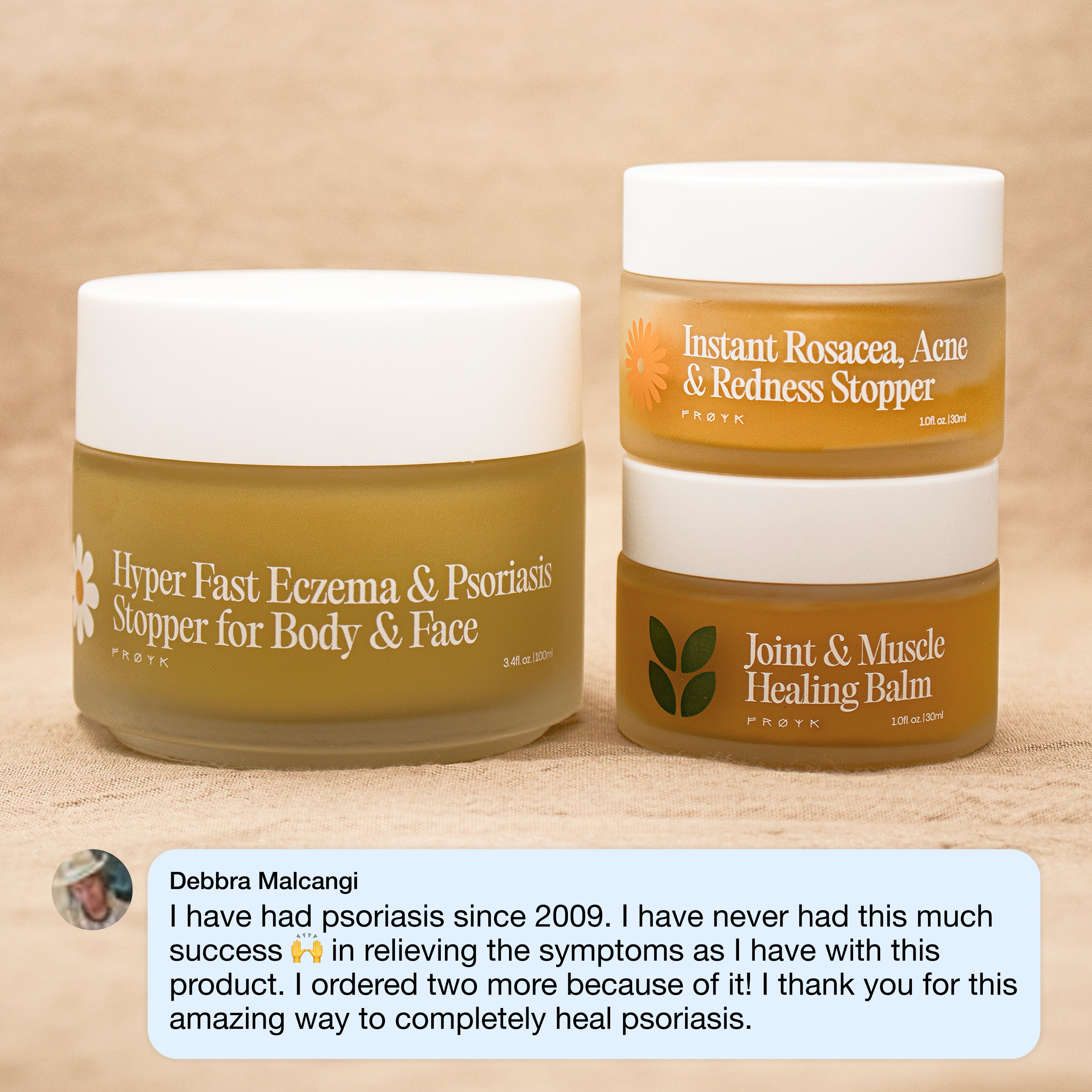
Tres bálsamos sin agua para eccema, psoriasis, rosácea y dolor articular. Las plantas árticas silvestres y la cera de abeja orgánica calman, protegen y reparan la piel en rostro y cuerpo, respaldado por una garantía de devolución de dinero de 60 días.
Compra el Sistema - $109Preguntas Frecuentes
¿Cuál es el mejor analgésico para articulaciones doloridas?+
¿Cuáles son las cremas de artritis sin receta más potentes?+
¿Son buenos los bálsamos naturales para el dolor articular y muscular?+
¿Cuánto tiempo tarda un bálsamo para el dolor articular en funcionar?+


