

 Account


Sie reiben Ihr Morgenöl ein, lehnen sich zum Spiegel und bemerken wieder dasselbe. Haut, die müde wirkt. Eine Rötungsstelle. Feine Linien, die tiefer wirken als im letzten Jahr.
Nach 45 produziert Ihre Haut weniger Öl, die Barriere wird dünner und ihre natürlichen Abwehrkräfte sinken. Die harten Säureprodukte, die alle anpreisen, können mehr stechen als helfen. Wenn also Rosmarin immer wieder erwähnt wird, möchten Sie wissen, ob es wirklich funktioniert.
Hier die kurze Antwort. Rosmarinöl ist reich an Antioxidantien, die Entzündungen beruhigen, Bakterien bekämpfen und reife Haut vor täglichen Schäden schützen. Unten sehen Sie, was die Forschung zeigt und wie Sie es anwenden, ohne die Reizung, die Menschen abschreckt.
Die wichtigsten Erkenntnisse
- Rosmarinöl ist ein starkes Antioxidans, das reife Haut vor dem freien Radikalschaden schützt, der hinter feinen Linien und matter Haut steckt.
- Es beruhigt Rötungen und bekämpft Akne-Bakterien und ist daher eine sanfte Option für empfindliche, reaktive oder zu Ausbrüchen neigende Haut nach 45.
- Frühe Forschung verbindet seine Carnosinsäure mit besserer Wundheilung und weniger Narbenbildung, obwohl diese Arbeiten noch in Tierstudien erfolgen.
- Rosmarinextrakt ist die sanftere, hautgerechte Form, sodass ein fertiger Balsam die Verdünnung und das Patch-Test-Ratespiel von reinem ätherischem Öl überspringt.
Was ist Rosmarinöl und warum reife Haut es braucht?
Rosmarinöl stammt von Rosmarinus officinalis, derselben duftenden Pflanze, mit der Sie kochen. Das aus den Blättern extrahierte ätherische Öl wird gepresst oder dampfdestilliert und dann in einen potenten Hautpflege-Wirkstoff konzentriert.
Was es für reife Haut nützlich macht, ist seine Chemie. Rosmarin enthält drei herausragende Verbindungen: Rosmarinsäure, Carnosinsäure und Ursolsäure. Jede bekämpft ein Problem, das sich mit dem Alter verschärft, wie oxidativer Schaden, langsame Heilung und eine schwächere Barriere.
Diese Verbindungen erscheinen in vielen arktischen Wildpflanzen, und Rosmarin ist nur eine davon. Was für Ihre Haut zählt, ist die Formulierung, da ein fertiger Balsam Rosmarinextrakt in der richtigen Menge mischt, damit Sie den Nutzen erhalten, ohne selbst etwas zu mischen. Für die breitere Ansicht zeigt dieser Leitfaden zu ätherischen Ölen für reife Haut, wo Rosmarin unter ihnen passt.
Rosmarinöl vs. Rosmarinextrakt
Diese Begriffe werden verwechselt, aber sie sind nicht dasselbe. Rosmarinöl ist die starke, dampfdestillierte Version. Rosmarinextrakt ist dieselbe Pflanze in einem Trägeröl gelöst, daher sanfter auf der Haut.
Das ist für Sie wichtig. Die meisten fertigen Hautpflege-Produkte verwenden den milderen Rosmarinextrakt, was das Reizungsrisiko von reinem ätherischem Öl überspringt. Sie bekommen den Antioxidans-Nutzen, ohne selbst Tropfen zu mischen.
Vorteile von Rosmarinöl für reife Haut
 Rosmarin bleibt unterschätzt neben den üblichen Hautpflege-Wirkstoffen, leistet aber ruhig viel für reife Haut. Wo harte Inhaltsstoffe oft reizen, beruhigt Rosmarin Rötungen, bekämpft die Bakterien hinter Ausbrüchen und trägt über die Zeit zu festerer Haut und weicheren Narben bei.
Antioxidantien-Eigenschaften, die vor freien Radikalen schützen
Die Antioxidantien-Eigenschaften von Rosmarin sind seine größte Stärke. Seine Verbindung Carnosinsäure fängt freie Radikale ein, die instabilen Moleküle, die sichtbare Hautalterung beschleunigen.
Hier ist, warum das wichtig ist. Sonne, Umweltverschmutzung und Stress erzeugen freie Radikale, die Kollagen abbauen und Ihre Haut matt machen. In Hautzell-Forschung schützte Carnosinsäure menschliche Hautzellen vor UV-Schaden und half, die Enzyme zu blockieren, die Kollagen abbauen.
Entzündungshemmende Unterstützung, die Rötungen beruhigt
Wenn Ihre Haut leicht errötet, helfen die entzündungshemmenden Eigenschaften von Rosmarin. Seine Rosmarinsäure reduziert Entzündungen und beruhigt Rötungen, was für empfindliche Haut, Ekzeme und Rosazea passt.
Die Wissenschaft erklärt, warum. In einer Rosmarinsäure-Hauttudie schirmte die Verbindung Hautzellen vor Umweltverschmutzung und UV-Schaden ab, indem sie oxidativen Stress senkte, denselben Stress, der Haut reaktiv und reizbar macht. Indem Rosmarin diesen Prozess in der Zelle beruhigt, hilft es der Haut, stabiler zu bleiben und weniger anfällig für Ausbrüche zu sein.
Rosmarin kann auch die Blutdurchblutung in der Haut verbessern, was einem müden, geröteten Gesicht einen frischeren Look gibt. Für reife Haut, die leicht errötet, ist diese Ruhe ein echter Gewinn.
Antibakterielle Eigenschaften, die Ausbrüche klären helfen
Ausbrüche enden nicht mit 45, und Rosmarin hilft auch hier. Seine antibakteriellen Eigenschaften bekämpfen die Bakterien hinter Akne, sodass die Poren klarer bleiben.
Hier ist, was die Forschung fand. In einer Rosmarinextrakt-Aknestude verlangsamte Rosmarin das Wachstum von Akne-Bakterien und beruhigte die Entzündung, die sie auslösen, senkte die chemischen Signale, die einen kleinen Verschluss an Ihrem Kinn in einen wütenden, geschwollenen Fleck verwandeln. So funktioniert es auf zwei Fronten gleichzeitig.
Kombiniert mit seiner zusammenziehenden Wirkung hält Rosmarin die Haut sauber, ohne sie auszutrocknen. Dieses Gleichgewicht passt zu reifer Haut, die die harten, austrocknenden Akne-Produkte für Teenager nicht verträgt.
Ölige Haut ausbalancieren und Hautton verfeinern
Rosmarin hilft, die Ölproduktion zu regulieren, praktisch, wenn Ihre Haut glänzend wirkt. Seine natürliche zusammenziehende Wirkung strafit das Erscheinungsbild der Poren und glättet die Textur.
Mit der Zeit kann das den Hautton verbessern und einen gesunden Glow zurückbringen. Sie können die Poren nicht wirklich schrumpfen, aber Sie können aufweichen, wie groß sie aussehen.
Wenn ein hellerer, gleichmäßigerer Teint Ihr Ziel ist, sind diese strahlenden Hautpflege-Produkte darum herum gebaut. Rosmarins klärende Seite macht es für Haut, die Balance, nicht Stripping will, geeignet.
Ist Rosmarin gut für alternde Haut?
Ja. Rosmarin unterstützt alternde Haut, indem er sie vor freien Radikalschäden schützt und hilft, das Kollagen zu verteidigen, das die Haut fest hält.
Mit dem Alter bauen Oxidation und Entzündung Kollagen und Elastin, die Fasern, die Haut straff halten, ab. Rosmarins Antioxidantien helfen, sie zu schützen, und seine Rosmarinsäure wurde auf die Unterstützung von Kollagen und die Milderung feiner Linien untersucht. Sie finden sie in diesen Balsamen für reife Haut, die für das Gesicht nach 45 gemacht sind.
Eine ehrliche Anmerkung zur Sonne. Rosmarin ist eine Antioxidantien-Unterstützung, kein Sonnenschutzmittel, und ein wenig Sonne ist gut für Sie. Wenn Sie für längere Zeit draußen sind, greifen Sie zu einem Mineral-Sonnenschutzmittel statt zu den chemielastigen Optionen.
Kann Rosmarinöl bei Narben helfen?
Es könnte. Frühe Forschung deutet auf Rosmarins Carnosinsäure als echten Spieler bei der Hautheailung hin.
In einer 2025 Penn-Rosmarin-Wundstudie fanden Forscher heraus, dass eine Carnosinsäure-Creme die Wundschließung bei Mäusen beschleunigte und der Haut half, sich wieder aufzubauen statt zu narben. Senior-Autor Dr. Thomas Leung, ein Penn-Dermatologe, sagte, dass die Verbindung die Heilung von Narbenbildung weg und hin zu gesunder Reparatur verschieben kann.
Diese Arbeit wurde bei Mäusen durchgeführt, daher ist sie vielversprechend statt bewiesen bei Menschen, und das Team empfiehlt, vorher einen Arzt zu konsultieren. Dennoch verdient für reife Haut, die langsam heilt, ein sanfter Inhaltsstoff, der Reparatur unterstützen kann, einen Platz in Ihrer Routine.
Wie man Rosmarinöl sicher auf empfindlicher Haut anwendet
Richtig angewendet ist Rosmarinöl sanft. Probleme entstehen, wenn Menschen reines ätherisches Öl direkt auf das Gesicht geben.
Wenn Sie Ihr eigenes reines Rosmarinöl mischen, halten Sie es einfach:
- Verdünnen Sie es immer zuerst in einem Trägeröl, dann verwenden Sie 1 bis 2 Tropfen für ölige Haut und bis zu 3 für trockene Haut
- Wenden Sie 2 bis 3 Tropfen auf sauberer, leicht feuchter Haut an und massieren Sie sanft in Ihr Gesicht und Hals ein
- Lassen Sie es einziehen für 1 bis 2 Minuten vor dem Make-up, damit es nicht fusselt oder klebt
- Machen Sie einen Patch-Test auf Ihrer Innenseite des Arms und warten Sie 24 Stunden, dann stop wenn Rötung oder Stechen auftaucht
- Halten Sie es weg von Ihren Augen und verletzter Haut
Unverdünntes Rosmarinöl kann Reizung verursachen, weshalb Dermatologen einen Patch-Test zuerst empfehlen. Das Ritual selbst korrekt zu machen, kann schwierig sein, besonders auf reaktiver Haut.
Hier der einfachere Weg. Ein Balsam aus Rosmarinextrakt hat die Verdünnung bereits gehandhabt, daher gibt es kein Mischen und viel weniger Risiko.
Wo wildes arktisches Rosmarin in Ihre Routine passt

Jetzt wissen Sie, was Rosmarin tut, die Frage ist, wie man es anwendet. Der einfachste Weg ist ein fertiger Balsam, wo Rosmarinextrakt bereits in die Formel gemischt ist, daher gibt es nichts zum Mischen oder Messen selbst.
Andere Wirkstoffe können auch reife Haut helfen, aber die meisten kommen mit Kompromissen. Retinol bringt oft Schuppen und Stechen, und Säure-Seren wie Glykol- oder Salicylsäure können dünne Haut roh hinterlassen. Rosmarins sanfterer Ansatz überspringt diese Harshheit, weshalb es für reaktive Haut geeignet ist.
Frøya formuliert wildes arktisches Rosmarinextrakt in Balsame für reife Haut, zusammen mit Bienenwachs und anderen natürlichen Inhaltsstoffen, wo der Duft sanft bleibt und die Formel sauber bleibt:
|
Produkt |
Was es ist |
Wie Rosmarin darin funktioniert |
Beste für |
|
Tages-Anti-Aging-Balsam |
Rosmarin und Brennnessel reinigen und klären, kombiniert mit Granatapfel und Hagebutte für Festigkeit |
Feine Linien, Mattheit, ungleichmäßiger Ton |
|
|
Reparatur- und Glow-Tagesbalsam |
Rosmarin ist ein benannter Held, der Haut reinigt und wieder ins Gleichgewicht bringt |
Barriere-Reparatur, Narben, ölige Haut |
|
|
Gezielter beruhigender Balsam |
Rosmarinblatt-Extrakt unterstützt die beruhigende, antibakterielle Wirkung |
Rötung, Mitesser, reaktive Haut |
Jeder verwendet eine winzige Fingerbeere-Menge, daher hält ein Tiegel lange. Diese Balsame konzentrieren sich auf Haut, nicht Haare, daher können Sie das Label lesen und genau wissen, was Sie auf Ihr Gesicht geben.
Sehen Sie den Unterschied auf echter reifer Haut

Der beste Beweis ist keine Zahl auf einem Papier, es ist Haut, die Sie sehen können. Hier sind echte Vorher- und Nachher-Fotos von Frauen, die wildes arktisches Rosmarin von Frøya Organics konsistent in ihrer täglichen Routine verwendeten.
Was auffällt, ist wie natürlich die Veränderung aussieht. Ruhigere Rötung, weichere Textur und ein gesunder Glow, die Art von stetigem Ergebnis, das aus Hautpflege statt aus Bekämpfung kommt.
Wenn Produkte mehr gestechen als geholfen haben, sanftere botanische Balsame sind vielleicht der Reset, auf den Ihre Haut wartet.
Haftungsausschluss: Dieser Artikel dient nur der allgemeinen Information und ist keine medizinische Beratung. Rosmarinöl und Hautpflege-Produkte wirken auf jeden anders, daher variieren die Ergebnisse von Person zu Person. Wenn Sie eine Hautkondition oder ein anhaltendes Problem haben, sprechen Sie mit einem qualifizierten Dermatologen, bevor Sie etwas Neues ausprobieren.
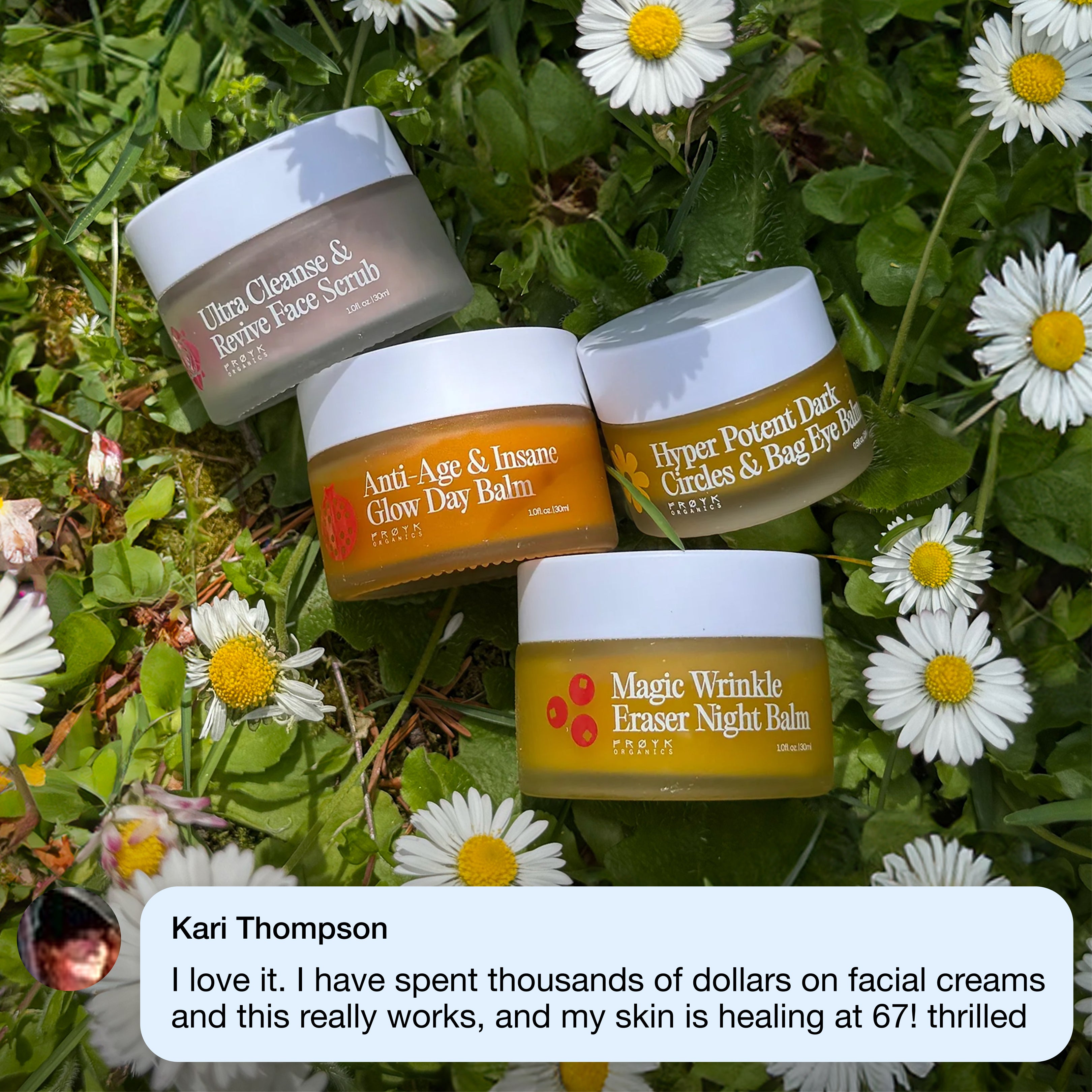
Wilde arktische Wildpflanzen und Bio-Bienenwachs. Kein Wasser, keine künstlichen Duftstoffe. Vier Balsame in einer Routine, die die Barriere-Lipide nährt, auf die ein dauerhafter Glow angewiesen ist, unterstützt durch eine 60-Tage-Geld-zurück-Garantie.
System kaufen - $11

