

 Account


Rote Wangen. Dieses heiße, enge Brennen nach einem Produkt, das vorgab, sanft zu sein. Wenn Sie jemals etwas in Panik abgewaschen haben und sich gefragt haben, was Ihre Haut diesmal gereizt hat, dann ist dieser Artikel für Sie.
Sie sind nicht das Problem, und Sie sind auch nicht daran gebunden. Die Lösung ist meist einfacher als das Drogerie-Regal vermuten lässt: weniger Inhaltsstoffe, keine künstlichen Duftstoffe und einige Pflanzenöle, die empfindliche Haut tatsächlich beruhigen statt zu reizen.
Das ist die ganze Idee hinter den Balsamen von Frøya Organics. Sie sind wasserfrei, hergestellt aus arktischen Wildpflanzen und Bienenwachs, mit einfachen Inhaltsstoffen, die Sie in einem Atemzug lesen können.
Diese Anleitung zeigt Ihnen, was Ihre Haut braucht, was Sie vermeiden sollten, und wie Sie die richtige Wahl treffen – ohne Trial and Error.
Die wichtigsten Punkte
- Empfindliche Haut reagiert, weil Ihre Hautbarriere dünner ist und Reizstoffe leichter eindringen lässt.
- „Natürlich" bedeutet nicht automatisch sanft, da einige Pflanzenextrakte und ätherische Öle trotzdem eine Reaktion auslösen können.
- Vermeiden Sie künstliche Duftstoffe, SLS, starke Säuren und Retinol, wenn Ihre Haut leicht gereizt wird.
- Eine kurze Routine mit weniger Reizstoffen schlägt eine lange Routine mit vielen aktiven Wirkstoffen.
- Wasserfreie Pflanzenbalsame beruhigen und versiegeln die Barriere – genau das, was empfindliche Haut braucht.
Was empfindliche Haut wirklich ist und warum sie reagiert
Empfindliche Haut bedeutet, dass Ihre Haut mit Stechen, Brennen, Jucken oder Rötung auf Dinge reagiert, die keine Reaktion hervorrufen sollten. Es ist meistens eine selbstberichtete Erfahrung, da es oft keine sichtbaren Zeichen gibt, auf die ein Arzt hinweisen könnte.
Es ist auch unglaublich verbreitet. Die meisten Menschen mit empfindlicher Haut teilen ein gemeinsames Merkmal: eine Hautbarriere, die Feuchtigkeit leichter abgibt und Reizstoffe leichter eindringen lässt, als sie sollte.
Diese Barriere-Verbindung ist wichtig. Eine dermatologische Übersicht über empfindliche Haut verbindet sie mit Veränderungen im Nervensystem der Haut, wobei Barriere-Schwäche oft damit einhergeht. Wenn Ihre Barriere dünn ist, nimmt empfindliche Haut jedes Produkt intensiver wahr – unabhängig von Ihrem Hauttyp oder Hautton.
Das Ziel ist also nicht ein stärkeres Produkt. Es geht darum, Ihrer Haut die Dinge zu ersparen, die sie reizen.
Warum „natürlich" nicht automatisch sanft bedeutet
Natürlich und bio sind nicht dasselbe wie reizfrei. Ein Pflanzenöl kann Ihre Haut beruhigen, und ein anderer Pflanzenextrakt könnte Ihre Haut reizen. Beides ist wahr.
Das verwirrt viele Menschen, die nach natürlichen Hautpflegeprodukten einkaufen. Sie sehen „Pflanzlich" auf dem Etikett und nehmen an, es ist sicher – aber Ihre Haut liest kein Marketing.
Hinzugefügter Duft ist das klarste Beispiel. Einige ätherische Öle sind beruhigend, andere können sehr empfindliche Haut aber reizen – deshalb ist es wichtiger, Ihre eigenen Auslöser zu kennen, als das Wort „natürlich" auf der Vorderseite zu lesen.
Das ist kein Grund, die Natur zu fürchten. Es ist ein Grund, Etiketten zu lesen und einen Patch-Test zu machen, bevor Sie einem Produkt vertrauen – besonders wenn Sie mit trockener, juckender, empfindlicher Haut kämpfen.
Aggressive Inhaltsstoffe, die Sie in Produkten für empfindliche Haut meiden sollten
Wenn Ihre Haut leicht reagiert, gibt es einige häufige Inhaltsstoffe, die Sie vermeiden sollten. Diese tauchen selbst in Produkten auf, die als „clean" vermarktet werden, also schützt das Etikett allein Sie nicht.
Hier ist, was für empfindliche Haut üblicherweise Probleme verursacht:
- Künstliche Duftstoffe, einer der häufigsten Auslöser für Rötung und Jucken
- Natriumlaurylsulfat (SLS), ein starkes Reinigungsmittel, das die Barriere angreift
- Starke Säuren wie Glykol- und Salicylsäure, die stechen und dünne Haut überentfernen können
- Retinol und Retinoide, wirksam für manche, aber oft zu aggressiv – sie können auf empfindlicher Haut Schuppung, Brennen und verstopfte Poren verursachen
- Alkoholhaltige Formeln, schnelltrocknend aber austrocknend
Wirkstoffe wie Säuren und Retinol haben ihren Platz. Das Problem ist, dass sie auf empfindlicher Haut oft mehr Reizung als Nutzen bringen – deshalb gewinnt ein sanfterer Weg meist.
Warum duftfrei besser ist als „unparfümiert"
Hier ist ein schneller Etikett-Trick. „Duftfrei" ist ein besseres Signal als „unparfümiert", weil Produkte ohne Parfüm trotzdem Masking-Duftstoffe enthalten können, um einen Basisgeruch zu überdecken. Bei Hautpflege für empfindliche Haut bedeutet weniger hinzugefügter Duft weniger Chancen zu reagieren.
Was Sie in Bio-Hautpflege für empfindliche Haut suchen sollten
Die beste Bio-Hautpflege für empfindliche Haut hält es kurz, einfach und barrierenfreundlich. Sie wollen weniger Reizstoffe, keine künstlichen Duftstoffe und Formeln, die Ihre Haut unterstützen statt zu stressen.
Nutzen Sie diese Checkliste:
- Eine kurze Zutatenliste, die Sie aussprechen können
- Keine künstlichen Duftstoffe, keine Parabene, kein SLS oder aggressive Konservierungsstoffe
- Natürliche Inhaltsstoffe wie Pflanzenöle und Bienenwachs, die befeuchten und versiegeln
- Wasserfreie Formeln, damit nichts mit Füllstoffen verdünnt ist
- Von Drittanbietern getestet, mit Patch-Test-Option
Beruhigende Wildpflanzen und Öle, die die Barriere unterstützen
Bestimmte Pflanzenöle arbeiten mit Ihrer Haut zusammen, nicht dagegen. Jojobaöl ist herausragend, weil es Ihr eigenes Hautöl eng nachahmt – es nimmt es daher gut auf und fühlt sich beruhigend statt fettig an.
Sie können mehr über Jojobaöl für Haut und wie es Sanftheit unterstützt, erfahren. Dermatologen empfehlen oft leichte Öle, die reich an Linolsäure sind, plus beruhigende Extras wie Squalan und Vitamin E zur Befeuchtung.
Kamille beruhigt sichtbare Rötung, während Bienenwachs und Distel Feuchtigkeit in eine beschädigte Hautbarriere einschließen. Das sind die Bio-Inhaltsstoffe, die zuerst beruhigen, dann schützen.
Was Bio-Zertifizierung wirklich aussagt
Bio-Zertifizierung bestätigt, wie Inhaltsstoffe angebaut werden, nicht wie sanft sich ein Produkt anfühlt. Tatsächlich ist bio nicht automatisch sicherer, da selbst Bio-Pflanzen Stoffe enthalten können, die reizen. Labels wie USDA Organic oder COSMOS bedeuten nur einen bestimmten Prozentsatz zertifizierter Bio-Inhaltsstoffe – oft 95 % oder höher für die strengsten Stufen.
Andere wie MADE SAFE filtern Inhaltsstoffe heraus, die als schädlich gelten, und Gruppen wie die National Eczema Association kennzeichnen Produkte, die freundlich zu ekzem-anfälliger Haut sind. Das sind nützliche Signale, aber nicht die ganze Geschichte.
Bei empfindlicher Haut sagt Ihnen eine kurze, duftfreie Zutatenliste immer noch mehr als ein Siegel allein. Wild geerntete Wildpflanzen senken auch das Risiko von Pestiziden und chemischen Rückständen – das ist wichtig, wenn Umweltfaktoren Ihre Empfindlichkeit auslösen.
Eine einfache Routine für empfindliche Haut
Eine kurze Routine schlägt fast immer eine komplizierte für empfindliche Haut. Wenn Sie Seren, Lotionen und Wirkstoffe übereinander schichten, geben Sie Ihrer Haut mehr Chancen zu reagieren, nicht weniger.
Halten Sie es auf drei beruhigende Schritte:
- Sanfte Reinigung. Verwenden Sie lauwarmes Wasser, niemals heiß, und einen milden Reiniger mit sanften Inhaltsstoffen.
- Beruhigen und schützen. Verwenden Sie einen nährenden Balsam, um die Barriere zu beruhigen und zu versiegeln.
- Langsam vorgehen. Fügen Sie ein neues Produkt nach dem anderen hinzu, wenige Wochen auseinander, und überspringen Sie tägliches Schrubben.
Der letzte Punkt ist am wichtigsten. Reife und empfindliche Haut verbessern sich normalerweise mit einer konstanten Routine, die Überpeeling vermeidet – also widerstehen Sie dem Drang, Ihre Haut porentief zu reinigen.
Beim Sonnenschutz empfehlen die meisten Dermatologen einen mineralischen Sonnenschutz für längere Zeit in der Sonne, statt einen Balsam als Sonnenschutz zu behandeln.
Wie Bio-Balsame empfindliche Haut beruhigen

Die Balsame von Frøya sind genau für dieses Problem gebaut: empfindliche Haut, die Ergebnisse ohne das Brennen will. Statt Wasser und Füllstoffen ist jeder Balsam voller arktischer Wildpflanzen und Bienenwachs – eine kleine Menge leistet echte Arbeit.
Nehmen Sie den Balsam bei trockener, juckender Haut für Gesicht & Körper, gemacht für trockene, juckende, zu Rötung neigende Haut. Seine Formel verlässt sich auf deutsche Kamille, um Reaktivität zu beruhigen, plus Jojobaöl und Bienenwachs, um die Barriere zu erweichen und zu versiegeln.
Es ist wasserfrei, frei von künstlichen Duftstoffen und sanft genug für Gesicht und Körper. Das ist der Sinn dieser natürlichen Produkte: weniger Inhaltsstoffe, jeder mit einer Aufgabe, und keine Make-up nötig, um einen Schub zu verbergen.
Patch-Test zuerst: Bei allem Neuen reiben Sie eine kleine Menge auf Ihren inneren Unterarm und warten 24 Stunden, bevor es Ihr Gesicht berührt. Wenn Ihre Haut beruhigt bleibt, sind Sie bereit. Dieser einfache Patch-Test hilft Ihnen, eine Reaktion früh zu erkennen – besonders mit potenten Wildpflanzen.
Komplette Apotheke für Gesicht & Körper

Der Relief-Balsam gehört zu einem Set namens Komplette Apotheke für Gesicht & Körper, gebaut für beruhigende empfindliche Haut. Jeder Balsam ist eigenständig, also muss nichts gemischt oder gemessen werden.
So passen die drei Teile zusammen:
|
Produkt |
Wofür es hilft |
Star-Wildpflanzen |
Rolle in Ihrer Routine |
|
Trockene, juckende, zu Rötung neigende Haut |
Kamille, Distel, Bienenwachs, Jojobaöl |
Morgens und abends beruhigen und versiegeln, Gesicht und Körper |
|
|
Rötung und reaktive Ausbrüche |
Ringelblume, Studentenblume, Bienenwachs |
Dünne Schicht nachts auf roten, geröteten Stellen |
|
|
Schmerzende Gelenke und Muskeln |
Arktische Kräuter, Bienenwachs |
Nach Bedarf in den Körper massiert |
Weil jeder Balsam bereits vermischt ist, bekommen Sie eine vollständige Routine ohne fünf Wirkstoffe zu schichten, die sich gegenseitig bekämpfen.
Bio-Hautpflege für empfindliche Haut – die einfache Weise

Wenn Ihre Haut in einer Reizen-und-Erholen-Schleife feststeckt, ist der Ausweg normalerweise einfacher als das Drogerie-Regal vermuten lässt. Weniger Produkte, keine künstlichen Duftstoffe und wasserfreie Pflanzenbalsame, die Ihre Barriere unterstützen, leisten oft mehr als eine weitere 10-Schritte-Routine.
Das ist die ganze Idee hinter Frøya Organics. Es ist Bio-Hautpflege für empfindliche Haut, gebaut auf wenigen natürlichen Inhaltsstoffen, die Sie lesen können – nichts zum Mischen und arktische Pflanzenbalsame, gemacht um zu beruhigen statt zu reizen.
Sie müssen uns nicht einfach glauben. Sie können echte vorher-nachher Hautergebnisse von Frauen mit empfindlicher, zu Rötung neigender Haut sehen, die zu einer einfacheren Pflanzeneroutine gewechselt haben.
Beginnen Sie mit einem Balsam, machen Sie einen Patch-Test, und lassen Sie Ihre Haut Ihnen den Rest sagen.
Dieser Artikel dient nur zu Informationszwecken und ist keine medizinische Beratung. Die Balsame von Frøya Organics sind Kosmetikprodukte, die dazu bestimmt sind, die Haut zu beruhigen und zu unterstützen – nicht um irgendwelche Zustände zu behandeln, zu heilen oder zu verhindern. Wenn Sie eine anhaltende oder schwere Hautreaktion haben, sprechen Sie bitte mit einem lizenzierten Dermatologen.
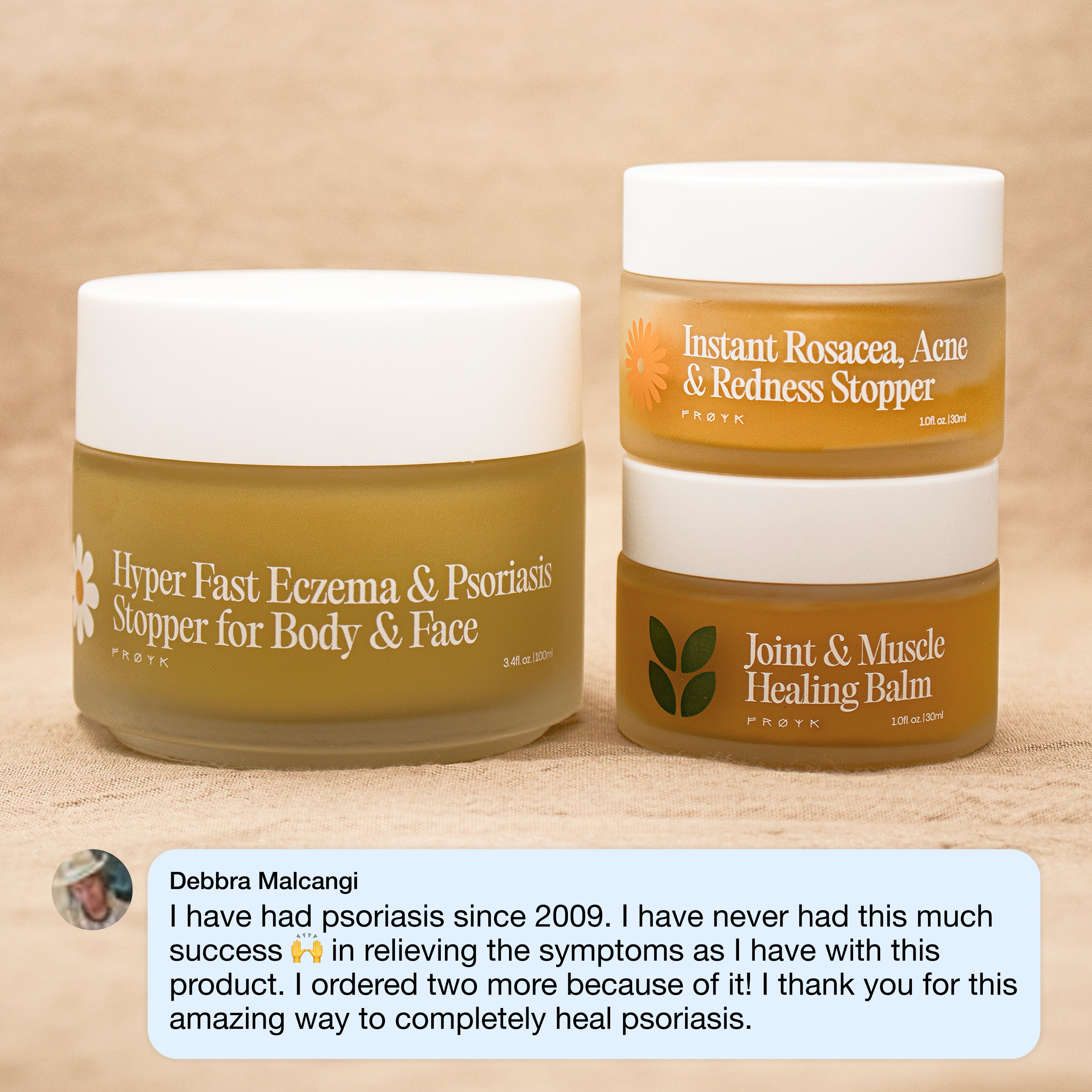
Drei wasserfreie Balsame für empfindliche, reaktive Haut. Arktische Wildpflanzen und Bio-Bienenwachs beruhigen, versiegeln und entspannen ohne künstliche Duftstoffe – gestützt durch eine 60-Tage-Geld-zurück-Garantie.
Jetzt das System kaufenHäufig gestellte Fragen
Wie wähle ich schnell eine sanfte Reinigung?+
Welches Gesichtsöl passt am besten zu reaktiver Haut?+
Ist Aloe vera für alle empfindlichen Hauttypen sicher?+
Was sind die besten Hautpflegeprodukte für überempfindliche Haut?+
Welche Hautpflegemarke ist die beste für empfindliche Haut?+


