

 Account


Heb je al crème na crème geprobeerd en komt de jeuk altijd terug, dan is de crème waarschijnlijk niet het probleem. Eczeem laait op omdat je huidbarrière vocht verliest en irritanten binnenlaat, niet omdat je een sterker werkzaam ingredient mist. Zorg dat je barrière herstelt, en al het andere begint te kalmeren.
Er is nog een formatdetail waar bijna niemand over praat. Een waterloze balsem bevat veel meer olie dan een standaardcrème, daarom verzegelt een formule zoals de Balsem voor de Droge, Jeukende Huid – Gezicht & Lichaam gescheurde huid beter en prikt zelden.
Hieronder leer je welke natuurlijke ingrediënten echt werken, wat je moet vermijden, waarom balsems watergebaseerde crèmes verslaan, en hoe je ze gebruikt voor echt eczeemverlichting.
Kernpunten
- Een natuurlijke eczeemcrème kalmeert jeuk en droogheid door je huidbarrière te verzegelen en te ondersteunen.
- Colloïdale haver, kamille en calendula hebben het sterkste onderzoek achter zich voor het kalmeren van eczeem.
- Natuurlijke crèmes helpen milde tot matige uitbarstingen, maar ernstig eczeem heeft nog steeds artsenkundige zorg nodig.
- Een waterloze balsem bevat meer olie dan een watergebaseerde crème, dus verzegelt gescheurde huid beter.
- Voer altijd een patchtest uit met nieuwe producten, omdat zelfs natuurlijke ingrediënten huidirritatie kunnen veroorzaken.
Wat Is Eczeem, en Waarom Je Huid Zich Zo Voelt
Eczeem is een langdurige aandoening die je huid droog, jeukerig, rood en ontstoken achterlaat. Het treft ongeveer 31,6 miljoen Amerikanen, en atopische dermatitis is de meest voorkomende vorm.
Het kernprobleem is een zwakke huidbarrière. Wanneer de huidbarrièrefunctie daalt, ontsnapt vocht en glijden irritanten naar binnen, wat meer jeuk en ontsteking veroorzaakt. Dit verandert doorgaans naarmate je ouder wordt.
Veelvoorkomende eczeemsymptomen bij volwassenen zijn onder meer:
- Droge, ruwe of schubachtige patches
- Jeuk die 's nachts erger wordt
- Roodheid en ontstoken huid
- Barsten, of huid die strak en gevoelig aanvoelt
Als je uitbarstingen aansluiten op hormonale veranderingen, dat is ook normaal. Veel vrouwen merken meer menopause-gerelateerde huidjeuk op wanneer estrogeen daalt en de barrière dunner wordt.
Waarom een Natuurlijke Eczeemcrème Eczeem-Gevoelige Huid Helpt
Het doel met natuurlijke eczeembehandelingen is eenvoudig: ontsteking verminderen en de barrière herbouwen. Een goede crème doet beide door vocht vast te houden en de immuunrespons die jeuk veroorzaakt te kalmeren.
Op planten gebaseerde crèmes werken goed omdat ze vertrouwen op zachte emolliënten en natuurlijke remedies in plaats van harde werkzame ingrediënten. Dat is belangrijk voor mensen met eczeem, wiens gevoelige huid op veel reageert.
De eerlijke reikwijdte: Natuurlijke crèmes blinken uit voor milde tot matige uitbarstingen en dagelijks onderhoud. Ze kalmeren jeuk en herbouwen de barrière, maar zij zijn geen vervanger voor recept-zorg wanneer eczeem ernstig wordt.
Voor een nader inzicht in het mechanisme laat deze gids over hoe je een beschadigde huidbarrière natuurlijk herstelt zien wat die beschermende barrière echt herbouwt.
Natuurlijke Ingrediënten Die Eczeem Kalmeren
Een paar natuurlijke ingrediënten hebben echt onderzoek achter zich. Het voorbehoud is dat "natuurlijk" niet altijd zacht betekent, dus weten wat elk doet helpt je een crème te kiezen die je huid echt kalmeert.
- Colloïdale haver heeft het sterkste antecedent. Het is het enige over-the-counter huidbeschermingsmiddel dat de FDA erkent voor eczeem, en één klinische studie vond dat een 1% colloïdale havercrème eczeemernstig met 51% in 14 dagen verminderde.
- Kamille en calendula kalmeren geïrriteerde huid, dankzij anti-inflammatoire eigenschappen die roodheid verminderen en genezing ondersteunen. Dit zijn de soort planten waar het waard is naar uit te kijken in een natuurlijke eczeemcrème.
- Kokosnootolie vermindert waterverlies en verlicht jeuk. Één studie vond dat maagdelijke kokosnootolie de huidsituatie over acht weken verbeterde, hoewel sommigen er op reageren, dus patch test eerst.
Een paar meer oliën en boters ondersteunen de barrière in mindere mate, en ze verschijnen vaak in natuurlijke crèmes:
- Zonnebloemolie is rijk aan vetzuren die hutvocht vergroten en de barrière versterken.
- Sheaboter en cacaoboter bieden anti-inflammatoire en antioxidant-eigenschappen, en werken als rijke emolliënten.
- Aloë vera koelt en kalmeert, terwijl teunisbloemolie ontsteking voor sommige mensen kan verminderen, hoewel het bewijs gemengd is.
De planten met het beste eczeemonderzoek zijn kalmerend, barrière-ondersteunende planten, niet harde werkzame ingrediënten. Een crème die ze al mengt bespaart je het giswerk.
Waar Je Op Moet Letten Voordat Je Het Erop Smeert
Niet elk natuurlijk ingrediënt is veilig voor elk gezicht. Sommige plantenoliën kunnen huidirritatie veroorzaken en eczeem erger maken, dus een beetje voorzichtigheid beschermt je.
Daarom is een patchtest belangrijk. Leg een beetje op een kleine plek huid op je binnenkant van je arm, wacht een paar minuten tot een volle dag, en controleer op een reactie voordat je het breder gebruikt.
Patch test eerst: Zelfs natuurlijke planten kunnen contactdermatitis veroorzaken. Dab een kleine hoeveelheid op je binnenkant van je arm, wacht 24 uur, en controleer op roodheid of jeuk voordat je het ergens anders gebruikt.
Benaderingen met zwakker of riskanter bewijs zijn ook nuttig om te kennen:
- Olijfolie kan huidbarrièrefunctie verlagen, dus het is beter van eczeem-gevoelige huid af te houden.
- Theeboomolie en andere zeer geconcentreerde etherische oliën kunnen irriteren en uitbarstingen verergeren.
- Appelciderazijn, honing en bleekbadbaden worden vaak genoemd. Een verdund azijnbad kan helpen huid-pH herstellen en honing heeft antimicrobiële eigenschappen, maar elk vereist voorzichtigheid en eerst een patchtest.
De National Eczema Association beveelt geurloos producten en een zachte reinigers aan, en bevochtig direct na het baden om vocht in de barrière vast te houden.
Waarom een Waterloze Balsem een Watergebaseerde Crème Verslaat

Hier is het onderdeel wat de meeste mensen missen. Oliehoudend besluit hoe goed een vochtinbrenger een beschadigde barrière verzegelt, en niet al hebben er veel.
Lotions bevatten de minste olie. Crèmes zijn gedeeltelijk water, gedeeltelijk olie, vaak dicht bij 70 tot 90% water. Vaseline en vet, hoog-oliehoudende balsems verzegelen het best en prikken zelden, daarom raden dermatologen ze vaak aan voor eczeemverlichting.
Oliehoudend is de beslissende factor: Lotions bevatten de minste olie, crèmes zitten dicht bij 70 tot 90% water, en balsems bevatten de meeste olie. Meer olie betekent betere verzegeling op gescheurde huid, daarom prikken balsems zelden.
Een waterloze balsem slaat water over. Elk bit werkt aan verzegeling en verzachting, in plaats van verdamping in een paar minuten. Voor droge, gescheurde huid helpt die blijvende kracht jeuk te verminderen en verlichting te bieden die aanhoudt.
Balsem voor de Droge, Jeukende Huid – Gezicht & Lichaam

Als je een natuurlijke balsem wilt die op de manier is gebouwd die onderzoek suggereert, dan is de Balsem voor de Droge, Jeukende Huid – Gezicht & Lichaam het antwoord van Frøya voor eczeem-gevoelige huid. Het is een waterloze, arctische plantformule gemaakt voor gezicht en lichaam.
De werkzame ingrediënten matchen het onderzoek hierboven. Duitse kamille kalmeert ontsteking en jeuk, distel en bijenwas verzegelen vocht terwijl ze de barrière herstellen, en borage en rozebottel verzachten ruwe, droge patches.
Die mix werkt op wat een uitbarsting veroorzaakt: een lekkende barrière die vocht laat ontsnappen en irritanten binnenlaat. De Balsem voor de Droge, Jeukende Huid – Gezicht & Lichaam helpt roodheid en jeuk te kalmeren, kalmeert eczeem-gevoelige huid, en sluit het vocht in dat je huid voortdurend verliest.
Breng een klein topje-hoeveelheid op schone, droge huid aan, 2 tot 3 keer per dag, met focus op de jeukerigste, meest gescheurde plekken. Dun en vaak verslaat dik en zelden. Het kalmeert en verlicht tijdens een uitbarsting, en het geneest de aandoening niet.
Complete Apotheek voor Gezicht & Lichaam

De balsem verankert ook een driestapenset voor mensen die meer dan één bezorgdheid beheersen. Je kunt de volledige Complete Apotheek voor Gezicht & Lichaam set verkennen, waarbij elke balsem één taak heeft en samen gezicht en lichaam bedekken.
|
Balsem |
Wat Het Doet |
Hoe Te Gebruiken |
|
Balsem voor de Droge, Jeukende Huid – Gezicht & Lichaam |
Kalmeert jeuk en droogheid, verzegelt de barrière |
Dun laagje op schone huid, 2 tot 3 keer per dag |
|
Verlicht roodheid en reactieve puistjes |
Dun laagje op het gezicht voor het slapengaan |
|
|
Kalmeert de pijnen die rust verstoren |
Masseer in zere plekken naar behoefte |
Samen bedekken de drie meer dan huid. De reliëfbalsem kalmeert de uitbarsting, de roodheid-stopper bedaart reactieve puistjes, en de genesingsbalsem verlicht de pijnen die je wakker houden, dus één eenvoudige routine behandelt huid en comfort tegelijk.
Wanneer Je een Zorgverlener Moet Zien
Natuurlijke zorg doet veel, maar het heeft grenzen, en ze kennen beschermt je huid. Ernstig eczeem heeft soms meer nodig dan een balsem kan bieden.
Neem contact op met een arts of dermatoloog als je opmerkt:
- Weepwonden, barsten, of tekenen van infectie
- Uitbarstingen die snel verspreiden of niet bedaaren
- Geen verbetering na een paar weken consistent onderhoud
Dat is je huid om versterking vragen, niet een mislukking aan jouw kant. Sterke receptplicht-opties kunnen met je dagelijkse routine koppelen.
Wat Steady, Zachte Zorg Kan Doen

Een natuurlijke eczeemcrème zal je huid niet van vandaag op morgen herstellen, en zal je arts niet vervangen voor een ernstige uitbarsting. Wat het doet is je barrière steady, zachte ondersteuning geven tot de jeuk bedaart en de droogheid afneemt.
Dat is waar de echte verandering gebeurt. Resultaten zijn door klanten gerapporteerd en variëren, maar het patroon houdt stand. Consistentie geeft een worstlende barrière de tijd die hij nodig heeft om te genezen.
Begin dus zacht en blijf ervan houden. Als je klaar bent om je pasvorm te vinden, blader door de natuurlijke eczeemverlichting-collectie en begin eenvoudig.
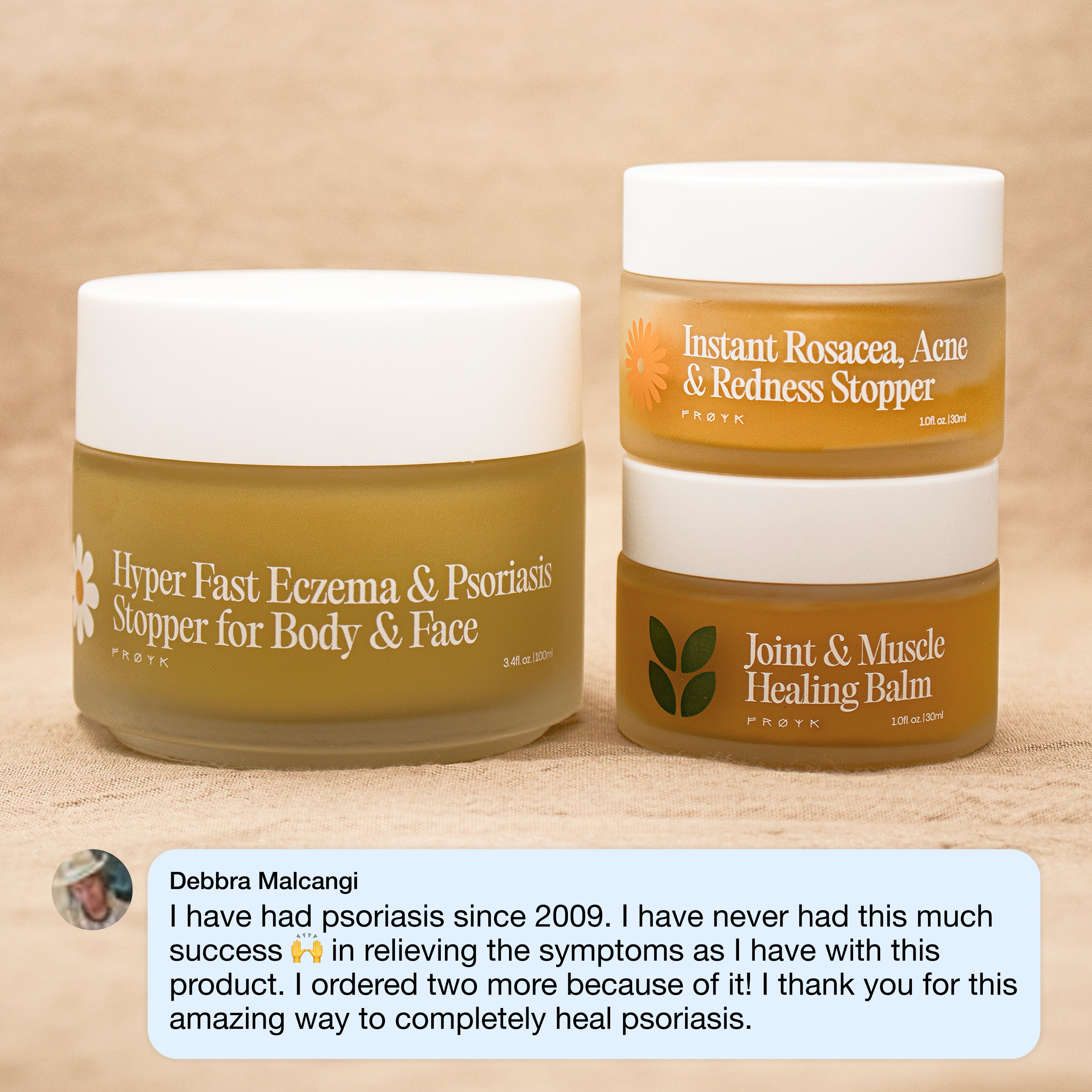
Drie waterloze balsems voor eczeem, roodheid en gewrichtspijn. Wilde arctische planten en biologische bijenwas kalmeren, verzegelen en herstellen huid op gezicht en lichaam, ondersteund door een 60-dagen niet-goed-geld-terug-garantie.
Shop het Systeem VandaagVeelgestelde Vragen
Wat is de beste natuurlijke crème tegen eczeem?+
Wat heelt eczeem op natuurlijke wijze?+
Wat doodt bacteriën op huid met eczeem?+
Hoe kun je eczemuitbarstingen thuis kalmeren?+
Welke natuurlijke ingrediënten moet je vermijden bij eczeem?+


