

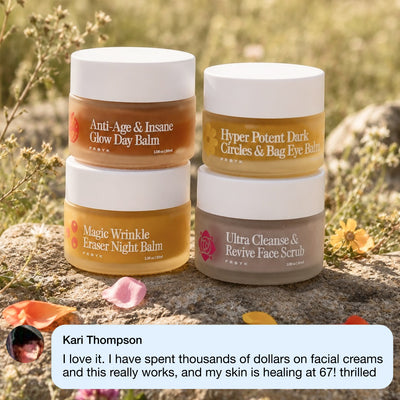
 Account


De beste rozaceabehandeling is geen genezing, omdat rosacea er geen heeft. Dat klinkt als slecht nieuws, maar het tegenovergestelde zodra je het begrijpt.
Rosacea treft meer dan 16 miljoen Amerikanen, volgens de National Rosacea Society, en wordt vaker bij vrouwen gediagnosticeerd. Het is ook een van de meest misverstane huidaandoeningen.
Hier is het deel dat weinig mensen noemen. Harde "behandelingen" maken rosacea vaak erger, terwijl voorzichtige botanische verzorging het rood rustiger maakt zonder te prikkelen. Dat is het idee achter onze Dagbalsem voor de Onzuivere Huid, een waterloze balsem ontworpen om roodheid te sussen, niet te irriteren.
In deze gids leer je wat uitbarstingen echt veroorzaakt, welke ingrediënten je moet vermijden, wat roodheid snel sust, en wanneer je een dermatoloog moet opzoeken.
Belangrijkste punten
- Rosacea is een chronische huidaandoening zonder genezing, maar de juiste verzorging houdt het rustig.
- Het kennen van je veel voorkomende triggers, zoals zon en pittig eten, helpt je uitbarstingen te voorkomen.
- Harde zuren en geur verergeren roodheid vaak, dus voorzichtige huidverzorging werkt beter.
- Botanicals die de barrière ondersteunen, sussen rozaceagevoelige huid zonder te steken.
- Een dermatoloog kan helpen bij ernstige gevallen die voorzichtige verzorging niet kan kalmeren.
Hoe de beste rozaceabehandeling er echt uitziet
De beste aanpak voor rosacea beheert het, geneest het niet. Je kalmeert de roodheid, beheerst de puistjes en voorkomt uitbarstingen voordat ze beginnen.
Rosacea is een chronische huidaandoening, dus snelle oplossingen houden zelden stand. De Cleveland Clinic legt uit dat medicijnen, crèmes en lotions symptomen helpen verminderen, maar rosacea kan gedurende je leven nog steeds uitbarsten.
Dat betekent dat je doel verschuift. In plaats van op zoek gaan naar een genezing, bouw je een eenvoudig behandelplan op dat je huid stabiel houdt. Triggercontrole plus voorzichtige dagelijkse producten doen het meeste werk.
Wat rosacea met je huid doet en hoe het voelt

Rozaceasymptomen omvatten aanhoudende gezichtsroodheid, zichtbare bloedvaten en kleine puistjes die kunnen steken of branden. Het verschijnt vooral op je wangen, neus, kin en voorhoofd.
Aanhoudende gezichtsroodheid is het teken dat mensen eerst opmerken. Na verloop van tijd zie je mogelijk rode vlekken, kapotte haarvaten en pijnlijke puistjes op de aangetaste huid. Het treedt meestal op na je 30e en komt vaker voor bij mensen met blanke huid.
Het moeilijke is niet alleen de huid. Een enquête van 2025 door de National Rosacea Society stelde vast dat de meeste mensen met rosacea zeggen dat het hun mentale gezondheid beïnvloedt, niet alleen hoe hun huid eruit ziet.
De vier soorten rosacea
Rosacea heeft vier hoofdsoorten, en je kunt er meer dan één tegelijk hebben.
- Erythematoteleangiectatisch: aanhoudende roodheid met zichtbare bloedvaten
- Papulopustulair rosacea: roodheid met acne-achtige, pus gevulde puistjes
- Phymateus: dikkere, bumpy huid, vooral rond de neus
- Oculair: geïrriteerde, waterende of bloeddoorlopen ogen
Het kennen van jouw type helpt jou en je arts het juiste plan te kiezen.
Wat rozaceauitbarstingen veroorzaakt
Rozaceauitbarstingen gebeuren wanneer iets de kleine bloedvaten in je gezichtshuid verwijd. Dat leidt tot blozen, warmte en roodheid.
Veel voorkomende triggers zijn:
- Blootstelling aan zon en hitte
- Het eten van pittig voedsel en warme dranken
- Alcohol
- Stress
- Koude wind en plotselinge weersveranderingen
Niet iedereen reageert op dezelfde dingen. Een eenvoudig triggerdagboek helpt je je eigen patronen op te sporen en uitbarstingen te verminderen. Noteer wat je at, deed en voelde elke dag dat je huid uitbarstte, en het patroon toont zich snel.
Probeer dit: Houd twee weken lang een triggerdagboek bij. Noteer je voeding, weer, stress en huidverzorging elke dag dat je huid uitbarstte, en je persoonlijke triggers worden gemakkelijk zichtbaar.
Veel voorkomende irritanten om te vermijden op rozaceagevoelige huid
Sommige huidverzorgingsproducten maken rosacea erger, dus het vermijden ervan is half de strijd. Reactieve huid doet het best met minder, zachtere ingrediënten.
Let op deze irritanten:
- Alcohol en synthetische geur
- Munt, pepermunt en eucalyptus
- Exfoliërende zuren zoals salicylzuur en glycolzuur
Hier wordt het lastig. Zuren zoals azelaïnezuur kunnen puistjes verminderen en inflammatie kalmeren, maar op gevoelige huid brengen ze vaak droogheid, steken en schilferige plekken. Die afweging is moeilijk wanneer je barrière al fragiel is.
Test altijd een nieuw product eerst op je kaak, en wacht een dag voordat je het op de omliggende huid gebruikt.
Opmerking: Sterke actieve ingrediënten kunnen puistjes voor sommige mensen kalmeren, maar ze ruilen vaak een probleem voor een ander op rozaceagevoelige huid: meer droogheid, steken en roodheid. Zachter is meestal slimmer hier.
Waarom natuurlijke, barrièreondersteunende huidverzorging rosacea kalmeert
Voorzichtige, barrièreondersteunende huidverzorging kalmeert rosacea omdat de aandoening vaak gepaard gaat met een verzwakte barrière. Wanneer je barrière sterk is, reageert je huid minder.
Rozaceagevoelige huid is meestal droger en gevoeliger, dus producten die stripping doen slaan tegen. De American Academy of Dermatology beveelt voorzichtig reinigen en geurloos verzorgen aan ter ondersteuning van de huidentgezondheid.
Het doel is eenvoudig. Voed je barrière met rustgevende, niet-stripping natuurlijke ingrediënten zodat deze vochtinslag kan vasthouden en tot rust kan komen. Je kunt meer leren over hoe je je huidbarrière natuurlijk herstelt met de juiste botanicals.
De beste biologische rozaceabalsem om dagelijks roodheid te kalmeren

Het beste natuurlijke middel voor dagelijkse roodheidsverlichting is een voorzichtige botanische balsem die sust zonder strip. Onze Balsem voor Rosacea, Acne & Roodheid is precies daarvoor gemaakt.
Het is een Goudsbloem & Calendula Bijenwas Balsem zonder synthetische geur en zonder zuren. Calendula-extract staat erom bekend geïrriteerde huid te kalmeren, daarom verankert het deze balsem.
De formule is waterloos en potent, dus een klein vingertopje gaat ver. Gebruik het door 's nachts een dunne laag over schone huid aan te brengen. Veel mensen zien binnen dagen kalmer, minder rode huid, hoewel resultaten per persoon verschillen.
In één merkonderzoek rapporteerden klanten 79% minder acne, roodheid en rosacea met regelmatig gebruik.
Compleet Systeem voor de Onzuivere Huid: Hoe het stel samenwerkt

Sommige mensen krijgen tegelijk roodheid en uitbraken, en die combinatie heeft iets meer nodig dan één balsem. Als dat klinkt als jouw huid, bouwt het Compleet Systeem voor de Onzuivere Huid de Roodheid Stopper in een eenvoudige dagelijkse routine.
Hier is hoe elke stap roodheid-gevoelige, uitbraak-gevoelige huid helpt:
|
Stap |
Wat het is |
Hoe het helpt |
|
Rosacea Stopper (nacht) |
Goudsbloem & Calendula Balsem |
Kalmeert roodheid en sust reactieve huid 's nachts |
|
Zee-Duindoorn Balsem |
Lichte dagvoeding die de barrière ondersteunt |
|
|
Zuiverende & Revitaliserende Gezichtsscrub (optioneel, 1 tot 2x per week) |
Waterloze poederscrub |
Een voorzichtige, occasionele vernieuwing, licht gebruikt omdat rozaceahuid niet van zwaar schrobben houdt |
De scrub is optioneel en bewust licht. Als je huid erg reactief is, kun je het overslaan en je aan de twee balsems houden.
Wanneer je een dermatoloog voor rosacea moet opzoeken
Raadpleeg een dermatoloog wanneer je rosacea matig tot ernstig is, of wanneer het niet tot rust komt met voorzichtige verzorging. Huidexperts kunnen sterkere behandelingsopties bieden die thuiszorg niet kan.
Voor rozaceagerelateerde puistjes en roodheid kunnen artsen naar een paar dingen grijpen:
- Topische medicijnen zoals metronidazol, vaak gebruikt voor rozacearoodheid en puistjes
- Mondelinge medicatie zoals lage-dosisdoxycycline, die inflammatie in matige tot ernstige gevallen kan verminderen, plus mondeling antibiotica voor ernstige gevallen
- Laserbehandeling en lasertherapie, die kapotte haarvaten richten om zichtbare roodheid te verminderen
Sommige onderzoeken suggereren dat bepaalde bacteriën een auto-immuunrespons in rosacea kunnen veroorzaken, wat een reden is waarom goede behandeling de inbreng van een professional waard is. Als je ogen geïrriteerd of korrelig voelen, noem dit vroeg, omdat onbehandelde oogsymptomen kunnen verergeren.
Dagelijkse gewoonten die rosacea rustig houden
Kleine leefstijlveranderingen houden uitbarstingen minder en milder. Ze kosten niets en ondersteunen alles wat je doet.
Probeer deze voorzichtige gewoonten:
- Beheer stress met rust, wandelingen of langzame ademhaling
- Test één nieuw voedsel tegelijk om triggers op te sporen
- Kies voorzichtige oefening die je niet oververwarmt
- Beperk lange periodes in sterke zon en vermijd verbranden
Over zon, houd het eenvoudig. Je hoeft de zon niet te vrezen, vermijd alleen verbranden. Voor langere tijd buiten kunt je een minerale zonnebrand met voorzichtige ingrediënten gebruiken. Je kunt ook producten verkennen die rozaceagevoelige huid kalmeren die in een voorzichtige dagelijkse routine passen.
Kalmer, helderder huid met natuurlijke botanische verzorging

Kalm, helderder huid is geen fantasie. Het komt voort uit vaste gewoonten, voorzichtige biologische producten en een beetje geduld.
Veel mensen zien een echte daling van roodheid binnen enkele weken van overschakeling naar natuurlijke botanische verzorging, hoewel resultaten per persoon verschillen. Wat het meest uitmaakt is volhouden, niet één nachtelijke oplossing najagen.
Echte klanten hebben hun voor- en naftoto's gedeeld nadat ze deze overstap hebben gemaakt. Zie hun echte resultaten op onze rosacea voor-naftoto's en visualiseer je eigen huid over enkele weken.
Disclaimer: Dit artikel is alleen ter informatie en is geen medisch advies. Rosacea verschilt van persoon tot persoon, en resultaten zijn niet gegarandeerd. Raadpleeg een gelicentieerde dermatoloog of zorgverlener voor diagnose en behandeling die bij jouw huid past.
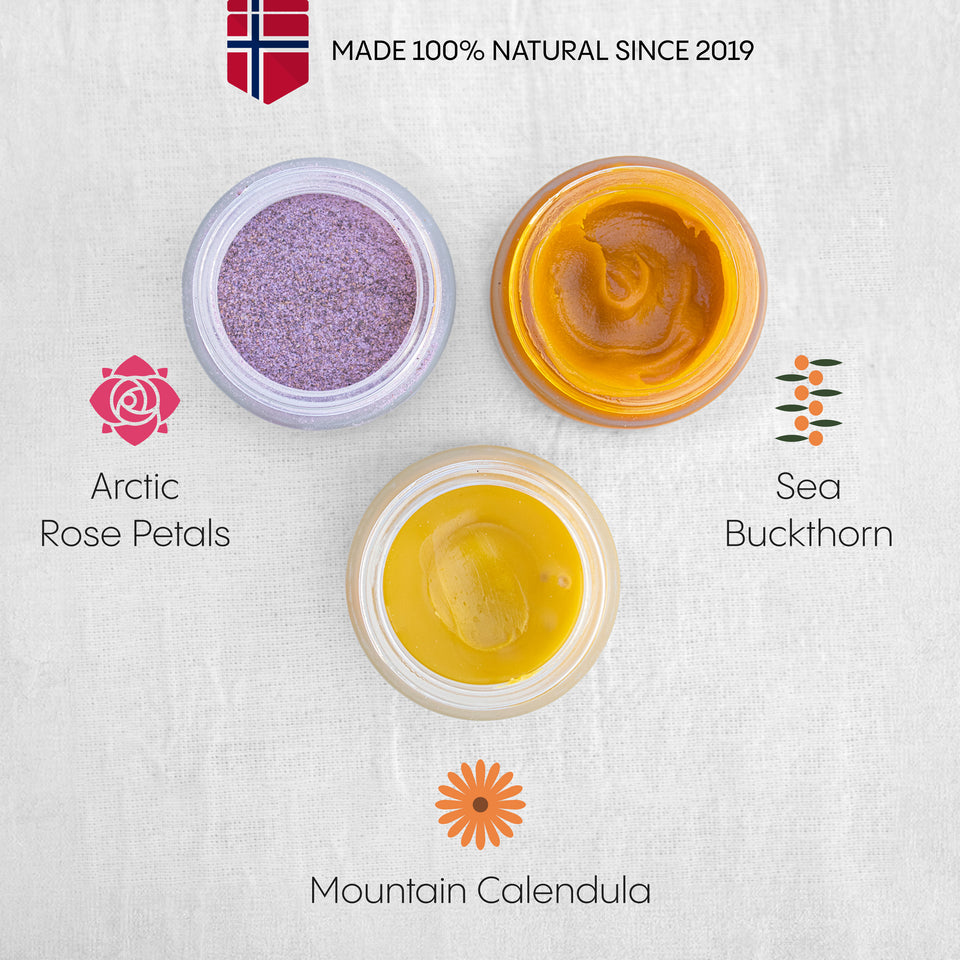
Drie arctische botanische stappen die roodheid kalmeren, de barrière ondersteunen en rozaceagevoelige huid comfortabel houden. Geen zuren, geen geur, geen stripping, ondersteund door een niet-goed-geld-terug-garantie van 60 dagen.
Koop het Systeem VandaagVeelgestelde Vragen
Wat kalmeert rosacea op natuurlijke wijze?+
Wat mag je niet op een gezicht met rosacea gebruiken?+
Wat is de grootste trigger voor rosacea?+
Wordt rosacea erger met de leeftijd?+
Welke voedingsmiddelen moet ik vermijden bij rosacea?+
Wat helpt tegen rosacea snel?+


