

 Account


Se hai provato crema dopo crema e il prurito continua a tornare, il problema probabilmente non è la crema. L'eczema si manifesta perché la barriera cutanea perde umidità e lascia entrare gli irritanti, non perché ti manca un principio attivo più potente. Ripara quella barriera, e tutto il resto inizia a calmarsi.
C'è un dettaglio di formulazione di cui quasi nessuno parla. Un balsamo senza acqua contiene molto più olio di una crema standard, ecco perché una formula come il Balsamo per Pelle Secca e Pruriginosa – Viso & Corpo sigilla la pelle screpolata meglio e raramente pizzica.
Qui sotto scoprirai quali ingredienti naturali funzionano davvero, cosa evitare, perché i balsami battono le creme a base d'acqua, e come usarli per un vero sollievo dall'eczema.
Punti Chiave
- Una crema naturale per l'eczema calma il prurito e la secchezza sigillando e supportando la barriera cutanea.
- L'avena colloidale, la camomilla e la calendula hanno le ricerche più forti alle spalle per lenire l'eczema.
- Le creme naturali aiutano gli sfoghi da lievi a moderati, ma l'eczema grave ha ancora bisogno dell'assistenza di un medico.
- Un balsamo senza acqua contiene più olio di una crema a base d'acqua, quindi sigilla meglio la pelle screpolata.
- Fai sempre un test su una piccola area prima, perché anche gli ingredienti naturali possono causare irritazione cutanea.
Cos'è l'Eczema e Perché la Tua Pelle si Sente Così
L'eczema è una condizione cronica che lascia la pelle secca, pruriginosa, rossa e infiammata. Colpisce circa 31,6 milioni di americani, e la dermatite atopica è la sua forma più comune.
Il problema di fondo è una barriera cutanea debole. Quando la funzione della barriera cutanea cala, l'umidità esce e gli irritanti entrano, il che scatena più prurito e infiammazione. Questo tende a cambiare con l'avanzare dell'età.
I sintomi comuni dell'eczema negli adulti includono:
- Macchie secche, ruvide o squamose
- Prurito che peggiora di notte
- Rossore e pelle infiammata
- Screpolature o pelle che si sente tesa e sensibile
Se i tuoi sfoghi coincidono con i cambiamenti ormonali, è normale. Molte donne notano più prurito cutaneo legato alla menopausa man mano che gli estrogeni scendono e la barriera si assottiglia.
Perché una Crema Naturale per l'Eczema Aiuta la Pelle a Tendenza Eczematosa
L'obiettivo con i trattamenti naturali per l'eczema è semplice: ridurre l'infiammazione e ricostruire la barriera. Una buona crema fa entrambe le cose sigillando l'umidità e calmando la risposta immunitaria che alimenta il prurito.
Le creme a base vegetale funzionano bene perché si affidano a emollienti delicati e rimedi naturali invece di principi attivi aggressivi. Questo è importante per le persone con eczema, la cui pelle sensibile reagisce a molte cose.
L'ambito realistico: Le creme naturali brillano per gli sfoghi da lievi a moderati e la manutenzione quotidiana. Calmano il prurito e ricostruiscono la barriera, ma non sono un sostituto della terapia prescritta quando l'eczema diventa grave.
Per uno sguardo più approfondito al meccanismo, questa guida su come riparare una barriera cutanea danneggiata naturalmente mostra cosa ricostruisce davvero quella barriera protettiva.
Ingredienti Naturali che Calmano l'Eczema
Alcuni ingredienti naturali hanno vere ricerche alle spalle. Il problema è che "naturale" non sempre significa delicato, quindi sapere cosa fa ognuno ti aiuta a scegliere una crema che calmi davvero la tua pelle.
- L'avena colloidale ha il curriculum più solido. È l'unico protettivo cutaneo da banco che la FDA riconosce per l'eczema, e uno studio clinico ha trovato che una crema d'avena colloidale all'1% ha ridotto la gravità dell'eczema del 51% in 14 giorni.
- La camomilla e la calendula calmano la pelle irritata, grazie a proprietà antinfiammatorie che riducono il rossore e supportano la guarigione. Questi sono il tipo di botaniche che vale la pena cercare in una crema naturale per l'eczema.
- L'olio di cocco riduce la perdita di acqua e allevia il prurito. Uno studio ha trovato che l'olio di cocco vergine ha migliorato le condizioni della pelle nel corso di otto settimane, anche se alcuni hanno reazioni, quindi fai un test su una piccola area prima.
Alcuni altri oli e burri supportano la barriera in misura minore, e compaiono spesso nelle creme naturali:
- L'olio di semi di girasole è ricco di acidi grassi che aumentano l'umidità della pelle e rinforzano la barriera.
- Il burro di karité e il burro di cacao offrono proprietà antinfiammatorie e antiossidanti, e agiscono come ricchi emollienti.
- L'aloe vera raffresca e calma, mentre l'olio di enotera può ridurre l'infiammazione per alcune persone, anche se le evidenze sono contrastanti.
Le botaniche con le migliori ricerche sull'eczema sono piante lenitive che supportano la barriera, non principi attivi aggressivi. Una crema che le mescola già ti risparmia il lavoro di ricerca.
A Cosa Stare Attento Prima di Spalmare
Non ogni ingrediente naturale è sicuro per ogni pelle. Alcuni oli vegetali possono scatenare irritazione cutanea e peggiorare l'eczema, quindi un po' di cautela ti protegge.
Ecco perché un test su una piccola area è importante. Metti un po' su una piccola zona di pelle sulla parte interna del braccio, aspetta da pochi minuti a un giorno intero, e controlla se c'è una reazione prima di usarlo più largamente.
Test su una piccola area prima: Anche le botaniche naturali possono scatenare dermatite da contatto. Strofina una piccola quantità sulla parte interna del braccio, aspetta 24 ore, e controlla il rossore o il prurito prima di usarlo altrove.
Gli approcci con evidenze più deboli o più rischiose vale la pena conoscere:
- L'olio d'oliva può abbassare la funzione della barriera cutanea, quindi è meglio tenerlo lontano dalla pelle a tendenza eczematosa.
- L'olio dell'albero del tè e altri oli essenziali altamente concentrati possono irritare e peggiorare gli sfoghi.
- L'aceto di mele, il miele e i bagni con candeggina vengono menzionati spesso. Un bagno in aceto diluito può aiutare a ripristinare il pH della pelle e il miele ha proprietà antimicrobiche, ma ognuno richiede attenzione e un test su una piccola area prima.
La National Eczema Association consiglia prodotti senza profumo e un detergente delicato, e di idratare subito dopo il bagno per sigillare l'umidità nella barriera.
Perché un Balsamo Senza Acqua Batte una Crema a Base d'Acqua

Ecco la parte che la maggior parte delle persone perde. Il contenuto di olio decide quanto bene un idratante sigilla una barriera danneggiata, e non tutti ne contengono molto.
Le lozioni contengono meno olio. Le creme sono in parte acqua, in parte olio, spesso vicino al 70-90% di acqua. La vaselina e i balsami untuosi e ricchi di olio sigillano meglio e raramente pizzicano, ecco perché i dermatologi spesso li consigliano per il sollievo dall'eczema.
Il contenuto di olio è il fattore decisivo: Le lozioni contengono meno olio, le creme si aggirano intorno al 70-90% di acqua, e i balsami contengono più olio. Più olio significa un sigillo migliore sulla pelle screpolata, ecco perché i balsami raramente pizzicano.
Un balsamo senza acqua salta completamente l'acqua. Ogni bit lavora a sigillare e ammorbidire, invece di evaporare nel giro di pochi minuti. Per la pelle secca e screpolata, quella durata aiuta a ridurre il prurito e fornisce un sollievo che dura.
Balsamo per Pelle Secca e Pruriginosa – Viso & Corpo

Se vuoi un balsamo naturale costruito come la ricerca suggerisce, il Balsamo per Pelle Secca e Pruriginosa – Viso & Corpo è la risposta di Frøya Organics per la pelle a tendenza eczematosa. È una formula senza acqua alle piante artiche fatta per viso e corpo.
I principi attivi corrispondono alla scienza di cui sopra. La camomilla tedesca calma l'infiammazione e il prurito, il cardo e la cera d'api sigillano l'umidità mentre riparano la barriera, e la borragine e il rosmarino ammorbidiscono le macchie ruvide e secche.
Questo mix funziona su quello che guida uno sfogo: una barriera che perde e che lascia uscire l'umidità e entrare gli irritanti. Il Balsamo per Pelle Secca e Pruriginosa – Viso & Corpo aiuta a calmare il rossore e il prurito, lenisce la pelle a tendenza eczematosa, e sigilla l'umidità che la tua pelle continua a perdere.
Per usarlo, stendi una piccola quantità con la punta del dito sulla pelle pulita e asciutta 2-3 volte al giorno, concentrandoti sulle zone più pruriginose e screpolate. Sottile e spesso batte spesso e raramente. Lenisce e allevia durante uno sfogo, e non cura la condizione.
Apotecario Completo per Viso & Corpo

Il balsamo è anche la base di una serie a tre step per le persone che gestiscono più di una preoccupazione. Puoi esplorare il set completo Apotecario Completo per Viso & Corpo, dove ogni balsamo ha un ruolo e insieme coprono viso e corpo.
|
Balsamo |
Cosa Fa |
Come Usarlo |
|
Balsamo per Pelle Secca e Pruriginosa – Viso & Corpo |
Calma il prurito e la secchezza, sigilla la barriera |
Strato sottile sulla pelle pulita, 2-3 volte al giorno |
|
Allevia il rossore e i brufoli reattivi |
Strato sottile sul viso prima di andare a letto |
|
|
Lenisce i dolori che disturbano il riposo |
Massaggia nei punti doloranti secondo le necessità |
Insieme, i tre coprono più della pelle. Il balsamo per il sollievo calma lo sfogo, il balsamo per il rossore calma i brufoli reattivi, e il balsamo lenitivo allevia i dolori che ti tengono sveglia, così una semplice routine gestisce pelle e comfort allo stesso tempo.
Quando Consultare un Operatore Sanitario
La cura naturale gestisce molto, ma ha limiti, e conoscerli mantiene la tua pelle al sicuro. L'eczema grave a volte ha bisogno di più di quello che un balsamo può offrire.
Contatta un medico o dermatologo se noti:
- Pelle che trasuda, screpolature o segni di infezione
- Sfoghi che si diffondono velocemente o non si calmano
- Nessun miglioramento dopo alcune settimane di cura coerente
La tua pelle ti sta chiedendo aiuto, non è un fallimento da parte tua. Opzioni di prescrizione forti possono abbinarsi alla tua routine quotidiana.
Cosa Può Fare una Cura Costante e Delicata

Una crema naturale per l'eczema non fisserà la tua pelle durante la notte, e non sostituirà il tuo medico per uno sfogo grave. Quello che fa è dare alla tua barriera un supporto costante e delicato finché il prurito non si calma e la secchezza non si allevia.
È qui che avviene il vero cambiamento. I risultati sono segnalati dai clienti e variano, ma il modello regge. La coerenza dà a una barriera in difficoltà il tempo di cui ha bisogno per guarire.
Quindi inizia in modo delicato e rimani coerente. Se sei pronta a trovare la tua soluzione, sfoglia la collezione di sollievo naturale per l'eczema e inizia in modo semplice.
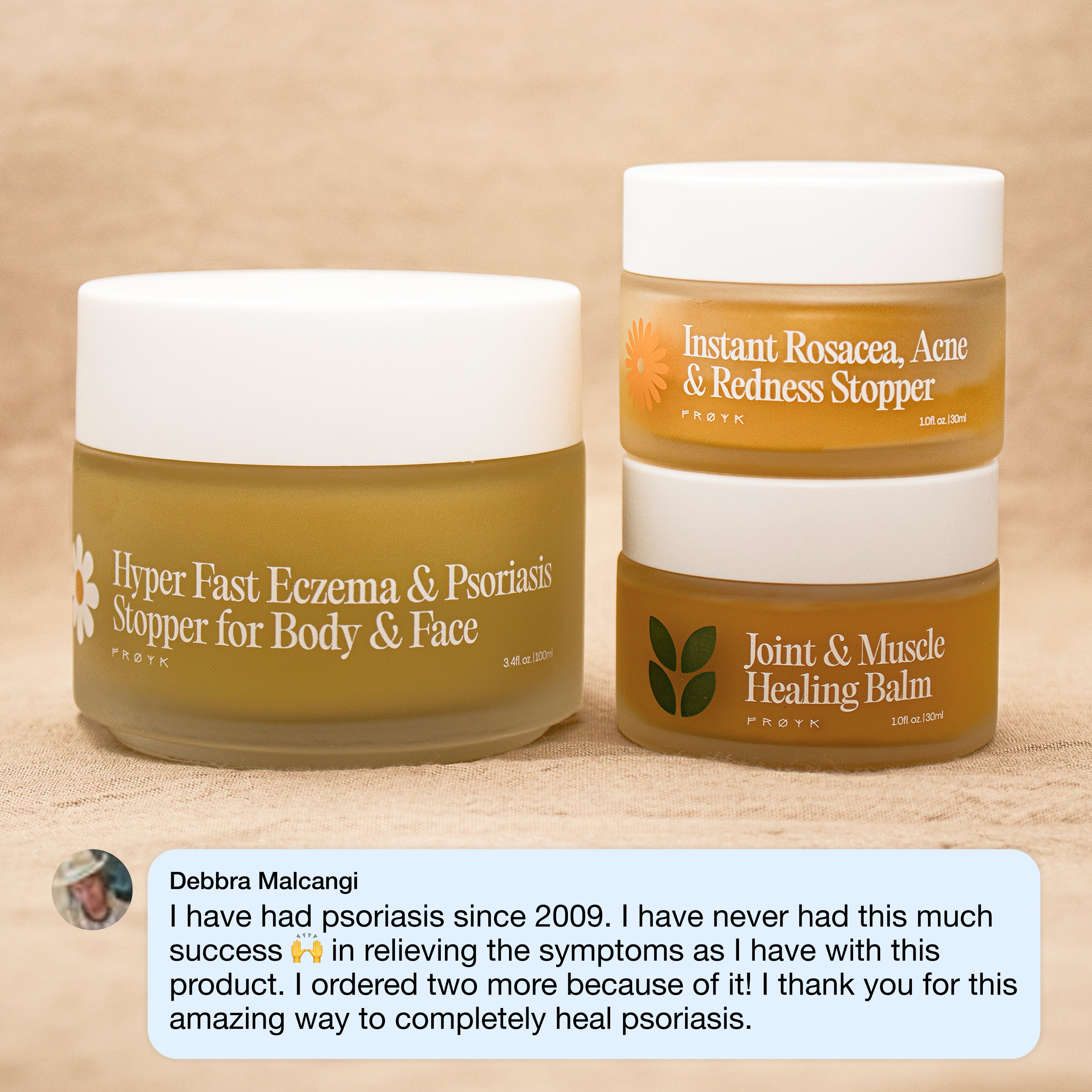
Tre balsami senza acqua per eczema, rossore e dolore articolare. Le piante artiche selvatiche e la cera d'api biologica calmano, sigillano e riparano la pelle su viso e corpo, supportati da una garanzia di rimborso di 60 giorni.
Acquista il Sistema OggiDomande Frequenti
Qual è la miglior crema naturale per l'eczema?+
Come si cura l'eczema in modo naturale?+
Cosa elimina i batteri sulla pelle con eczema?+
Come calmare le riacutizzazioni di eczema a casa?+
Quali ingredienti naturali dovresti evitare con l'eczema?+


