

 Account


Du hast acht Stunden geschlafen und dein Gesicht sieht trotzdem erschöpft aus.
Das wissen die meisten Menschen nicht über reife Haut: Ihre Hautbarriere wird nachts durchlässiger, nicht weniger. Mehr Wasser entweicht während des Schlafs als tagsüber. Deshalb kann Haut, die mittags noch fein aussah, morgens straff und matt wirken.
Eine Anti-Falten-Nachtcreme hilft, indem sie diesen Wasserverlust verlangsamt. Aber sie kann Schlafposition, schlechte Schlafqualität oder eine bereits geschädigte Barriere nicht korrigieren. Bei reifer Haut leistet die Abendroutine mehr als das Produkt aus dem Tiegel.
Nachfolgend finden Sie, was sich nachts in Ihrer Haut verändert, die zwei Faktoren, die Fältchen und Falten im Schlaf vertiefen, wie Sie ein Nachtprodukt für Ihren Hauttyp auswählen, und eine vierstufige Hautpflege-Routine, die Sie heute Abend starten können.
Wichtigste Erkenntnisse
- Ihre Haut verliert nachts mehr Wasser – deshalb ist ein Nachtschritt nach 45 wichtiger als mit 35.
- Etwa 30 % des Kollagens in der Dermis verschwinden in den ersten fünf Jahren nach der Menopause, daher landet das gleiche Produkt nun auf dünnerer Haut.
- Seitenschlaf erzeugt Kompressionsfältchen, die weder eine Creme noch ein Filler glätten kann.
- Schlechter Schlaf verlangsamt messbar, wie schnell sich Ihre Hautbarriere regeneriert.
- Die meisten Anti-Aging-Produkte brauchen sechs Wochen bis drei Monate, bevor Sie sie fair beurteilen können.
Warum Ihre Anti-Falten-Nachtcreme nach 45 nicht mehr wirkt

Östrogen hält die Haut prall, ölig und reparaturbereit. Wenn es sinkt, verschwinden alle drei damit. Forschung, die Brincat in den 1980er Jahren veröffentlichte, fand heraus, dass Frauen in den ersten fünf Jahren nach der Menopause etwa 30 % ihres dermalen Kollagens verlieren, danach etwa 2 % pro Jahr.
Das ist kein langsames Verblassen. Es ist ein Absturz – und er tritt genau dann auf, wenn die meisten Frauen Anti-Aging ernst nehmen.
Was das in der Praxis bedeutet:
- Ihre Haut speichert weniger Wasser, daher erscheinen matte Haut und Fältchen schneller
- Die Kollagenproduktion verlangsamt sich, daher verblasst die Festigkeit, bevor sich die Textur ändert
- Die Reparatur dauert länger, daher bleibt Irritation bestehen, anstatt über Nacht zu verschwinden
Die Creme, die mit 38 wirkte, sitzt nun auf dünnerer Haut mit einer schwächeren Barriere. Gleiches Produkt, anderes Gesicht.
Was mit reifer Haut im Schlaf passiert
Ihre Haut ruht nachts nicht. Sie wechselt ihre Aufgabe.
Tagsüber schützt sie. Nachts repariert sie, und wie sie sich verhält, ändert sich auf messbare Weise.
Ihre Hautbarriere verliert nachts mehr Wasser
Die Haut wird abends durchlässiger als morgens.
Eine klinische Übersichtsarbeit im Journal of Clinical and Aesthetic Dermatology bestätigt dies und fügt ein wichtiges Detail hinzu. Die Hautpenetration topischer Produkte ist um 4:00 Uhr morgens am höchsten und verlangsamt sich während der Tagesstunden.
Die Autoren gehen weiter und merken an, dass Feuchtigkeitscremes möglicherweise zusätzliche Vorteile bieten, wenn sie abends verwendet werden – genau aus diesem Grund. Das ist eine Dermatologie-Zeitschrift, die auf den Nachtschritt hinweist, nicht eine Marke.
Die nächtliche Barriererverschiebung: Mehr Wasser entweicht Ihrer Haut nachts, und alles, was Sie auftragen, dringt tiefer ein. Beides passiert gleichzeitig, weshalb Hautfeuchtigkeit, die vor dem Schlafengehen aufgetragen wird, mehr leistet als das gleiche Produkt mittags. Die Schritte, die eine beschädigte Hautbarriere reparieren, wirken am besten in diesem Fenster.
Die Hautzellenerneuerung erreicht ihren Höhepunkt um Mitternacht
Ihre Hautzellen teilen sich nach einem Plan. Die Keratinozytenproliferation ist um Mitternacht am höchsten und um die Mittagszeit am niedrigsten.
Sie sehen vielleicht Behauptungen, dass die Erneuerung nachts dreimal schneller abläuft. Die meisten dieser Zahlen stammen aus Mausstudien, daher behandeln Sie sie eher als Richtung denn als Zahl.
Was verlässlich ist, ist das Timing. Die Stunden, die Sie schlafen, sind die Stunden, in denen Ihre Haut die Hauttextur von innen heraus erneuert.
Zwei Faktoren, die Ihre Falten im Schlaf vertiefen
Hier stoppen die meisten Ratschläge zu Nachtcremes. Zwei nächtliche Faktoren beeinflussen Falten, und keine Formel berührt einen davon.
Schlafposition erzeugt Linien, die keine Creme glätten kann
Nicht alle Falten entstehen durch Mimik. Einige entstehen durch Ihr Kissen.
Ein Übersichtsartikel im Aesthetic Surgery Journal, verfasst von drei plastischen Chirurgen, erklärt, dass sich Falten dort bilden, wo Bruchlinien in alternder Haut entstehen. Einige dieser Bruchlinien entstehen durch Gesichtsausdrücke. Andere entstehen durch mechanische Kompression während des Schlafs.
Die Autoren nennen die zweite Art Schlaffältchen und stellten fest, dass Kompression, Scherung und Stressfaktoren auf Ihrem Gesicht in Seiten- und Bauchschlaf-Positionen wirken.
Schlaffältchen vs. Ausdruckslinien: Die Autoren stellten fest, dass sich die beiden in Ursache, Lage und Muster im Gesicht unterscheiden. Deshalb sind die Linien, die Sie mit 50 bemerken, möglicherweise nicht die, die Sie behandelt haben. Quelle: Anson, Kane, Lambros · Aesthetic Surgery Journal, 2016
Die meisten Menschen verbringen den Großteil der Nacht auf der Seite, und die Häufigkeit, mit der Sie die Position wechseln, nimmt mit dem Alter ab. Weniger Wechsel bedeuten, dass jede Linie länger an Ort und Stelle bleibt. Deshalb finden Frauen, die versuchen, Stirnfalten natürlich zu reduzieren, manchmal heraus, dass die gleichen Linien immer wieder auftauchen, egal was sie nachts auftragen.
Schlechter Schlaf verlangsamt Ihre Barrierereparatur
Schlechter Schlaf macht Sie nicht nur müde aussehen. Er verlangsamt, wie schnell Ihre Haut repariert.
Eine Studie mit 60 Frauen in Clinical and Experimental Dermatology verglich gute Schläfer, die 7 bis 9 Stunden bekamen, mit schlechten Schläfern, die 5 oder weniger bekamen. Gute Schläfer schnitten auf einer validierten Hautalterskala besser ab. Schlechte Schläfer begannen bereits mit höherem Wasserverlust.
Forscher fotografierten auch dunkle Ringe unter den Augen und verfolgten die UV-Rötungsreparatur. Gute Schläfer schnitten bei beiden besser ab.
Sieben bis neun Stunden ist hier keine Wellness-Empfehlung. Es ist das Fenster, auf das Ihr Nachtprodukt angewiesen ist.
Worauf Sie in einer Nachtcreme für reife Haut achten sollten
Ignorieren Sie die Texturwörter auf dem Tiegel und schauen Sie, was die Formel leistet.
Marken verkaufen Textur, weil sie leicht zu beschreiben ist. Sie sehen samtige Nachtcreme, kissenhafte Textur, leichte Gel-Creme-Textur und cremige Textur im Regal, die alle ungefähr die gleiche Aufgabe erfüllen. Was zählt, ist, ob eine reichhaltige Creme acht Stunden lang angenehm auf Ihrem Gesicht sitzt, ohne fettige Rückstände zu hinterlassen.
So vergleichen sich die gängigen Wirkstoffe:
|
Wirkstoff |
Was es bewirkt |
Der Nachteil |
|
Traditionelles Retinol |
Retinoide erhöhen die Zellenerneuerung und regen die Kollagenproduktion an |
Die meisten Nutzer berichten während der Anpassung von Rötung, Schuppung oder Trockenheit |
|
Alpha-Hydroxysäuren |
Lockern abgestorbene Hautzellen, bekämpfen Fältchen und dunkle Flecken |
Verdünnen die Oberflächenschicht, die nach 45 bereits fragil ist |
|
Peptide |
Kurze Aminosäureketten, die mit festerer aussehender Haut verbunden sind |
Wirken langsam, oft drei Monate oder länger |
|
Sheabutter |
Ein reichhaltiger Feuchtigkeitsspender, häufig in Nachtformeln |
Reichhaltigere Texturen können bei mancher Haut die Poren verstopfen |
In einer 24-Wochen-Studie mit 0,4 % Retinol berichtete die Mehrheit der Teilnehmer am Ende von Irritationen. Wenn Sie Retinol vertragen, führen Sie es zwei- bis dreimal pro Woche ein und bauen Sie von dort aus auf.
Keiner davon ist schlecht. Sie tragen einfach Nachteile mit sich, die sich verschärfen, wenn Ihre Barriere dünner wird.
Passen Sie die Formel Ihrem Hauttyp an
Ihre Hauptsorge und Ihr Hauttyp entscheiden, wie reichhaltig Ihr Nachtschritt sein sollte.
- Trockene oder reife Haut: eine reichhaltige Nachtcreme oder einen Balsam, aufgetragen auf Gesicht und Hals
- Mischhaut: eine dünne Schicht überall, etwas mehr auf trockenen Stellen
- Ölige oder zu Akne neigende Haut: weniger Produkt statt eines leichteren, da ölige Haut nachts immer noch Wasser verliert
- Empfindliche Hauttypen: weniger Wirkstoffe und testen Sie vier bis fünf Tage auf Ihrem Unterarm
Ein Punkt gilt unabhängig vom Typ: Wählen Sie etwas, das Sie monatelang täglich verwenden können, nicht etwas, das das schnellste Ergebnis verspricht.
Warum wasserfreie Formeln Feuchtigkeit länger halten
Die meisten Übernacht-Cremes sind zu großen Teilen Wasser, und dieses Wasser verdunstet. Dermatologin Zoe Draelos hat bemerkt, dass Wasser in einer Feuchtigkeitscreme als Träger wirkt, der verdunstet, und wiederholtes Benetzen und Trocknen kann trockene Haut schlimmer hinterlassen als zuvor.
Mit einem Balsam als Feuchtigkeitscreme überspringen Sie diesen Kreislauf. Nichts verdunstet, daher hält die Versiegelung während der Stunden, in denen der Wasserverlust seinen Höhepunkt erreicht.
Eine realistische Abendroutine für reife Haut
Vier Schritte, in dieser Reihenfolge, und der letzte kostet nichts.
- Reinigen Sie zwei- bis dreimal pro Woche. Das Entfernen abgestorbener Hautzellen bedeutet, dass alles, was Sie als Nächstes auftragen, nicht auf Ansammlungen sitzt. Reife Haut braucht das nicht täglich, und zu häufiges Peeling wirkt gegen jeden anderen Schritt.
- Pflegen Sie Ihre Augen täglich. Der Bereich unter den Augen ist die dünnste Haut in Ihrem Gesicht und die erste Stelle, wo schlechter Schlaf sichtbar wird. Tragen Sie vor Ihrer Feuchtigkeitscreme auf, da nichts gut durch eine Balsam-Schicht eindringt.
- Befeuchten Sie zuletzt, täglich. Das ist der Schritt, der den Wasserverlust während der Stunden verlangsamt, in denen er seinen Höhepunkt erreicht. Verwenden Sie sanfte Aufwärtsbewegungen und ziehen Sie es über Ihren Hals, der mit der gleichen Rate altert wie Ihr Gesicht und doppelt so häufig übersehen wird.
- Schlafen Sie auf dem Rücken. Kein Produkt, keine Kosten, und es ist das Einzige auf dieser Liste, das Kompressionsfältchen erreicht.
Die Reihenfolge ist wichtiger als die meisten Menschen erwarten. Ihre Feuchtigkeitscreme kommt zuletzt, weil sie wirkt, indem sie die Oberfläche versiegelt, und alles, das darüber aufgetragen wird, bleibt oben statt einzuziehen.
Glättender Anti-Falten Nachtbalsam: Was drin ist und warum es wirkt

Es ist wasserfrei, und das ist das, was es bei dem Problem funktionieren lässt, das dieser Artikel beschrieben hat.
Der Glättender Anti-Falten Nachtbalsam hat 16 Zutaten und keine davon ist Wasser. Die meisten Nachtcremes sind zu 70 bis 90 % Wasser, daher verdunstet ein großer Teil dessen, was Sie auftragen, innerhalb von Minuten, genau wenn der Wasserverlust ansteigt.
Wie es Fältchen und Falten bekämpft:
- Bienenwachs versiegelt die Oberfläche und verlangsamt den nächtlichen Wasserverlust, der Linien morgens tiefer aussehen lässt
- Arktische Wildrose ist der Falten-Wirkstoff, zitiert für weniger Faltentiefe in 14 bis 50 Tagen
- Arnika montana ist das am häufigsten zitierte Anti-Falten-Kraut der Marke, wild geerntet in Norwegen
- Distelöl liefert Linolsäure, die Fettsäure, die Ihre Barriere zur Regeneration nutzt
- Tocopherol, natürliches Vitamin E, wirkt gegen den freien Radikalschaden, der Kollagen abbaut
Was nicht drin ist: Kein Retinol, keine Säuren, kein Niacinamid. Nichts, das eine langsame Einführung oder eine Toleranzaufbauphase braucht.
So verwenden Sie es: Spülen Sie Ihr Gesicht mit Wasser, dann tragen Sie vor dem Schlafengehen eine dünne Schicht auf Gesicht und Hals auf. Eine kleine Fingerspitzenmenge reicht aus, eingearbeitet mit sanften Aufwärtsbewegungen. Verwenden Sie es täglich, als letzter Schritt in Ihrer Routine.
Wie es in das Anti-Aging Pflegesystem für reife Haut passt

Der Nachtbalsam funktioniert allein. Er wurde als ein Schritt von vier gebaut.
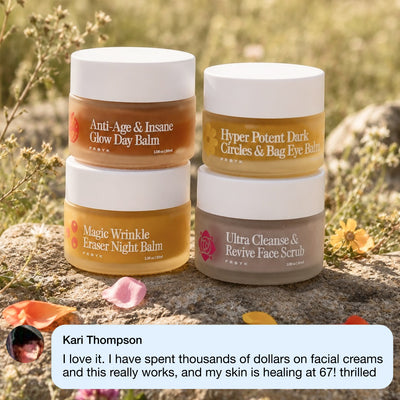
Das Anti-Aging Pflegesystem für reife Haut kombiniert ihn mit dem Revitalisierendem Gesichtspeeling, dem Belebenden Augenbalsam und einem Tagesbalsam. Jede ist ein 60-Tage-Vorrat, daher läuft der Satz nach dem gleichen Zeitplan wie die Garantie.
|
Produkt |
Wann |
Was es behandelt |
|
2 bis 3 Nächte pro Woche |
Entfernt Ansammlungen, damit der Balsam die Haut erreicht |
|
|
Täglich, vor dem Nachtbalsam |
Der dünne Augenbereich, zuerst aufgetragen |
|
|
Glättender Anti-Falten Nachtbalsam |
Täglich, letzter Schritt |
Versiegelt die Barriere während des Höchststands des Wasserverlusts |
|
Morgens |
Tagesschutz und Strahlung |
Die Reihenfolge ist wichtiger als die meisten Menschen erwarten. Reinigen, dann Augen, dann versiegeln, weil nichts über eine Barriererversiegelung gehen sollte.
Wie lange, bis sich Fältchen wirklich verbessern
Schneller als Sie fürchten, langsamer als die Verpackung suggeriert. Die American Academy of Dermatology ist hier direkt. Die Befeuchtung fängt Wasser in der Haut ein, was einige Fältchen sofort aufpolstern kann, aber die meisten Produkte brauchen mindestens sechs Wochen und manchmal drei Monate.
Die Veränderung läuft in Phasen ab. Die Haut fühlt sich innerhalb von Tagen weich an, sichtbare Veränderungen in Fältchen dauern vier bis sechs Wochen nächtlicher Anwendung, und Festigkeit dauert noch länger. Antioxidantien wie Vitamin E wirken nach der langsamsten Uhr und schützen die Haut vor dem oxidativen Stress, der Kollagen über Monate hinweg abbaut.
Die AAD fügt zwei Warnungen hinzu. Die Verwendung von mehr als einem Anti-Aging-Produkt neigt dazu, die Haut zu reizen, und gereizte Haut macht das Altern bemerkbarer. Das Auftragen von mehr als angewiesen kann die Poren verstopfen oder Ihren Teint fleckig machen, weshalb eine Fingerspitzenmenge die Anweisung ist.
Geben Sie also alles, das Sie beginnen, volle 60 Nächte, bevor Sie es beurteilen. Umschalten in Woche drei ist, wie die meisten Frauen zurück zum Ausgangspunkt enden.
Was 60 Nächte wirklich aussieht

Lisa R. fotografierte ihre Stirn am ersten Tag und erneut am sechzehnten Tag. Die horizontalen Linien über ihrer Stirn sind im zweiten Foto weicher, obwohl sie nicht verschwunden sind, und die Haut sieht insgesamt weniger trocken aus. Das sind realistische sechzehn Tage. Nicht gelöschte Linien, nur weniger Tiefe und bessere Hydratation, was die AAD-Zeitleiste in diesem Stadium vorhersagen würde.
Die echten Kundenergebnisse der Haut-Seite hat mehr davon, fotografiert in Badezimmern ohne Filter. Suchen Sie nach Frauen, die Ihrem Alter und Hauttyp am nächsten kommen, statt nach der dramatischsten Transformation.
Ändern Sie dann heute Abend eine Sache. Schlafen Sie auf dem Rücken, oder feuchten Sie vor dem Schlafengehen.
Häufig gestellte Fragen
Gibt es eine Anti-Falten-Creme, die wirklich wirkt?+
Was hilft über Nacht gegen Falten im Gesicht?+
Können Sie eine Nachtcreme verwenden, wenn Sie Retinol nicht vertragen?+
Gibt es eine Creme, die wie Botox gegen Falten wirkt?+


